
Ashley Hinson (R-IA)
Protecting American Industry and Labor from International Trade Crimes Act of 2026
A Republican bill with 27 Democratic cosponsors · See all 44 cosponsors
Last activity — Received in the Senate.
Passed one chamber, waiting for the other to take it up
Passed one chamber, and the other has not yet sent it to a committee or put it on its calendar.
The other chamber will hand it to a committee, place it on its calendar, or leave it where it is. Nothing has been decided, and a bill can sit here indefinitely.
Its path through Congress
- Introduced
- Passed House voice vote
- Awaiting Senate
The House by voice vote (members called out yes or no together): no member's position on it was recorded.
What this bill would do
The Protecting American Industry and Labor from International Trade Crimes Act of 2026 aims to increase the Department of Justice's ability to fight trade-related crimes. It establishes a new structure, such as a task force or program, within the Criminal Division of the Department of Justice to investigate and prosecute these crimes. This includes creating new positions for criminal trial attorneys and support personnel. The act focuses on crimes like smuggling, trade-based money laundering, and the evasion of duties and tariffs. It also requires the Attorney General to provide annual reports to Congress on the progress and funding of these efforts.
Yes· 3 of 12
- Scored +4
Does this make it easier to run a small business?
Enforcing trade laws and stopping illegal smuggling and duty evasion protects law-abiding domestic businesses from unfair foreign competition.
- Scored +4
Does this make trade with other countries easier?
The bill targets illicit trade practices like smuggling and tariff evasion, promoting fairer international trade standards.
- Scored +3
Would business owners be better off under this?
Domestic business owners benefit from stronger enforcement against illegal trade practices and unfair foreign competition.
The opposite
No question was scored the opposite.
Who it would affect, and how
Potential Positive Impacts for People
-
Increased Prosecution of Health and Safety Crimes: The act seeks to increase the number of investigations and prosecutions for health, safety, financial, and economic trade-related crimes, including violations of the Federal Food, Drug, and Cosmetic Act and the Toxic Substances Control Act (Section 4(a)(2)).
-
Better Government Coordination: The act requires the new structure to promote interaction with the public, industry representatives, and law enforcement, and ensures that different components enforcing trade laws consult with each other (Section 3(b)(3) and Section 4(a)(6)).
-
Stronger Enforcement Capabilities: By creating new positions for experienced and technically qualified prosecutors and support personnel, the Department of Justice can better lead investigations that impact more than one district (Section 3(b)(1) and 3(b)(2)).
-
Accountability through Reporting: The Attorney General must submit annual reports to Congress detailing the volume of charges, indictments, and how funds were spent, which provides transparency on the use of public money (Section 5).
Potential Negative Impacts for People
- Increased Legal Risk: The act explicitly states that litigation by the Criminal Division does not stop other criminal prosecutions or civil actions from being pursued for the same trade-related violations (Section 4(b)).
Groups and Interests Ranking
Every group the model scored this bill for, from -10 to +10. Tap or hover a score for the reason it gave.
- Economy And Finance
- Does this make it easier to run a small business? — Enforcing trade laws and stopping illegal smuggling and duty evasion protects law-abiding domestic businesses from unfair foreign competition. Does this give people more protection from unfair business practices? — The bill includes enforcement against health and safety-related trade violations, helping protect consumers from illicit imports. Is this likely to grow the economy? — By cracking down on international trade crimes and duty evasion, the bill supports fair competition for domestic industries. Is this likely to create jobs? — The bill creates new positions within the Department of Justice for criminal trial attorneys and support personnel.
- Demographic And Interest Groups
- Would business owners be better off under this? — Domestic business owners benefit from stronger enforcement against illegal trade practices and unfair foreign competition. Would union members be better off under this? — Union workers benefit from protections against illegal trade and smuggling that undermine domestic manufacturing and labor.
- Governance And Ideology
- Does this make what the government does easier for the public to see? — The bill mandates regular reporting to congressional committees detailing enforcement statistics and funding usage. Does this give the federal government more power? — The bill expands federal prosecutorial authority and creates new structures within the Department of Justice.
- National Security And Foreign Policy
- Does this make trade with other countries easier? — The bill targets illicit trade practices like smuggling and tariff evasion, promoting fairer international trade standards.
- Social Issues And Justice
- Does this tighten control of the border? — The legislation enhances coordination with customs and border protection agencies to investigate smuggling and trade violations.
- Education And Technology
- Does this make patent and copyright rules fairer? — The legislation encompasses enforcement against counterfeiting and intellectual property crimes related to imports.
- Environment Energy And Infrastructure
- Does this better protect air, water and wildlife? — The bill explicitly includes enforcement of toxic substances and environmental-related import/export regulations.
- 9/14/2026
- Received in the Senate.
- 8/31/2026
- Motion to reconsider laid on the table Agreed to without objection.
- Passed/agreed to in House: On motion to suspend the rules and pass the bill, as amended Agreed to by voice vote.
- On motion to suspend the rules and pass the bill, as amended Agreed to by voice vote. (text: CR H5273-5274)
- DEBATE - The House proceeded with forty minutes of debate on H.R. 1869.
- Considered under suspension of the rules. (consideration: CR H5273-5275)
- Mr. Schmidt moved to suspend the rules and pass the bill, as amended.
- 8/27/2026
- Reported (Amended) by the Committee on Judiciary. H. Rept. 119-782.
- Placed on the Union Calendar, Calendar No. 683.
- 6/3/2026
- Committee Consideration and Mark-up Session Held
- Ordered to be Reported (Amended) by the Yeas and Nays: 23 - 0.
- 12/12/2025
- 1 Cosponsor added.
- 12/9/2025
- 1 Cosponsor added.
- 10/31/2025
- 1 Cosponsor added.
- 9/4/2025
- 1 Cosponsor added.
- 6/9/2025
- 1 Cosponsor added.
- 5/7/2025
- 1 Cosponsor added.
- 4/17/2025
- 1 Cosponsor added.
- 4/7/2025
- 1 Cosponsor added.
- 3/31/2025
- 1 Cosponsor added.
- 3/26/2025
- 1 Cosponsor added.
- 3/21/2025
- 1 Cosponsor added.
- 3/5/2025
- Referred to the House Committee on the Judiciary.
- 33 Cosponsors added.
- Introduced in House
One bill Congress.gov lists as related to this one — companions in the other chamber, earlier versions, and bills this one absorbed or was folded into.
 Sanford Bishop
Democrat · Georgia
 Suzanne Bonamici
Democrat · Oregon
 Nikki Budzinski
Democrat · Illinois
 Kathy Castor
Democrat · Florida
 André Carson
Democrat · Indiana
 J. Correa
Democrat · California
 Ben Cline
Republican · Virginia
 Juan Ciscomani
Republican · Arizona
 Herbert Conaway
Democrat · New Jersey
 Rosa DeLauro
Democrat · Connecticut
 Donald Davis
Democrat · North Carolina
 Christopher Deluzio
Democrat · Pennsylvania
 Debbie Dingell
Democrat · Michigan
 Brad Finstad
Republican · Minnesota
 Josh Gottheimer
Democrat · New Jersey
 Carlos Gimenez
Republican · Florida
 Clay Higgins
Republican · Louisiana
 Glenn Ivey
Democrat · Maryland
 Mike Kelly
Republican · Pennsylvania
 Ro Khanna
Democrat · California
 Raja Krishnamoorthi
Democrat · Illinois
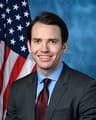 Kevin Kiley
Independent · California
 Ted Lieu
Democrat · California
 Darin LaHood
Republican · Illinois
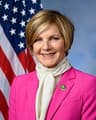 Susie Lee
Democrat · Nevada
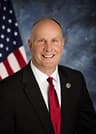 John Moolenaar
Republican · Michigan
 Seth Moulton
Democrat · Massachusetts
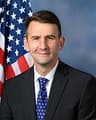 Frank Mrvan
Democrat · Indiana
 Nathaniel Moran
Republican · Texas
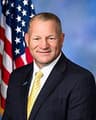 Troy Nehls
Republican · Texas
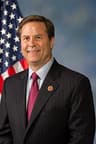 Donald Norcross
Democrat · New Jersey
 Dan Newhouse
Republican · Washington
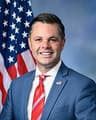 Zachary Nunn
Republican · Iowa
 Deborah Ross
Democrat · North Carolina
 Michael Rulli
Republican · Ohio
 Josh Riley
Democrat · New York
 Elise Stefanik
Republican · New York
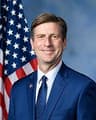 Greg Stanton
Democrat · Arizona
 Haley Stevens
Democrat · Michigan
 William Timmons
Republican · South Carolina
 Ritchie Torres
Democrat · New York
 Jill Tokuda
Democrat · Hawaii
 Eugene Vindman
Democrat · Virginia
 Robert Wittman
Republican · Virginia