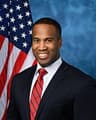
John James (R-MI)
Sickle Cell Disease and Other Heritable Blood Disorders Research, Surveillance, Prevention, and Treatment Act of 2025
A Republican bill with 5 Democratic cosponsors · See all 6 cosponsors
Last activity — Referred to the House Committee on Energy and Commerce.
In committee
Introduced and handed to a committee in the chamber it started in.
The committee holds it, and most bills are never heard from again. A hearing or a committee vote would be news; silence is the usual outcome, and it kills the bill without anyone voting against it.
Its path through Congress
- Introduced
- In Committee
What this bill would do
This bill seeks to amend the Public Health Service Act to reauthorize a demonstration program. It aims to expand the focus of the program to include the prevention and treatment of complications related to sickle cell disease. The legislation also updates the methods for providing support by allowing for grants, contracts, or cooperative agreements. Furthermore, it increases the funding allocated to the program for specific fiscal years. The bill is titled the "Sickle Cell Disease and Other Heritable Blood Disorders Research, Surveillance, Prevention, and Treatment Act of 2025".
Yes· 3 of 5
- Scored +6
Does this put more money into medical research?
The bill increases annual funding for the sickle cell disease demonstration program from $4,455,000 to $8,205,000.
- Scored +5
Does this make health care easier to get in general?
The bill expands the scope of the demonstration program to include the prevention and treatment of complications of sickle cell disease.
- Scored +5
Would Black Americans be better off under this?
The bill increases resources for treating sickle cell disease and its complications, a condition that highly impacts the Black community.
The opposite
No question was scored the opposite.
Who it would affect, and how
Potential Positive Impacts for People
-
Expanded Medical Focus: The bill changes the language to include the "prevention and treatment of complications of sickle cell disease" (Section 2(a)(1), 2(a)(2), and 2(a)(3)(B)). This could benefit patients by addressing the various complications that arise from the disease rather than just the disease itself.
-
Increased Flexibility in Funding: By allowing the program to "make a grant to, or enter into a contract or cooperative agreement with" entities (Section 2(a)(3)(A)), the program gains more ways to distribute resources to those in need.
-
Increased Funding Levels: The bill increases the amount from $4,455,000 to $8,205,000 for the specified fiscal years (Section 2(a)(4)). This provides more financial resources for the demonstration program between fiscal years 2025 and 2029.
Potential Negative Impacts for People
- No negative impacts are explicitly stated in the provided text.
Groups and Interests Ranking
Every group the model scored this bill for, from -10 to +10. Tap or hover a score for the reason it gave.
- Healthcare
- Does this put more money into medical research? — The bill increases annual funding for the sickle cell disease demonstration program from $4,455,000 to $8,205,000. Does this make health care easier to get in general? — The bill expands the scope of the demonstration program to include the prevention and treatment of complications of sickle cell disease.
- Demographic And Interest Groups
- Would Black Americans be better off under this? — The bill increases resources for treating sickle cell disease and its complications, a condition that highly impacts the Black community. Would households on low incomes be better off under this? — Increased funding for disease complication treatment may provide better health outcomes for those reliant on public health programs.
- Social Issues And Justice
- Does this narrow racial gaps in how people are treated? — The bill increases funding and focus on sickle cell disease, which disproportionately affects certain racial groups.
- 1/16/2026
- 1 Cosponsor added.
- 8/15/2025
- 1 Cosponsor added.
- 3/3/2025
- Referred to the House Committee on Energy and Commerce.
- 4 Cosponsors added.
- Introduced in House
4 bills Congress.gov lists as related to this one — companions in the other chamber, earlier versions, and bills this one absorbed or was folded into.
 Sanford Bishop
Democrat · Georgia
 Troy Carter
Democrat · Louisiana
 Danny Davis
Democrat · Illinois
 Jennifer Kiggans
Republican · Virginia
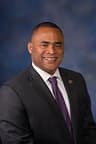 Marc Veasey
Democrat · Texas
 Eugene Vindman
Democrat · Virginia