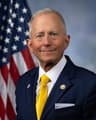
Jefferson Van Drew (R-NJ)
Dental Loan Repayment Assistance Act of 2025
A Republican bill with 4 Democratic cosponsors · See all 5 cosponsors
Last activity — Referred to the Committee on Ways and Means, and in addition to the Committee on Energy and Commerce, for a period to be subsequently determined by the Speaker, in each case for consideration of such provisions as fall within the jurisdiction of the committee concerned.
In committee
Introduced and handed to a committee in the chamber it started in.
The committee holds it, and most bills are never heard from again. A hearing or a committee vote would be news; silence is the usual outcome, and it kills the bill without anyone voting against it.
Its path through Congress
- Introduced
- In Committee
What this bill would do
This bill, known as the "Dental Loan Repayment Assistance Act of 2025," seeks to amend the Internal Revenue Code of 1986. It aims to exclude certain federally subsidized loan repayments for dental school faculty from being counted as gross income. This exclusion applies specifically to loan repayment programs awarded a grant or contract under section 748(a)(2) of the Public Health Service Act. The changes would take effect for amounts received in taxable years beginning after the bill is enacted. Additionally, the bill requires the Comptroller General to review and report on the participation of dental providers and faculty in specific programs.
Yes· 3 of 6
- Scored +5
Does this cut taxes for middle-income families?
The bill excludes certain dental school faculty loan repayments from gross income, providing tax relief to those professionals.
- Scored +4
Would middle-income households be better off under this?
The tax exclusion provides financial relief to dental professionals who often fall within middle-income brackets.
- Scored +4
Would students be better off under this?
The bill eases the long-term financial burden of dental school debt through tax-free loan repayments.
The opposite
No question was scored the opposite.
Who it would affect, and how
Potential Positive Impacts for People
- Tax Relief for Dental Faculty: By amending the Internal Revenue Code to exclude certain loan repayments from gross income, dental school faculty receiving these funds would not have that money treated as taxable income (Section 2(a)).
Potential Negative Impacts for People
- No negative impacts are explicitly stated in the provided text.
Groups and Interests Ranking
Every group the model scored this bill for, from -10 to +10. Tap or hover a score for the reason it gave.
- Demographic And Interest Groups
- Would middle-income households be better off under this? — The tax exclusion provides financial relief to dental professionals who often fall within middle-income brackets. Would students be better off under this? — The bill eases the long-term financial burden of dental school debt through tax-free loan repayments.
- Economy And Finance
- Does this cut taxes for middle-income families? — The bill excludes certain dental school faculty loan repayments from gross income, providing tax relief to those professionals.
- Education And Technology
- Does this make college cost less? — The bill provides relief for dental school debt by excluding loan repayments from taxable income.
- Healthcare
- Does this make health care easier to get in general? — The bill supports dental school faculty, which may help maintain and expand dental care services in schools and community clinics.
- Governance And Ideology
- Does this make what the government does easier for the public to see? — The bill requires the Comptroller General to review and report on the participation of dental providers and faculty in specific programs.
- 10/3/2025
- 1 Cosponsor added.
- 9/9/2025
- 1 Cosponsor added.
- 6/5/2025
- 1 Cosponsor added.
- 4/7/2025
- 1 Cosponsor added.
- 2/27/2025
- Referred to the Committee on Ways and Means, and in addition to the Committee on Energy and Commerce, for a period to be subsequently determined by the Speaker, in each case for consideration of such provisions as fall within the jurisdiction of the committee concerned.
- 1 Cosponsor added.
- Introduced in House
One bill Congress.gov lists as related to this one — companions in the other chamber, earlier versions, and bills this one absorbed or was folded into.
 Yvette Clarke
Democrat · New York
 Nicole Malliotakis
Republican · New York
 Deborah Ross
Democrat · North Carolina
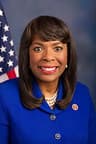 Terri Sewell
Democrat · Alabama
 Eugene Vindman
Democrat · Virginia