
Gerald Connolly (D-VA)
Taxpayer Funds Oversight and Accountability Act
A Democratic bill with 18 Democratic cosponsors · See all 18 cosponsors
Last activity — ASSUMING FIRST SPONSORSHIP - Mr. Min asked unanimous consent that he may hereafter be considered as the first sponsor of H.R. 1558, a bill originally introduced by Representative Connolly, for the purpose of adding cosponsors and requesting reprintings pursuant to clause 7 of rule XII. Agreed to without objection.
Introduced, nothing more yet
Formally proposed, and not yet handed to a committee.
Nearly every bill is sent to a committee within days. Introduction alone is not a sign of support, of momentum, or of any likelihood of passing — any member may introduce any bill.
Its path through Congress
- Introduced
What this bill would do
The Taxpayer Funds Oversight and Accountability Act seeks to modify the governmentwide financial management plan. It updates the duties of agency Chief Financial Officers to include oversight of internal controls and the preparation of agency-specific financial management plans. The bill shifts the governmentwide financial management plan from a 5-year to a 4-year cycle. It also changes how financial management status reports are submitted to Congress and the Comptroller General. Additionally, the bill modifies audit requirements for agencies to evaluate the design and implementation of internal controls.
Yes· 3 of 6
- Scored +5
Does this make the government pay for what it commits to?
The bill strengthens oversight of agency financial management, internal controls, and the integration of performance and cost information.
- Scored +5
Does this make what the government does easier for the public to see?
The bill requires agency financial management plans and status reports to be made available to the public.
- Scored +3
Does this reduce what the federal government spends?
The bill directs agencies to eliminate duplicative and unnecessary systems and activities to be more cost-effective.
The opposite
No question was scored the opposite.
Who it would affect, and how
Potential Positive Impacts for People
-
Increased Oversight of Agency Funds: The bill mandates that Chief Financial Officers oversee the design, implementation, and operation of internal controls regarding financial reporting and key information (Section 2(a)(1)(B)(5)).
-
Improved Financial Transparency: Agency plans for financial management must be made publicly available (Section 2(a)(1)(B)(6)(D)).
-
Enhanced Decision Making: The governmentwide plan is updated to include linking performance and cost information to help facilitate effective and efficient decision making (Section 2(b)(1)(A)(2)(B)(ii)(II)).
-
Cost-Effective Government Operations: The new 4-year plan includes instructions for eliminating duplicative and unnecessary systems and activities, and encourages agencies to share systems and services where practicable (Section 2(b)(1)(A)(2)(B)(ii)(II)).
-
Strengthened Workforce: The governmentwide plan is required to provide a strategy for strengthening the Federal financial management workforce (Section 2(b)(1)(A)(2)(B)(vii)).
Potential Negative Impacts for People
- Increased Audit Burdens: Auditors are now required to evaluate the design and implementation of internal controls as part of each audit (Section 2(c)(1)(A)(2)).
Groups and Interests Ranking
Every group the model scored this bill for, from -10 to +10. Tap or hover a score for the reason it gave.
- Economy And Finance
- Does this make the government pay for what it commits to? — The bill strengthens oversight of agency financial management, internal controls, and the integration of performance and cost information. Does this reduce what the federal government spends? — The bill directs agencies to eliminate duplicative and unnecessary systems and activities to be more cost-effective. Does this give people more protection from unfair business practices? — Increased financial transparency and oversight of agency spending can better protect taxpayers' interests.
- Governance And Ideology
- Does this make what the government does easier for the public to see? — The bill requires agency financial management plans and status reports to be made available to the public.
- Demographic And Interest Groups
- Would households on low incomes be better off under this? — Improved oversight of federal spending and reduction of duplicative systems can lead to more efficient use of public funds. Would middle-income households be better off under this? — Increased accountability and efficiency in government spending can provide better value for taxpayers.
- 9/15/2025
- ASSUMING FIRST SPONSORSHIP - Mr. Min asked unanimous consent that he may hereafter be considered as the first sponsor of H.R. 1558, a bill originally introduced by Representative Connolly, for the purpose of adding cosponsors and requesting reprintings pursuant to clause 7 of rule XII. Agreed to without objection.
- 2/25/2025
- Referred to the House Committee on Oversight and Government Reform.
- 18 Cosponsors added.
- Introduced in House
2 bills Congress.gov lists as related to this one — companions in the other chamber, earlier versions, and bills this one absorbed or was folded into.
 Yassamin Ansari
Democrat · Arizona
 Shontel Brown
Democrat · Ohio
 Wesley Bell
Democrat · Missouri
 Jasmine Crockett
Democrat · Texas
 Maxwell Frost
Democrat · Florida
 Robert Garcia
Democrat · California
 Ro Khanna
Democrat · California
 Raja Krishnamoorthi
Democrat · Illinois
 Stephen Lynch
Democrat · Massachusetts
 Summer Lee
Democrat · Pennsylvania
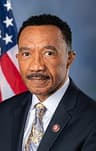 Kweisi Mfume
Democrat · Maryland
 Dave Min
Democrat · California
 Eleanor Norton
Democrat · District of Columbia
 Emily Randall
Democrat · Washington
 Melanie Stansbury
Democrat · New Mexico
 Suhas Subramanyam
Democrat · Virginia
 Lateefah Simon
Democrat · California
 Rashida Tlaib
Democrat · Michigan