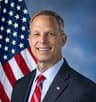
A Republican bill with 2 Democratic cosponsors · See all 12 cosponsors
Last activity — Received in the Senate and Read twice and referred to the Committee on Foreign Relations.
In the other chamber's committee
Passed one chamber and has been handed to a committee in the other.
The committee decides whether it goes any further, and most bills that reach a committee never leave it. A committee that simply does nothing kills a bill without anyone ever voting against it, so no news from here is usually the news.
Its path through Congress
- Introduced
- Passed House voice vote
- In Senate committee
The House by voice vote (members called out yes or no together): no member's position on it was recorded.
What this bill would do
This bill is called the Falun Gong Protection Act. It sets a policy for the United States to avoid cooperating with the People's Republic of China on organ transplantation. It requires the President to place sanctions on foreign people who directly take part in or help with involuntary organ harvesting in China. These sanctions include blocking property and denying visas or entry into the United States. The bill also requires specific government reports regarding China's organ transplant policies, practices, and research grants. Finally, the sanction authorities in the bill will end five years after the bill is enacted.
Yes· 3 of 6
- Scored +8
Does this protect the freedom to practise a religion?
The bill addresses the severe persecution of Falun Gong practitioners, supporting international religious freedom and human rights.
- Scored +7
Does this strengthen ties with allied countries?
The legislation fosters cooperation with international allies to address human rights abuses and coordinate targeted sanctions.
- Scored +7
Does this make what the government does easier for the public to see?
The legislation mandates detailed reporting on foreign organ transplant policies, practices, and research grants.
The opposite
No question was scored the opposite.
Who it would affect, and how
Potential Positive Impacts for People
-
Section 2 outlines a policy to work with allies and international partners to highlight China's persecution of Falun Gong and coordinate on targeted sanctions and visa restrictions, which aims to hold human rights abusers accountable.
-
Section 3 requires the President to impose property-blocking and visa-denying sanctions on any foreign person who knowingly and directly engages in or facilitates the involuntary harvesting of organs within the People's Republic of China, which targets those responsible for these acts.
-
Section 3 explicitly protects humanitarian efforts by stating that sanctions cannot be imposed on transactions for selling agricultural commodities, food, or medicine, or for providing vital humanitarian assistance and related financial transactions or transport.
-
Section 4 requires the Secretary of State, the Secretary of Health and Human Services, and the Director of the National Institutes of Health to submit a report detailing China's organ transplant practices, the sources of their transplant organs, and a determination on whether the persecution of Falun Gong practitioners constitutes an atrocity, bringing transparency to these practices.
Potential Negative Impacts for People
- Section 3 states that people who violate, attempt to violate, or conspire to violate the sanctions regulations will face penalties under the International Emergency Economic Powers Act, which could create burdens or legal consequences for individuals tied to those violations.
Groups and Interests Ranking
Every group the model scored this bill for, from -10 to +10. Tap or hover a score for the reason it gave.
- National Security And Foreign Policy
- Does this strengthen ties with allied countries? — The legislation fosters cooperation with international allies to address human rights abuses and coordinate targeted sanctions. Does this favour talking over confrontation abroad? — The bill establishes clear diplomatic policies and reporting requirements regarding foreign organ transplantation practices.
- Governance And Ideology
- Does this make what the government does easier for the public to see? — The legislation mandates detailed reporting on foreign organ transplant policies, practices, and research grants. Does this give the federal government more power? — The bill grants specific federal sanctioning authorities and reporting requirements to the executive branch.
- Social Issues And Justice
- Does this protect the freedom to practise a religion? — The bill addresses the severe persecution of Falun Gong practitioners, supporting international religious freedom and human rights.
- Demographic And Interest Groups
- Would Asian Americans be better off under this? — The legislation protects vulnerable groups, including practitioners of Falun Gong, against severe state-sponsored persecution.
- 5/6/2025
- Received in the Senate and Read twice and referred to the Committee on Foreign Relations.
- 5/5/2025
- Motion to reconsider laid on the table Agreed to without objection.
- Passed/agreed to in House: On motion to suspend the rules and pass the bill Agreed to by voice vote. (text: CR H1830-1831)
- On motion to suspend the rules and pass the bill Agreed to by voice vote. (text: CR H1830-1831)
- DEBATE - The House proceeded with forty minutes of debate on H.R. 1540.
- Considered under suspension of the rules. (consideration: CR H1830-1833)
- Mr. Mast moved to suspend the rules and pass the bill.
- 1 Cosponsor added.
- 4/21/2025
- 2 Cosponsors added.
- 2/24/2025
- Referred to the Committee on Foreign Affairs, and in addition to the Committee on the Judiciary, for a period to be subsequently determined by the Speaker, in each case for consideration of such provisions as fall within the jurisdiction of the committee concerned.
- 9 Cosponsors added.
- Introduced in House
One bill Congress.gov lists as related to this one — companions in the other chamber, earlier versions, and bills this one absorbed or was folded into.
 Gus Bilirakis
Republican · Florida
 Pat Fallon
Republican · Texas
 Brian Fitzpatrick
Republican · Pennsylvania
 Lance Gooden
Republican · Texas
 Gregory Murphy
Republican · North Carolina
 Eleanor Norton
Democrat · District of Columbia
 Burgess Owens
Republican · Utah
 Andrew Ogles
Republican · Tennessee
 Patrick Ryan
Democrat · New York
 Thomas Tiffany
Republican · Wisconsin
 Joe Wilson
Republican · South Carolina
 Randy Weber
Republican · Texas