
A Republican bill with 13 Democratic cosponsors · See all 24 cosponsors
Last activity — Referred to the House Committee on Ways and Means.
In committee
Introduced and handed to a committee in the chamber it started in.
The committee holds it, and most bills are never heard from again. A hearing or a committee vote would be news; silence is the usual outcome, and it kills the bill without anyone voting against it.
Its path through Congress
- Introduced
- In Committee
What this bill would do
This bill, known as the "ENABLE Act," aims to amend the Internal Revenue Code of 1986. It seeks to make certain provisions regarding qualified ABLE programs permanent. Specifically, it addresses increased contributions to ABLE accounts. It also addresses the extension of rollovers to ABLE programs from 529 programs. The legislation includes changes to how qualified retirement savings contributions are defined.
Yes· 3 of 7
- Scored +8
Would people with disabilities be better off under this?
The bill provides permanent certainty for ABLE account contribution limits and 529-to-ABLE rollovers which are vital financial tools for people with disabilities.
- Scored +7
Does this expand the rights of people with disabilities?
The bill makes increased contributions to and rollovers into ABLE programs permanent, providing long-term financial stability for individuals with disabilities.
- Scored +4
Would households on low incomes be better off under this?
The bill expands access to retirement-related tax credits through ABLE account contributions.
The opposite
No question was scored the opposite.
Who it would affect, and how
Potential Positive Impacts for People
-
Permanent Increased Contributions: By striking the expiration date of "before January 1, 2026" in Section 529A(b)(2)(B)(ii), the bill makes increased contributions to ABLE accounts permanent (Section 2.a).
-
Savers Credit Inclusion: The bill modifies the definition of "qualified retirement savings contributions" to include amounts contributed to an ABLE account of an eligible beneficiary (Section 2.b.1.A). This could benefit eligible individuals seeking tax credits.
-
Permanent 529 to ABLE Rollovers: The bill strikes the expiration date of "before January 1, 2026" regarding rollovers from 529 programs to ABLE programs, making this provision permanent (Section 3.a).
Potential Negative Impacts for People
- Repeal of SECURE 2.0 Act Provision: The bill repeals paragraph (1) of section 103(e) of the SECURE 2.0 Act of 2022, directing the Internal Revenue Code to be applied as though that paragraph was never enacted (Section 2.b.2).
Groups and Interests Ranking
Every group the model scored this bill for, from -10 to +10. Tap or hover a score for the reason it gave.
- Demographic And Interest Groups
- Would people with disabilities be better off under this? — The bill provides permanent certainty for ABLE account contribution limits and 529-to-ABLE rollovers which are vital financial tools for people with disabilities. Would households on low incomes be better off under this? — The bill expands access to retirement-related tax credits through ABLE account contributions. Would people in their twenties and thirties be better off under this? — Permanent ABLE account provisions assist young adults with disabilities in long-term financial planning.
- Social Issues And Justice
- Does this expand the rights of people with disabilities? — The bill makes increased contributions to and rollovers into ABLE programs permanent, providing long-term financial stability for individuals with disabilities. Is this likely to lift people out of poverty? — By making ABLE program provisions permanent, the bill helps individuals with disabilities build and protect assets more effectively.
- Education And Technology
- Does this make college cost less? — The bill makes the ability to roll over funds from 529 college savings programs to ABLE accounts permanent.
- Economy And Finance
- Does this cut taxes for middle-income families? — The bill expands the definition of qualified retirement savings contributions to include ABLE account contributions, potentially increasing access to the Saver's Credit.
- 8/3/2026
- 1 Cosponsor added.
- 7/6/2026
- 1 Cosponsor added.
- 9/23/2025
- 1 Cosponsor added.
- 6/26/2025
- 1 Cosponsor added.
- 6/23/2025
- 1 Cosponsor added.
- 6/20/2025
- 1 Cosponsor added.
- 6/12/2025
- 1 Cosponsor added.
- 6/11/2025
- 1 Cosponsor added.
- 5/21/2025
- 1 Cosponsor added.
- 5/13/2025
- 1 Cosponsor added.
- 5/5/2025
- 2 Cosponsors added.
- 3/21/2025
- 1 Cosponsor added.
- 3/10/2025
- 1 Cosponsor added.
- 2/21/2025
- 1 Cosponsor added.
- 2/18/2025
- Referred to the House Committee on Ways and Means.
- 9 Cosponsors added.
- Introduced in House
2 bills Congress.gov lists as related to this one — companions in the other chamber, earlier versions, and bills this one absorbed or was folded into.
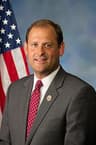 Andy Barr
Republican · Kentucky
 Donald Beyer
Democrat · Virginia
 Mike Carey
Republican · Ohio
 Debbie Dingell
Democrat · Michigan
 Warren Davidson
Republican · Ohio
 Sharice Davids
Democrat · Kansas
 Bill Foster
Democrat · Illinois
 Brian Fitzpatrick
Republican · Pennsylvania
 William Keating
Democrat · Massachusetts
 Greg Landsman
Democrat · Ohio
 Carol Miller
Republican · West Virginia
 Gregory Murphy
Republican · North Carolina
 Seth Magaziner
Democrat · Rhode Island
 Sarah McBride
Democrat · Delaware
 Eleanor Norton
Democrat · District of Columbia
 Joe Neguse
Democrat · Colorado
 Mike Rogers
Republican · Alabama
 Jamie Raskin
Democrat · Maryland
 Pete Stauber
Republican · Minnesota
 Hillary Scholten
Democrat · Michigan
 Derek Schmidt
Republican · Kansas
 David Taylor
Republican · Ohio
 Eugene Vindman
Democrat · Virginia
 Robert Wittman
Republican · Virginia