
A Democratic bill with 39 Democratic cosponsors · See all 39 cosponsors
Last activity — Referred to the House Committee on Ways and Means.
In committee
Introduced and handed to a committee in the chamber it started in.
The committee holds it, and most bills are never heard from again. A hearing or a committee vote would be news; silence is the usual outcome, and it kills the bill without anyone voting against it.
Its path through Congress
- Introduced
- In Committee
What this bill would do
The Expanding Child Care Access Act of 2025 aims to amend the Internal Revenue Code of 1986. It seeks to establish a new refundable credit known as the Licensed Family Child Care Credit. This credit is intended for qualified taxpayers who operate a qualified family child care provider. The credit covers qualified child care startup expenses up to a limit of $5,000. This provision applies to the current or preceding taxable year. The credit is set to expire seven years after the date of enactment.
Yes· 3 of 10
- Scored +7
Would business owners be better off under this?
The bill directly subsidizes critical startup expenses for those running a family child care business.
- Scored +7
Does this make it easier to run a small business?
The bill offers direct financial relief for the startup and operational costs of home-based child care providers.
- Scored +6
Does this cut taxes for small businesses?
The bill provides a refundable tax credit of up to $5,000 for startup expenses for those operating a family child care business.
The opposite
- Scored -2
Does this reduce what the federal government spends?
The bill creates a new refundable tax credit which increases federal tax expenditures.
- Scored -1
Does this put more money into scientific research?
The bill's focus on child care startup expenses does not involve scientific research.
Who it would affect, and how
Potential Positive Impacts for People
-
Financial assistance for childcare providers: Qualified taxpayers who operate a qualified family child care provider can receive a credit of up to $5,000 for startup expenses (Section 2(a)).
-
Coverage of essential business costs: The credit can be used for various startup needs such as licensing fees, supplies like diapers and food, liability insurance, fencing, playground equipment, furniture, employee salaries, computers, professional training, and required home renovations (Section 2(d)).
-
Support for home-based businesses: The credit is available to providers who primarily provide child care at their primary residence (Section 2(c)(2)).
Potential Negative Impacts for People
-
One-time use limitation: The credit cannot be claimed by a taxpayer if they have already received the credit in a previous taxable year (Section 2(e)).
-
Restriction on duplicate benefits: A taxpayer cannot claim this credit for any expense that is already covered by another deduction or credit (Section 2(f)).
-
Expiration of the benefit: The credit is subject to a sunset provision, meaning no credit will be allowed for any taxable year beginning after seven years from the date of enactment (Section 2(h)).
Groups and Interests Ranking
Every group the model scored this bill for, from -10 to +10. Tap or hover a score for the reason it gave.
- Demographic And Interest Groups
- Would business owners be better off under this? — The bill directly subsidizes critical startup expenses for those running a family child care business. Would households on low incomes be better off under this? — The credit helps individuals with lower incomes start small-scale home businesses. Would women be better off under this? — The bill supports home-based child care providers, a profession that is disproportionately composed of women. Would children be better off under this? — The bill supports the establishment of more child care providers, which can improve care access for children. Would middle-income households be better off under this? — The credit provides a tax benefit to qualified taxpayers who may be middle-income providers.
- Economy And Finance
- Does this make it easier to run a small business? — The bill offers direct financial relief for the startup and operational costs of home-based child care providers. Does this cut taxes for small businesses? — The bill provides a refundable tax credit of up to $5,000 for startup expenses for those operating a family child care business. Is this likely to create jobs? — By subsidizing startup costs like employee salaries, the bill may encourage the establishment of new child care providers. Does this reduce what the federal government spends? — The bill creates a new refundable tax credit which increases federal tax expenditures.
- Social Issues And Justice
- Does this make child care cost less? — The credit assists providers in establishing services, which can increase the overall supply and accessibility of child care. Is this likely to lift people out of poverty? — The credit provides a financial boost to low-income individuals looking to start a home-based child care business.
- Education And Technology
- Does this put more money into scientific research? — The bill's focus on child care startup expenses does not involve scientific research.
- 9/30/2025
- 1 Cosponsor added.
- 6/23/2025
- 1 Cosponsor added.
- 5/7/2025
- 1 Cosponsor added.
- 4/3/2025
- 1 Cosponsor added.
- 3/3/2025
- 1 Cosponsor added.
- 2/24/2025
- 1 Cosponsor added.
- 2/21/2025
- 3 Cosponsors added.
- 2/14/2025
- 1 Cosponsor added.
- 2/13/2025
- Referred to the House Committee on Ways and Means.
- 29 Cosponsors added.
- Introduced in House
One bill Congress.gov lists as related to this one — companions in the other chamber, earlier versions, and bills this one absorbed or was folded into.
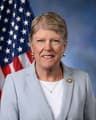 Julia Brownley
Democrat · California
 Nanette Barragán
Democrat · California
 Janelle Bynum
Democrat · Oregon
 André Carson
Democrat · Indiana
 Judy Chu
Democrat · California
 Salud Carbajal
Democrat · California
 Sean Casten
Democrat · Illinois
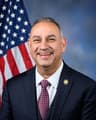 Gilbert Cisneros
Democrat · California
 Sheila Cherfilus-McCormick
Democrat · Florida
 Christopher Deluzio
Democrat · Pennsylvania
 Cleo Fields
Democrat · Louisiana
 Maxwell Frost
Democrat · Florida
 Valerie Foushee
Democrat · North Carolina
 Josh Gottheimer
Democrat · New Jersey
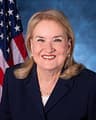 Sylvia Garcia
Democrat · Texas
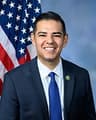 Robert Garcia
Democrat · California
 Marie Perez
Democrat · Washington
 Jahana Hayes
Democrat · Connecticut
 Henry Johnson
Democrat · Georgia
 Greg Landsman
Democrat · Ohio
 LaMonica McIver
Democrat · New Jersey
 John Mannion
Democrat · New York
 Kristen McDonald Rivet
Democrat · Michigan
 Eleanor Norton
Democrat · District of Columbia
 Alexandria Ocasio-Cortez
Democrat · New York
 Scott Peters
Democrat · California
 Ayanna Pressley
Democrat · Massachusetts
 Deborah Ross
Democrat · North Carolina
 Raul Ruiz
Democrat · California
 Delia Ramirez
Democrat · Illinois
 Linda Sánchez
Democrat · California
 Emilia Sykes
Democrat · Ohio
 Andrea Salinas
Democrat · Oregon
 Dina Titus
Democrat · Nevada
 Mark Takano
Democrat · California
 Rashida Tlaib
Democrat · Michigan
 Lori Trahan
Democrat · Massachusetts
 Jill Tokuda
Democrat · Hawaii
 Bonnie Watson Coleman
Democrat · New Jersey