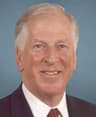
Mike Thompson (D-CA)
Disaster Resiliency and Coverage Act of 2025
A Democratic bill with 5 Republican cosponsors · See all 63 cosponsors
Last activity — Referred to the Subcommittee on Economic Development, Public Buildings, and Emergency Management.
In committee
Introduced and handed to a committee in the chamber it started in.
The committee holds it, and most bills are never heard from again. A hearing or a committee vote would be news; silence is the usual outcome, and it kills the bill without anyone voting against it.
Its path through Congress
- Introduced
- In Committee
What this bill would do
The Disaster Resiliency and Coverage Act of 2025 aims to amend the Robert T. Stafford Disaster Relief and Emergency Assistance Act. It requires the President to establish an individual household disaster mitigation program that provides grants to States and Indian tribal governments. These grants are intended for pre-disaster mitigation activities for residential households at risk of damage from major disasters. The bill also includes provisions regarding tax treatments for various disaster-related payments and assistance. Additionally, it establishes a tax credit for qualifying disaster mitigation expenditures.
Yes· 3 of 11
- Scored +7
Does this improve help for people hit by a disaster?
The bill amends the Stafford Act to establish a new disaster mitigation program.
- Scored +5
Would households on low incomes be better off under this?
The bill provides grants for household mitigation and excludes them from gross income.
- Scored +5
Would middle-income households be better off under this?
The bill offers a 30 percent tax credit for mitigation expenditures.
The opposite
No question was scored the opposite.
Who it would affect, and how
Potential Positive Impacts for People
-
Grants for Home Improvements: The bill establishes a program to provide grants to States and Indian tribal governments for qualifying pre-saster mitigation activities on individual residential households at risk of damage from a major disaster (Section 2, subsection a).
-
Tax-Free Disaster Grants: Amounts received under the individual household disaster mitigation program are not included in gross income (Section 2, subsection b; Section 139 of the Internal Revenue Code of 1986).
-
Tax-Free State Mitigation Payments: Payments received from State-based catastrophe loss mitigation programs for the sole purpose of hazard mitigation are excluded from gross income (Section 3, subsection a).
-
Tax-Free Agricultural Assistance: Certain types of emergency agricultural assistance are included in the definition of qualified disaster relief payments that are excluded from gross income (Section 4, subsection a).
-
Tax Credits for Mitigation: A tax credit is allowed for 30 percent of expenditures paid for qualifying mitigation activities regarding real property owned or leased by the taxpayer (Section 5, subsection a).
Potential Negative Impacts for People
-
Income Eligibility Limits: An individual is not eligible to receive a grant under the individual household disaster mitigation program if their adjusted gross income exceeds $250,000 (or $500,000 for joint tax returns) for the preceding taxable year (Section 2, subsection e, paragraph 2).
-
Grant Amount Caps: A State or Indian tribal government may not provide more than $10,000 to any individual household under the program (Section 2, subsection h).
Groups and Interests Ranking
Every group the model scored this bill for, from -10 to +10. Tap or hover a score for the reason it gave.
- Demographic And Interest Groups
- Would households on low incomes be better off under this? — The bill provides grants for household mitigation and excludes them from gross income. Would middle-income households be better off under this? — The bill offers a 30 percent tax credit for mitigation expenditures. Would farmers be better off under this? — The bill excludes certain emergency agricultural assistance from gross income. Would Native Americans be better off under this? — The bill provides grants to Indian tribal governments for mitigation programs.
- Environment Energy And Infrastructure
- Does this improve help for people hit by a disaster? — The bill amends the Stafford Act to establish a new disaster mitigation program. Does this better protect air, water and wildlife? — The bill funds proactive mitigation of natural hazards like floods and wildfires.
- Economy And Finance
- Does this cut taxes for middle-income families? — The bill provides a 30 percent tax credit for qualifying disaster mitigation expenditures. Does this give people more protection from unfair business practices? — The bill aims to incentivize insurance availability and affordability through mitigation.
- Governance And Ideology
- Does this give the federal government more power? — The bill requires the President to establish and manage a new mitigation program. Does this leave more decisions to the states? — Grants are provided to States and Indian tribal governments for implementation.
- Social Issues And Justice
- Does this make housing cost less? — The bill provides grants to improve residential household resiliency against disasters.
- 9/15/2026
- 1 Cosponsor added.
- 7/9/2026
- 1 Cosponsor added.
- 6/3/2026
- 1 Cosponsor added.
- 3/19/2026
- 1 Cosponsor added.
- 12/15/2025
- 1 Cosponsor added.
- 11/17/2025
- 1 Cosponsor added.
- 11/7/2025
- 2 Cosponsors added.
- 11/4/2025
- 1 Cosponsor added.
- 9/3/2025
- 1 Cosponsor added.
- 8/15/2025
- 2 Cosponsors added.
- 7/23/2025
- 1 Cosponsor added.
- 7/2/2025
- 1 Cosponsor added.
- 6/4/2025
- 1 Cosponsor added.
- 5/20/2025
- 1 Cosponsor added.
- 4/30/2025
- 1 Cosponsor added.
- 4/17/2025
- 1 Cosponsor added.
- 3/21/2025
- 2 Cosponsors added.
- 3/10/2025
- 1 Cosponsor added.
- 3/3/2025
- 1 Cosponsor added.
- 2/6/2025
- Referred to the Committee on Ways and Means, and in addition to the Committee on Transportation and Infrastructure, for a period to be subsequently determined by the Speaker, in each case for consideration of such provisions as fall within the jurisdiction of the committee concerned.
- Referred to the Subcommittee on Economic Development, Public Buildings, and Emergency Management.
- 41 Cosponsors added.
- Introduced in House
 Julia Brownley
Democrat · California
 Ami Bera
Democrat · California
 Nanette Barragán
Democrat · California
 Ed Case
Democrat · Hawaii
 Jim Costa
Democrat · California
 Kathy Castor
Democrat · Florida
 Judy Chu
Democrat · California
 J. Correa
Democrat · California
 Salud Carbajal
Democrat · California
 Angie Craig
Democrat · Minnesota
 Gilbert Cisneros
Democrat · California
 Troy Carter
Democrat · Louisiana
 Danny Davis
Democrat · Illinois
 Mark DeSaulnier
Democrat · California
 Dwight Evans
Democrat · Pennsylvania
 Cleo Fields
Democrat · Louisiana
 Lois Frankel
Democrat · Florida
 Maxwell Frost
Democrat · Florida
 Valerie Foushee
Democrat · North Carolina
 Laura Friedman
Democrat · California
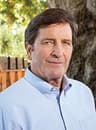 John Garamendi
Democrat · California
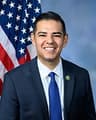 Robert Garcia
Democrat · California
 Daniel Goldman
Democrat · New York
 James Gallagher
Republican · California
 Jared Huffman
Democrat · California
 Josh Harder
Democrat · California
 Sara Jacobs
Democrat · California
 Ro Khanna
Democrat · California
 Young Kim
Republican · California
 Sydney Kamlager-Dove
Democrat · California
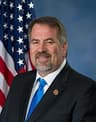 Doug LaMalfa
Republican · California
 Ted Lieu
Democrat · California
 Mike Levin
Democrat · California
 Doris Matsui
Democrat · California
 Jared Moskowitz
Democrat · Florida
 Kevin Mullin
Democrat · California
 LaMonica McIver
Democrat · New Jersey
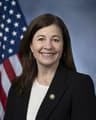 Kristen McDonald Rivet
Democrat · Michigan
 Dave Min
Democrat · California
 Eleanor Norton
Democrat · District of Columbia
 Joe Neguse
Democrat · Colorado
 Jay Obernolte
Republican · California
 Jimmy Panetta
Democrat · California
 Brittany Pettersen
Democrat · Colorado
 Raul Ruiz
Democrat · California
 Brad Sherman
Democrat · California
 Linda Sánchez
Democrat · California
 Terri Sewell
Democrat · Alabama
 Eric Swalwell
Democrat · California
 Kim Schrier
Democrat · Washington
 Eric Sorensen
Democrat · Illinois
 Andrea Salinas
Democrat · Oregon
 Mark Takano
Democrat · California
 Norma Torres
Democrat · California
 Rashida Tlaib
Democrat · Michigan
 Jill Tokuda
Democrat · Hawaii
 Shri Thanedar
Democrat · Michigan
 Derek Tran
Democrat · California
 Nydia Velázquez
Democrat · New York
 David Valadao
Republican · California
 Juan Vargas
Democrat · California
 Gabe Vasquez
Democrat · New Mexico
 George Whitesides
Democrat · California