
August Pfluger (R-TX)
Amateur Radio Emergency Preparedness Act
A Republican bill with 12 Democratic cosponsors · See all 33 cosponsors
Last activity — Referred to the House Committee on Energy and Commerce.
In committee
Introduced and handed to a committee in the chamber it started in.
The committee holds it, and most bills are never heard from again. A hearing or a committee vote would be news; silence is the usual outcome, and it kills the bill without anyone voting against it.
Its path through Congress
- Introduced
- In Committee
What this bill would do
This bill, known as the Amateur Radio Emergency Preparedness Act, stops private land use restrictions from blocking licensed amateur radio operators from putting up and using outdoor antennas on their property. It lets communities keep certain common-sense rules, like safety and building codes, but stops them from using unfair delays or bans against radio operators. The bill also sets up a 45-day approval deadline for community associations and gives radio operators the right to sue in federal court if rules are broken. Additionally, it lists specific types of antennas, like flagpole and wire antennas, that do not need prior approval to be installed. Finally, the Federal Communications Commission is ordered to put these rules into action within 180 days.
Yes
- Scored +5
Does this improve help for people hit by a disaster?
The bill bolsters emergency preparedness by ensuring amateur radio operators can maintain vital communications during disasters.
- Scored +5
Does this give the federal government more power?
The bill expands federal preemption over private land use restrictions regarding amateur radio antennas.
- Scored +5
Does this protect the right to fair treatment by the courts?
The bill provides a private right of action and shifts the burden of proof to those attempting to enforce restrictions.
The opposite
- Scored -5
Does this leave more decisions to the states?
The bill reduces the ability of local community associations and private land owners to enforce their own rules.
Who it would affect, and how
Potential Positive Impacts for People
-
Protects Amateur Operators from Unfair Bans: Section 3(a) adds Section 346(a) to the Communications Act of 1934, which prohibits private land use restrictions from stopping amateur operators from installing, operating, or maintaining station antennas on property they control. This benefits the more than 770,000 licensed amateur operators by ensuring they can actually use their equipment at home.
-
Speeds Up Community Approvals: Section 3(a) adds Section 346(c)(3), which states that if a community association fails to approve or deny an antenna installation application within 45 days, the application is automatically approved. This protects individuals from endless waiting periods imposed by local associations.
-
Allows Certain Antennas Without Prior Approval: Section 3(a) adds Section 346(d), which prevents community associations from requiring prior approval for specific types of antennas, such as antennas 1 meter or less in diameter, flagpole antennas up to 43 feet tall, minimally obtrusive wire antennas, and vertical antennas up to 43 feet tall. This makes it easier and faster for people to set up standard equipment without getting permission first.
-
Stops Penalties During Legal Disputes: Section 3(a) adds Section 346(f)(2), which stops any penalties or costs from piling up against an amateur operator while a court or the Federal Communications Commission is deciding whether a land use restriction complies with the law. This protects everyday people from unfair financial burdens while fighting over antenna rules.
Potential Negative Impacts for People
-
Limits Community Associations and Neighbors: Section 3(a) adds Section 346(a), which takes away the ability of private entities and community associations to enforce certain land use rules they may have agreed upon to govern their neighborhoods. This could be seen as a negative outcome for property owners who prefer strict neighborhood uniformity or aesthetics without large outdoor antennas nearby.
-
Requires Visual Screening for Equipment: Section 3(a) adds Section 346(b)(1)(E), which allows associations to require ground-mounted electrical enclosures, control enclosures, or guy wire anchors to be visually screened if they are visible from the street or located in an unfenced side or rear yard visible to a neighbor. This places a specific burden on the radio operator to spend extra time and money hiding these parts of their antenna setup.
Groups and Interests Ranking
Every group the model scored this bill for, from -10 to +10. Tap or hover a score for the reason it gave.
- Environment Energy And Infrastructure
- Does this improve help for people hit by a disaster? — The bill bolsters emergency preparedness by ensuring amateur radio operators can maintain vital communications during disasters.
- Governance And Ideology
- Does this protect the right to fair treatment by the courts? — The bill provides a private right of action and shifts the burden of proof to those attempting to enforce restrictions. Does this give the federal government more power? — The bill expands federal preemption over private land use restrictions regarding amateur radio antennas. Does this leave more decisions to the states? — The bill reduces the ability of local community associations and private land owners to enforce their own rules.
- 10/22/2026
- 1 Cosponsor added.
- 9/21/2026
- 1 Cosponsor added.
- 9/16/2026
- 1 Cosponsor added.
- 9/10/2026
- 1 Cosponsor added.
- 9/1/2026
- 1 Cosponsor added.
- 5/14/2026
- 1 Cosponsor added.
- 2/11/2026
- 1 Cosponsor added.
- 2/10/2026
- 1 Cosponsor added.
- 1/20/2026
- 1 Cosponsor added.
- 1/14/2026
- 1 Cosponsor added.
- 1/7/2026
- 1 Cosponsor added.
- 12/12/2025
- 1 Cosponsor added.
- 12/1/2025
- 2 Cosponsors added.
- 10/24/2025
- 1 Cosponsor added.
- 10/3/2025
- 1 Cosponsor added.
- 9/16/2025
- 1 Cosponsor added.
- 8/22/2025
- 1 Cosponsor added.
- 7/22/2025
- 1 Cosponsor added.
- 7/15/2025
- 3 Cosponsors added.
- 7/2/2025
- 1 Cosponsor added.
- 6/26/2025
- 2 Cosponsors added.
- 6/20/2025
- 1 Cosponsor added.
- 6/5/2025
- 1 Cosponsor added.
- 6/4/2025
- 1 Cosponsor added.
- 6/3/2025
- 1 Cosponsor added.
- 5/21/2025
- 1 Cosponsor added.
- 4/28/2025
- 1 Cosponsor added.
- 2/24/2025
- 1 Cosponsor added.
- 2/6/2025
- Referred to the House Committee on Energy and Commerce.
- 1 Cosponsor added.
- Introduced in House
4 bills Congress.gov lists as related to this one — companions in the other chamber, earlier versions, and bills this one absorbed or was folded into.
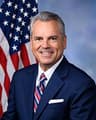 Mark Alford
Republican · Missouri
 Mike Bost
Republican · Illinois
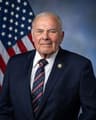 James Baird
Republican · Indiana
 Tom Barrett
Republican · Michigan
 Robert Bresnahan
Republican · Pennsylvania
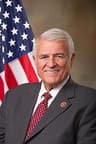 John Carter
Republican · Texas
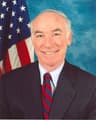 Joe Courtney
Democrat · Connecticut
 André Carson
Democrat · Indiana
 Michael Cloud
Republican · Texas
 Ben Cline
Republican · Virginia
 Rosa DeLauro
Democrat · Connecticut
 Mike Ezell
Republican · Mississippi
 Brad Finstad
Republican · Minnesota
 Jared Golden
Democrat · Maine
 Craig Goldman
Republican · Texas
 Andy Harris
Republican · Maryland
 Jahana Hayes
Democrat · Connecticut
 John Larson
Democrat · Connecticut
 James McGovern
Democrat · Massachusetts
 Max Miller
Republican · Ohio
 Nathaniel Moran
Republican · Texas
 John McGuire
Republican · Virginia
 Jimmy Panetta
Democrat · California
 Michael Rulli
Republican · Ohio
 Marilyn Strickland
Democrat · Washington
 Thomas Suozzi
Democrat · New York
 Keith Self
Republican · Texas
 Jefferson Van Drew
Republican · New Jersey
 Gabe Vasquez
Democrat · New Mexico
 Eugene Vindman
Democrat · Virginia
 Daniel Webster
Republican · Florida
 Randy Weber
Republican · Texas
 Roger Williams
Republican · Texas