
A Democratic bill with 46 Democratic cosponsors · See all 46 cosponsors
Last activity — Referred to the Committee on Energy and Commerce, and in addition to the Committee on Ways and Means, for a period to be subsequently determined by the Speaker, in each case for consideration of such provisions as fall within the jurisdiction of the committee concerned.
In committee
Introduced and handed to a committee in the chamber it started in.
The committee holds it, and most bills are never heard from again. A hearing or a committee vote would be news; silence is the usual outcome, and it kills the bill without anyone voting against it.
Its path through Congress
- Introduced
- In Committee
What this bill would do
-
This bill lowers the Medicare eligibility age from 65 to 50.
-
It establishes a new Medicare Cost Assistance Program to help low-income individuals pay for Medicare premiums, coinsurance, and deductibles.
-
It moves certain Medicare cost-sharing benefits out of State Medicaid programs and directly into Medicare.
-
It expands access to Medicare Part D prescription drug low-income subsidies for individuals with incomes at or below 200 percent of the poverty line.
-
It requires public awareness campaigns and coordinated transition plans between government agencies to help individuals enroll and receive benefits.
-
It includes a sunset provision that completely repeals the entire Act five and a half years after its enactment.
Yes· 3 of 24
- Scored +9
Does this make health care easier to get in general?
Lowering the Medicare eligibility age to 50 and creating the Medicare Cost Assistance Program greatly expands healthcare access for millions of Americans.
- Scored +8
Would people in middle age be better off under this?
Individuals aged 50 to 64 directly benefit from the lowered Medicare eligibility age and financial assistance programs.
- Scored +8
Would households on low incomes be better off under this?
The Medicare Cost Assistance Program and expanded Part D subsidies provide substantial financial relief for individuals with incomes at or below 200 percent of the poverty line.
The opposite
- Scored -4
Does this make the government pay for what it commits to?
The bill creates significant new federal spending obligations through Medicare expansion and subsidies without corresponding permanent revenue offsets.
- Scored -3
Does this put more money into Medicaid, the health coverage for people on low incomes?
The bill shifts Medicare cost-sharing benefits out of State Medicaid programs and into Medicare, altering the financial structure of care for dual-eligible individuals.
Who it would affect, and how
Potential Positive Impacts for People
-
Lowering Medicare Eligibility Age: Section 2 lowers the Medicare eligibility age to 50, allowing individuals aged 50 to 64 to qualify for Medicare hospital insurance and enroll in Part B benefits. This provides earlier access to federal health coverage for millions of Americans.
-
Medicare Cost Assistance Program: Section 3 creates the Medicare Cost Assistance Program, detailed in Section 1899C, which provides financial help for premiums, coinsurance, and deductibles for individuals with incomes at or below 200 percent of the poverty line. This eases the out-of-pocket financial burden on lower-income Americans.
-
Expanded Prescription Drug Subsidies: Section 5 amends Section 1860D-14 of the Social Security Act to expand access to Medicare Part D out-of-pocket cost assistance for seniors and individuals with disabilities whose incomes are at or below 200 percent of the poverty line. This helps lower the cost of necessary medications for vulnerable populations.
-
Simplified Application and Automatic Enrollment: Sections 2 and 3 require the government to establish automatic enrollment procedures for certain individuals turning 50 and create a simplified, nationally uniform application form for cost assistance that is translated into at least ten languages. This makes it easier for people to sign up for and receive the benefits they qualify for.
Potential Negative Impacts for People
-
Medicaid Cost-Sharing Changes: Section 4 ends most Medicare cost-sharing benefits under State Medicaid programs and transitions them to the new Medicare-administered program. This structural shift could cause confusion or administrative hurdles for individuals currently receiving assistance through their state Medicaid programs.
-
Complete Repeal After Five Years: Section 6 includes a sunset provision stating that the entire Act, along with all of its amendments and expansions, is fully repealed five years after the initial six-month effective date. This means that individuals who gain Medicare coverage or cost assistance under this law will lose those benefits when the law expires.
Groups and Interests Ranking
Every group the model scored this bill for, from -10 to +10. Tap or hover a score for the reason it gave.
- Demographic And Interest Groups
- Would households on low incomes be better off under this? — The Medicare Cost Assistance Program and expanded Part D subsidies provide substantial financial relief for individuals with incomes at or below 200 percent of the poverty line. Would people in middle age be better off under this? — Individuals aged 50 to 64 directly benefit from the lowered Medicare eligibility age and financial assistance programs. Would people with disabilities be better off under this? — Individuals with disabilities under age 65 benefit from expanded access to Medicare cost-sharing and prescription drug subsidies. Would retired people be better off under this? — Early retirees aged 50-64 gain access to Medicare before the traditional retirement age, reducing private insurance costs. Would people over 65 be better off under this? — Seniors benefit from expanded low-income prescription drug subsidies and simplified enrollment processes under Medicare Part D. Would middle-income households be better off under this? — Middle-income individuals aged 50-64 gain access to Medicare coverage and exchange premium tax credit structures. Would people in rural areas be better off under this? — Rural residents with lower incomes or without employer-sponsored health insurance benefit from expanded federal healthcare coverage and outreach grants. Would veterans be better off under this, taking everything together? — Veterans aged 50-64 gain access to earlier Medicare coverage options and enhanced subsidy programs. Would women be better off under this? — Women, who often have lower average retirement savings and longer life expectancies, benefit from earlier Medicare eligibility and cost assistance. Would Black Americans be better off under this? — Low-income and minority populations disproportionately benefit from expanded healthcare subsidies and translated outreach materials. Would Hispanic Americans be better off under this? — The requirement for application forms to be translated into multiple languages improves access for non-English speaking Hispanic communities. Would immigrants be better off under this? — Multilingual application forms and outreach provisions help eligible immigrants navigate and enroll in Medicare cost assistance. Would Native Americans be better off under this? — Low-income Native Americans gain enhanced access to healthcare coverage and prescription drug cost assistance.
- Healthcare
- Does this make health care easier to get in general? — Lowering the Medicare eligibility age to 50 and creating the Medicare Cost Assistance Program greatly expands healthcare access for millions of Americans. Does this put more money into Medicare, the health coverage for people over 65? — The bill significantly expands Medicare funding and responsibilities by lowering the eligibility age to 50 and establishing the Medicare Cost Assistance Program. Does this lower the price of prescription medicines? — Section 5 expands access to Medicare Part D low-income subsidies for individuals with incomes at or below 200 percent of the poverty line, lowering medication costs. Does this help veterans get medical care? — Military retirees and veterans aged 50-64 benefit from earlier eligibility for Medicare coverage and assistance programs. Does this strengthen the Affordable Care Act? — The legislation integrates Medicare coverage expansions for individuals aged 50 to 64 with qualified health plan frameworks under the Exchange. Does this put more money into Medicaid, the health coverage for people on low incomes? — The bill shifts Medicare cost-sharing benefits out of State Medicaid programs and into Medicare, altering the financial structure of care for dual-eligible individuals.
- Governance And Ideology
- Does this give the federal government more power? — The legislation shifts responsibilities for Medicare cost-sharing from state Medicaid programs to federal administration under Medicare. Does this make what the government does easier for the public to see? — The bill mandates public awareness campaigns, uniform applications translated into multiple languages, and coordinated transition plans.
- Social Issues And Justice
- Is this likely to lift people out of poverty? — By lowering out-of-pocket healthcare and prescription drug costs for low-income individuals, the bill alleviates financial burdens on vulnerable households. Does this narrow racial gaps in how people are treated? — Assistance programs targeted at low-income individuals and translated application forms help reduce systemic disparities in healthcare access for minority populations.
- National Security And Foreign Policy
- Does this increase the pay, pensions or support veterans receive? — Veterans and military retirees aged 50 to 64 gain earlier access to Medicare benefits and cost-sharing assistance.
- Economy And Finance
- Is this likely to grow the economy? — Expanding healthcare coverage to individuals aged 50-64 and increasing financial assistance can improve workforce productivity and economic stability. Does this make the government pay for what it commits to? — The bill creates significant new federal spending obligations through Medicare expansion and subsidies without corresponding permanent revenue offsets.
- 10/29/2026
- 2 Cosponsors added.
- 10/22/2026
- Referred to the Committee on Energy and Commerce, and in addition to the Committee on Ways and Means, for a period to be subsequently determined by the Speaker, in each case for consideration of such provisions as fall within the jurisdiction of the committee concerned.
- 44 Cosponsors added.
- Introduced in House
 Yassamin Ansari
Democrat · Arizona
 Suzanne Bonamici
Democrat · Oregon
 Janelle Bynum
Democrat · Oregon
 Everton Blair
Democrat · Georgia
 Yvette Clarke
Democrat · New York
 Steve Cohen
Democrat · Tennessee
 Judy Chu
Democrat · California
 J. Correa
Democrat · California
 Salud Carbajal
Democrat · California
 Jason Crow
Democrat · Colorado
 Greg Casar
Democrat · Texas
 Christopher Deluzio
Democrat · Pennsylvania
 Debbie Dingell
Democrat · Michigan
 Maxine Dexter
Democrat · Oregon
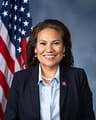 Veronica Escobar
Democrat · Texas
 Jesús García
Democrat · Illinois
 Adelita Grijalva
Democrat · Arizona
 Val Hoyle
Democrat · Oregon
 Henry Johnson
Democrat · Georgia
 Sara Jacobs
Democrat · California
 Ro Khanna
Democrat · California
 Ted Lieu
Democrat · California
 James McGovern
Democrat · Massachusetts
 Grace Meng
Democrat · New York
 Seth Moulton
Democrat · Massachusetts
 LaMonica McIver
Democrat · New Jersey
 Eleanor Norton
Democrat · District of Columbia
 Joe Neguse
Democrat · Colorado
 Alexandria Ocasio-Cortez
Democrat · New York
 Chellie Pingree
Democrat · Maine
 Mark Pocan
Democrat · Wisconsin
 Deborah Ross
Democrat · North Carolina
 Patrick Ryan
Democrat · New York
 Adam Smith
Democrat · Washington
 Janice Schakowsky
Democrat · Illinois
 Mike Thompson
Democrat · California
 Paul Tonko
Democrat · New York
 Rashida Tlaib
Democrat · Michigan
 Lori Trahan
Democrat · Massachusetts
 Shri Thanedar
Democrat · Michigan
 Nydia Velázquez
Democrat · New York
 Maxine Waters
Democrat · California
 Nikema Williams
Democrat · Georgia
 Debbie Wasserman Schultz
Democrat · Florida
 Frederica Wilson
Democrat · Florida
 Bonnie Watson Coleman
Democrat · New Jersey