
A Democratic bill with 3 Republican cosponsors · See all 5 cosponsors
Last activity — Referred to the House Committee on Natural Resources.
In committee
Introduced and handed to a committee in the chamber it started in.
The committee holds it, and most bills are never heard from again. A hearing or a committee vote would be news; silence is the usual outcome, and it kills the bill without anyone voting against it.
Its path through Congress
- Introduced
- In Committee
What this bill would do
This bill establishes the East Coast Bivalve Research Task Force to study and support clams, oysters, mussels, and scallops. The task force must review existing research, prioritize scientific needs, and address the decline in harvests for species like quahogs. It will be made up of representatives from government agencies, fishery councils, state wildlife agencies, Indian Tribes, the fishing industry, and academia. The group is required to submit an interim progress report within one year and a final report within two years. Additionally, specialized work groups will focus on quahogs and climate change impacts.
Yes· 3 of 8
- Scored +4
Does this better protect air, water and wildlife?
The bill establishes a task force to review bivalve science, water quality, and climate change solutions to restore shellfish populations.
- Scored +4
Does this put more money into scientific research?
The bill prioritizes scientific research needs and strategies for commercially harvested and aquacultured East Coast bivalves.
- Scored +3
Does this invest in rural communities?
The legislation supports coastal and rural communities dependent on commercial fishing and bivalve aquaculture.
The opposite
No question was scored the opposite.
Who it would affect, and how
Potential Positive Impacts for People
-
Section 4(c)(1) requires the task force to review science related to bivalve harvests, traditional ecological knowledge, water quality, and climate change solutions, which could help protect and restore shellfish populations for harvesters and communities.
-
Section 4(c)(1)(A)(xii) directs the task force to evaluate the economic value of bivalve aquaculture and look at financial and regulatory barriers for small-scale operations, potentially making it easier for small business owners and local farmers to succeed.
-
Section 4(d)(2) establishes specific work groups focused on quahog populations and climate change impacts, ensuring targeted problem-solving for economically vital species that support local jobs and seafood supply chains.
Potential Negative Impacts for People
- Section 4(d)(3) states that members of the task force and work groups shall serve without compensation, which could create a financial burden for certain individuals or smaller operations who must spend time away from their regular work to participate.
Groups and Interests Ranking
Every group the model scored this bill for, from -10 to +10. Tap or hover a score for the reason it gave.
- Environment Energy And Infrastructure
- Does this better protect air, water and wildlife? — The bill establishes a task force to review bivalve science, water quality, and climate change solutions to restore shellfish populations. Does this invest in rural communities? — The legislation supports coastal and rural communities dependent on commercial fishing and bivalve aquaculture.
- Demographic And Interest Groups
- Would business owners be better off under this? — The bill evaluates financial and regulatory barriers to help small-scale bivalve aquaculture operations and seafood businesses. Would farmers be better off under this? — The legislation directly supports bivalve aquaculture farmers and producers through targeted research and task force representation.
- Economy And Finance
- Does this make it easier to run a small business? — The task force will evaluate financial and regulatory barriers for small-scale bivalve aquaculture operations. Is this likely to grow the economy? — The bill supports the evaluation and growth of bivalve aquaculture and commercial fisheries.
- Education And Technology
- Does this put more money into scientific research? — The bill prioritizes scientific research needs and strategies for commercially harvested and aquacultured East Coast bivalves.
- Governance And Ideology
- Does this make what the government does easier for the public to see? — The task force is required to submit interim progress reports and a final public report detailing bivalve research findings.
- 11/13/2026
- 1 Cosponsor added.
- 11/2/2026
- 2 Cosponsors added.
- 10/29/2026
- 1 Cosponsor added.
- 10/22/2026
- Referred to the House Committee on Natural Resources.
- 1 Cosponsor added.
- Introduced in House
One bill Congress.gov lists as related to this one — companions in the other chamber, earlier versions, and bills this one absorbed or was folded into.
 Andrew Garbarino
Republican · New York
 William Keating
Democrat · Massachusetts
 Nancy Mace
Republican · South Carolina
 Thomas Suozzi
Democrat · New York
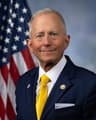 Jefferson Van Drew
Republican · New Jersey