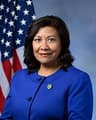
A Democratic bill with 30 Democratic cosponsors · See all 30 cosponsors
Last activity — Referred to the House Committee on Education and Workforce.
In committee
Introduced and handed to a committee in the chamber it started in.
The committee holds it, and most bills are never heard from again. A hearing or a committee vote would be news; silence is the usual outcome, and it kills the bill without anyone voting against it.
Its path through Congress
- Introduced
- In Committee
What this bill would do
The bill is known as the Improving Access to WIC Act. It sets up a grant program to help States improve access to, and participation and retention in, the special supplemental nutrition program for women, infants, and children. The Secretary of Agriculture will give grants to participating State agencies that submit an application. States can use these funds for outreach, data-sharing guidelines with healthcare providers, streamlining WIC-related documentation, improving the enrollment experience with online applications, and identifying eligible individuals. The bill authorizes appropriations of $50,000,000 for each of fiscal years 2027 through 2031.
Yes· 3 of 12
- Scored +6
Would children be better off under this?
The WIC program directly supports infants and children by improving access to supplemental nutrition.
- Scored +6
Would households on low incomes be better off under this?
The bill directly aids low-income households by streamlining enrollment and outreach for nutrition assistance.
- Scored +6
Would women be better off under this?
The WIC program specifically provides supplemental nutrition and support for low-income pregnant, postpartum, and breastfeeding women.
The opposite
No question was scored the opposite.
Who it would affect, and how
Potential Positive Impacts for People
-
Better Outreach and Referrals: Under Section 2(c)(1), states can use grant funds to conduct outreach to potential WIC participants by supporting direct referrals from healthcare providers, establishing statewide uniform referral processes, and improving notification systems at Head Start programs, preschools, and schools. This makes it easier for families to learn about and connect with the program.
-
Easier Enrollment and Data Sharing: Under Section 2(c)(2), Section 2(c)(3), and Section 2(c)(4), funds can be used to establish data-sharing guidelines so healthcare providers can securely refer individuals or share necessary clinical data with consent. It also streamlines sending measurements like height and weight to local agencies and helps establish online applications, improving the overall enrollment experience for people.
-
Connecting Eligible Individuals: Under Section 2(c)(5), states can use funds to identify and contact individuals who receive medical assistance or participate in the supplemental nutrition assistance program but are not currently participating in WIC, solely for the purpose of certifying eligible individuals. This helps bring eligible people into the program.
Potential Negative Impacts for People
- Based on the provided text, there are no explicitly stated negative consequences or burdens for individuals or groups of people in the United States.
Groups and Interests Ranking
Every group the model scored this bill for, from -10 to +10. Tap or hover a score for the reason it gave.
- Demographic And Interest Groups
- Would children be better off under this? — The WIC program directly supports infants and children by improving access to supplemental nutrition. Would households on low incomes be better off under this? — The bill directly aids low-income households by streamlining enrollment and outreach for nutrition assistance. Would women be better off under this? — The WIC program specifically provides supplemental nutrition and support for low-income pregnant, postpartum, and breastfeeding women. Would people in their twenties and thirties be better off under this? — Young adults who are pregnant or postpartum benefit from improved access to WIC services. Would middle-income households be better off under this? — Middle-income families who qualify for WIC may benefit from easier enrollment and data sharing. Would students be better off under this? — Improved notification systems at schools and preschools help connect student families with WIC resources.
- Healthcare
- Does this make health care easier to get in general? — The bill provides grants to improve healthcare provider referrals and data sharing for WIC participation. Does this put more money into Medicaid, the health coverage for people on low incomes? — The bill connects Medicaid participants who are not currently in WIC to nutrition assistance programs.
- Social Issues And Justice
- Is this likely to lift people out of poverty? — By improving access to and retention in the WIC nutrition program, the bill helps low-income families secure essential food assistance.
- Governance And Ideology
- Does this make what the government does easier for the public to see? — The bill requires public reports on program outcomes and best practices for WIC access.
- Education And Technology
- Does this put more money into public schools? — The bill improves notification and referral systems at schools and preschools to connect families with WIC.
- Environment Energy And Infrastructure
- Does this invest in rural communities? — Grant programs for WIC access benefit rural communities and state agencies serving them.
- 11/10/2026
- 5 Cosponsors added.
- 10/13/2026
- 3 Cosponsors added.
- 10/9/2026
- Referred to the House Committee on Education and Workforce.
- 22 Cosponsors added.
- Introduced in House
 Suzanne Bonamici
Democrat · Oregon
 Julia Brownley
Democrat · California
 Nanette Barragán
Democrat · California
 Jim Costa
Democrat · California
 Yvette Clarke
Democrat · New York
 Salud Carbajal
Democrat · California
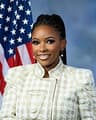 Jasmine Crockett
Democrat · Texas
 Christopher Deluzio
Democrat · Pennsylvania
 Mark DeSaulnier
Democrat · California
 Debbie Dingell
Democrat · Michigan
 Jesús García
Democrat · Illinois
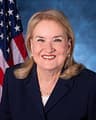 Sylvia Garcia
Democrat · Texas
 Adelita Grijalva
Democrat · Arizona
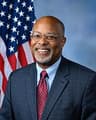 Glenn Ivey
Democrat · Maryland
 Pramila Jayapal
Democrat · Washington
 Robin Kelly
Democrat · Illinois
 Sydney Kamlager-Dove
Democrat · California
 Timothy Kennedy
Democrat · New York
 James McGovern
Democrat · Massachusetts
 Kelly Morrison
Democrat · Minnesota
 Eleanor Norton
Democrat · District of Columbia
 Chellie Pingree
Democrat · Maine
 Deborah Ross
Democrat · North Carolina
 Melanie Stansbury
Democrat · New Mexico
 Lateefah Simon
Democrat · California
 Mark Takano
Democrat · California
 Rashida Tlaib
Democrat · Michigan
 Juan Vargas
Democrat · California
 Eugene Vindman
Democrat · Virginia
 Maxine Waters
Democrat · California