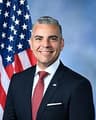
Juan Ciscomani (R-AZ)
Nicholas Douglas Quets United States-Mexico Rapid Response for Victims of Crime Act
A Republican bill with 1 Republican cosponsor · See the cosponsor
Last activity — Referred to the House Committee on Foreign Affairs.
In committee
Introduced and handed to a committee in the chamber it started in.
The committee holds it, and most bills are never heard from again. A hearing or a committee vote would be news; silence is the usual outcome, and it kills the bill without anyone voting against it.
Its path through Congress
- Introduced
- In Committee
What this bill would do
H.R. 10723, known as the Nicholas Douglas Quets United States-Mexico Rapid Response for Victims of Crime Act, requires the Secretary of State, working with the Attorney General, to engage with the Government of Mexico to establish a bilateral rapid response protocol for serious crimes committed against United States citizens in Mexico. The bill is named after Nicholas Quets, an American who was tragically killed by armed criminals associated with the Sinaloa Cartel in Sonora, Mexico. Current bilateral coordination can be delayed or incomplete, which may deny the administration of justice for victims and their families. To fix this, the proposed protocol is intended to facilitate timely coordination between United States and Mexican authorities in responding to and investigating these serious crimes. The Secretary of State is required to submit progress and implementation reports to appropriate congressional committees.
Yes
- Scored +4
Does this strengthen ties with allied countries?
The bill establishes a bilateral rapid response protocol with Mexico to improve coordination on serious crimes against U.S. citizens.
- Scored +3
Does this make what the government does easier for the public to see?
The bill requires the Secretary of State to submit periodic progress and implementation reports to appropriate congressional committees.
The opposite
No question was scored the opposite.
Who it would affect, and how
Potential Positive Impacts for People
-
Better communication for victims' families: Section 2(f)(8) provides for the designation of a point of contact within the United States Government responsible for communicating with the victim or the victim's family and providing timely updates regarding available assistance and investigative developments. This is positive because it ensures families are kept informed and supported.
-
Faster and more secure investigations: Section 2(f)(2), section 2(f)(3), and section 2(f)(5) include procedures for secure communication channels, timely securing of crime scenes, and sharing investigative leads, intelligence, and forensic information. This is positive because it helps overcome previous delays and gaps in coordination that hindered investigations.
-
Support for extradition: Section 2(f)(6) includes the designation of points of contact to facilitate requests for international extradition and timely coordination for extradition to the United States. This is positive because it helps bring suspects to justice.
-
Support for victims and families from consular officials: Section 2(f)(10) includes procedures for coordination between United States consular officials and Mexican authorities regarding support for victims and their families. This is positive because it offers direct assistance during difficult times.
Potential Negative Impacts for People
- The provided text does not explicitly identify any negative consequences or burdens for individuals or groups of people in the United States.
Groups and Interests Ranking
Every group the model scored this bill for, from -10 to +10. Tap or hover a score for the reason it gave.
- National Security And Foreign Policy
- Does this strengthen ties with allied countries? — The bill establishes a bilateral rapid response protocol with Mexico to improve coordination on serious crimes against U.S. citizens.
- Governance And Ideology
- Does this make what the government does easier for the public to see? — The bill requires the Secretary of State to submit periodic progress and implementation reports to appropriate congressional committees.
- 10/5/2026
- Referred to the House Committee on Foreign Affairs.
- 1 Cosponsor added.
- Introduced in House
 Elijah Crane
Republican · Arizona