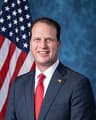
A Republican bill with 2 Republican cosponsors · See all 2 cosponsors
Last activity — Referred to the House Committee on Energy and Commerce.
In committee
Introduced and handed to a committee in the chamber it started in.
The committee holds it, and most bills are never heard from again. A hearing or a committee vote would be news; silence is the usual outcome, and it kills the bill without anyone voting against it.
Its path through Congress
- Introduced
- In Committee
What this bill would do
H.R. 10633 is titled the Medicaid Integrity and Fiscal Accountability Act. It amends title XIX of the Social Security Act to require every State to designate a single agent responsible for certain fiscal duties under the Medicaid program. Starting January 1, 2028, this designated individual must ensure proper processing and adjudication of claims, payment integrity, appropriate financial reporting, and the maintenance of controls for expenditures. The bill was introduced in the House of Representatives by Mr. Pfluger on September 28, 2026. Ultimately, it aims to hold officials accountable for how taxpayer money is handled within state Medicaid programs.
Yes· 3 of 9
- Scored +4
Does this make the government pay for what it commits to?
By requiring states to designate a single agent responsible for financial reporting and expenditure controls, the bill enhances fiscal responsibility.
- Scored +4
Does this make what the government does easier for the public to see?
The bill requires appropriate financial reporting and expenditure controls to ensure accountability in state Medicaid programs.
- Scored +3
Would households on low incomes be better off under this?
The bill ensures accurate and timely processing of Medicaid claims, benefiting low-income individuals who rely on the program.
The opposite
No question was scored the opposite.
Who it would affect, and how
Potential Positive Impacts for People
-
Section 2 (adding paragraph (91)(A)): This provision requires the designated agent to ensure the processing and adjudication of claims in an accurate and timely manner. This is positive because it helps people get their claims handled correctly and without unnecessary delays.
-
Section 2 (adding paragraph (91)(B)): This provision focuses on payment integrity by identifying and preventing fraud, waste, abuse, and improper payments, overseeing program integrity, and implementing corrective actions. This benefits the public by protecting taxpayer funds from being misused.
-
Section 2 (adding paragraph (91)(C)): This provision requires appropriate financial reporting to ensure the accuracy, completeness, and timeliness of State expenditures and financial information submitted to the Secretary. This is a positive step for keeping elected officials and state programs accountable to the people.
Potential Negative Impacts for People
- There are no explicit negative impacts or burdens for individuals or groups of people mentioned in the text of the bill.
Groups and Interests Ranking
Every group the model scored this bill for, from -10 to +10. Tap or hover a score for the reason it gave.
- Demographic And Interest Groups
- Would households on low incomes be better off under this? — The bill ensures accurate and timely processing of Medicaid claims, benefiting low-income individuals who rely on the program. Would children be better off under this? — Ensuring the integrity and proper claims processing of Medicaid helps children who rely on the program for healthcare. Would people over 65 be better off under this? — Better financial oversight and claims processing in Medicaid helps protect healthcare benefits for seniors.
- Economy And Finance
- Does this make the government pay for what it commits to? — By requiring states to designate a single agent responsible for financial reporting and expenditure controls, the bill enhances fiscal responsibility. Does this reduce what the federal government spends? — The bill aims to improve payment integrity and prevent improper payments in Medicaid, which can reduce wasteful government spending.
- Governance And Ideology
- Does this make what the government does easier for the public to see? — The bill requires appropriate financial reporting and expenditure controls to ensure accountability in state Medicaid programs. Does this give the federal government more power? — The legislation imposes federal requirements on states to designate a specific individual for Medicaid fiscal duties and financial reporting.
- Healthcare
- Does this make health care easier to get in general? — Accurate and timely processing of claims helps beneficiaries maintain reliable access to Medicaid services. Does this put more money into Medicaid, the health coverage for people on low incomes? — The bill improves the fiscal administration and integrity of the Medicaid program to ensure proper processing and reporting.
- 9/28/2026
- Referred to the House Committee on Energy and Commerce.
- 2 Cosponsors added.
- Introduced in House
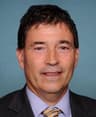 Troy Balderson
Republican · Ohio
 John Joyce
Republican · Pennsylvania