
Alexandria Ocasio-Cortez (D-NY)
Civilian Climate Corps for Jobs and Justice Act
A Democratic bill with 36 Democratic cosponsors · See all 36 cosponsors
Last activity — Referred to the Committee on Education and Workforce, and in addition to the Committee on Ways and Means, for a period to be subsequently determined by the Speaker, in each case for consideration of such provisions as fall within the jurisdiction of the committee concerned.
In committee
Introduced and handed to a committee in the chamber it started in.
The committee holds it, and most bills are never heard from again. A hearing or a committee vote would be news; silence is the usual outcome, and it kills the bill without anyone voting against it.
Its path through Congress
- Introduced
- In Committee
What this bill would do
This bill amends the National and Community Service Act of 1990 to establish a Civilian Climate Corps. It creates both a national climate service program and a national climate service grant program to help communities respond to climate change. The legislation sets up an advisory board and a multi-year roadmap to scale up the number of participant positions through 2031. It provides participants with living allowances, health care benefits, supportive services, and educational benefits. Finally, the bill authorizes supplemental appropriations and excludes certain educational awards and loan discharges from gross income.
Yes· 3 of 40
- Scored +8
Would people in their twenties and thirties be better off under this?
Provides hundreds of thousands of paid service opportunities, career training, and substantial higher education benefits for young people.
- Scored +8
Does this cut the pollution that drives climate change?
The Civilian Climate Corps explicitly focuses on weatherization, renewable energy deployment, and carbon reduction projects.
- Scored +8
Does this put more money into wind, solar and other renewable power?
Authorizes extensive investments and labor to support the nationwide transition to renewable energy.
The opposite
- Scored -6
Does this reduce what the federal government spends?
The bill authorizes significant new appropriations and supplemental funding totaling billions of dollars for program operations.
- Scored -4
Does this make the government pay for what it commits to?
Large-scale discretionary spending authorizations without offsetting revenue measures may increase the fiscal deficit.
Who it would affect, and how
Potential Positive Impacts for People
-
Economic Support and Living Allowances: Section 199S(b) ensures that members of the Civilian Climate Corps receive a living allowance of at least the equivalent of $20 per hour, which is positive because it guarantees fair compensation and helps participants sustain themselves and their families.
-
Health Care Coverage: Section 199S(d) entitles each member of the Civilian Climate Corps to health care benefits equal to the annual premium for a gold level health plan purchased on the American Health Benefit Exchange for the member and their dependents, which ensures participants have access to necessary medical coverage.
-
Educational Benefits and Student Loan Repayment: Section 199S(f) provides members with up to $25,000 per term of service to apply toward tuition at an institution of higher education or the repayment of qualified student loans, which helps individuals advance their education or reduce debt. Section 6 also excludes these educational benefits and loan discharges from gross income.
-
Focus on Underserved Communities: Section 199Q(i) and Section 199R(j) require that not less than 50 percent of the labor and investments support climate service projects based in under-resourced communities of need, with at least 10 percent of those funds supporting projects in Indian country, which directs resources to populations historically vulnerable to environmental impacts.
Potential Negative Impacts for People
- Potential for Labor Disputes and Strikes: Section 199V(d) and Section 199W(d) grant Civilian Climate Corps members the right to strike and engage in collective bargaining. While framed as a worker protection, strikes and labor disputes can cause disruptions in community service projects, disaster recovery efforts, and clean energy transitions relied upon by the public.
Groups and Interests Ranking
Every group the model scored this bill for, from -10 to +10. Tap or hover a score for the reason it gave.
- Demographic And Interest Groups
- Would people in their twenties and thirties be better off under this? — Provides hundreds of thousands of paid service opportunities, career training, and substantial higher education benefits for young people. Would households on low incomes be better off under this? — Directs at least half of program resources toward historically underserved and low-income communities of need. Would Native Americans be better off under this? — Explicitly mandates that at least 10 percent of under-resourced community funds be dedicated to projects in Indian country. Would students be better off under this? — Offers significant educational awards, career and technical education, and loan repayment assistance. Would union members be better off under this? — Promotes collective bargaining rights, labor neutrality, prevailing wage standards, and pre-apprenticeships tied to unions. Would Black Americans be better off under this? — Prioritizes investments in under-resourced communities of color suffering from environmental injustices. Would Hispanic Americans be better off under this? — Directs targeted climate resilience and clean energy projects toward historically disadvantaged communities. Would immigrants be better off under this? — Explicitly opens eligibility for the national climate service program regardless of immigration status. Would people in rural areas be better off under this? — Ensures specific rural representation and invests in rural conservation, forestry, and disaster mitigation. Would Asian Americans be better off under this? — Benefits minority communities through targeted environmental justice and remediation initiatives. Would farmers be better off under this? — Provides advisory support and assistance for farmers and ranchers transitioning to regenerative agriculture systems. Would men be better off under this? — Provides wide access to labor mobilization and career-building opportunities. Would middle-income households be better off under this? — Offers wide-scale employment opportunities, training pathways, and energy-saving building retrofits. Would people in cities be better off under this? — Funds urban forestry, public transit improvements, and green infrastructure in cities. Would veterans be better off under this, taking everything together? — Provides employment, training, health coverage, and educational benefits applicable to veterans seeking civilian career transitions. Would women be better off under this? — Mandates gender inclusion and representation among participants in the program. Would children be better off under this? — Projects improve community health, reduce pollution, and advance climate stability for future generations. Would people with disabilities be better off under this? — Involves vocational rehabilitation agencies in recruitment and offers accessible service opportunities. Would white Americans be better off under this? — General investments in community infrastructure and climate resilience broadly benefit all demographics.
- Environment Energy And Infrastructure
- Does this put more money into wind, solar and other renewable power? — Authorizes extensive investments and labor to support the nationwide transition to renewable energy. Does this cut the pollution that drives climate change? — The Civilian Climate Corps explicitly focuses on weatherization, renewable energy deployment, and carbon reduction projects. Does this better protect air, water and wildlife? — Projects include habitat restoration, conservation, invasive species removal, and pollution remediation. Does this better protect public land such as parks and forests? — Projects include renewing public lands, conducting prescribed burns, reforestation, and maintaining public trails. Does this improve help for people hit by a disaster? — Corps members are tasked with disaster preparedness, community resilience assessments, and post-disaster recovery efforts. Does this invest in rural communities? — The bill mandates rural representation and directs climate resilience and conservation projects to rural communities. Does this improve buses, trains and other public transport? — Service projects include installing and upgrading public transit and electric vehicle infrastructure.
- Economy And Finance
- Is this likely to create jobs? — The bill establishes a Civilian Climate Corps with targets scaling up to hundreds of thousands of new positions. Does this strengthen the rights of workers to organise? — The legislation provides participants with strong collective bargaining rights and requires neutrality in labor organizing. Is this likely to grow the economy? — Massive labor mobilization and infrastructure investments facilitate the transition to a clean energy economy. Does this raise the lowest wage an employer may pay? — Participants in the Civilian Climate Corps receive a living allowance equivalent to at least $20 per hour. Does this make it easier to run a small business? — Local small businesses and farms are prioritized in procurement and clean energy infrastructure upgrade grants. Does this reduce what the federal government spends? — The bill authorizes significant new appropriations and supplemental funding totaling billions of dollars for program operations. Does this make the government pay for what it commits to? — Large-scale discretionary spending authorizations without offsetting revenue measures may increase the fiscal deficit.
- Social Issues And Justice
- Is this likely to lift people out of poverty? — Provides paid employment, living wages, and educational benefits to unemployed individuals, low-income youth, and disadvantaged workers. Does this narrow racial gaps in how people are treated? — Mandates that at least 50 percent of Civilian Climate Corps labor and investments support under-resourced communities of need. Does this make housing cost less? — Service projects include building and retrofitting energy-efficient affordable housing units.
- Education And Technology
- Does this make college cost less? — Grants participants up to $25,000 in educational benefits per term of service for higher education expenses or loan repayment. Does this reduce what student borrowers owe or repay? — Educational benefits can be applied directly to qualified student loan repayment and discharge of debt is exempted from taxation.
- Healthcare
- Does this strengthen the Affordable Care Act? — Corps members are entitled to health care benefits equal to the annual premium for a gold level plan on the health exchange. Does this make health care easier to get in general? — Comprehensive health insurance provision directly increases healthcare access for hundreds of thousands of program participants.
- Governance And Ideology
- Does this make what the government does easier for the public to see? — Requires robust data collection, benchmarking, and reporting on the progress and success of the Civilian Climate Corps. Does this give the federal government more power? — Establishes a large new federal civilian corps program administered through the Corporation for National and Community Service.
- 9/24/2026
- Referred to the Committee on Education and Workforce, and in addition to the Committee on Ways and Means, for a period to be subsequently determined by the Speaker, in each case for consideration of such provisions as fall within the jurisdiction of the committee concerned.
- 36 Cosponsors added.
- Introduced in House
4 bills Congress.gov lists as related to this one — companions in the other chamber, earlier versions, and bills this one absorbed or was folded into.
 Suzanne Bonamici
Democrat · Oregon
 Nanette Barragán
Democrat · California
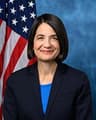 Becca Balint
Democrat · Vermont
 Emanuel Cleaver
Democrat · Missouri
 Steve Cohen
Democrat · Tennessee
 Salud Carbajal
Democrat · California
 Jasmine Crockett
Democrat · Texas
 Greg Casar
Democrat · Texas
 Lloyd Doggett
Democrat · Texas
 Debbie Dingell
Democrat · Michigan
 Maxine Dexter
Democrat · Oregon
 Maxwell Frost
Democrat · Florida
 Adelita Grijalva
Democrat · Arizona
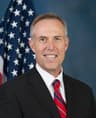 Jared Huffman
Democrat · California
 Pramila Jayapal
Democrat · Washington
 Ro Khanna
Democrat · California
 Raja Krishnamoorthi
Democrat · Illinois
 Summer Lee
Democrat · Pennsylvania
 James McGovern
Democrat · Massachusetts
 Kevin Mullin
Democrat · California
 Jerrold Nadler
Democrat · New York
 Eleanor Norton
Democrat · District of Columbia
 Ilhan Omar
Democrat · Minnesota
 Ayanna Pressley
Democrat · Massachusetts
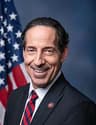 Jamie Raskin
Democrat · Maryland
 Janice Schakowsky
Democrat · Illinois
 Melanie Stansbury
Democrat · New Mexico
 Lateefah Simon
Democrat · California
 Paul Tonko
Democrat · New York
 Rashida Tlaib
Democrat · Michigan
 Ritchie Torres
Democrat · New York
 Jill Tokuda
Democrat · Hawaii
 Shri Thanedar
Democrat · Michigan
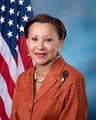 Nydia Velázquez
Democrat · New York
 Frederica Wilson
Democrat · Florida
 Bonnie Watson Coleman
Democrat · New Jersey