
A Democratic bill with 36 Democratic cosponsors · See all 36 cosponsors
Last activity — Referred to the House Committee on Education and Workforce.
In committee
Introduced and handed to a committee in the chamber it started in.
The committee holds it, and most bills are never heard from again. A hearing or a committee vote would be news; silence is the usual outcome, and it kills the bill without anyone voting against it.
Its path through Congress
- Introduced
- In Committee
What this bill would do
This bill is known as the Food for Thought Act of 2026. It allows the Secretary of Agriculture to award competitive grants to certain higher education institutions. These grants are meant to provide free meals and snacks to low-income college students. Participating schools will provide between 1 and 10 free meals per week to eligible students. The bill also requires schools to help students learn about other federal and state benefit programs like SNAP. Finally, it ensures that these free meals do not count as other financial assistance when calculating student aid.
Yes· 3 of 11
- Scored +9
Would households on low incomes be better off under this?
The bill specifically targets low-income students to provide essential nutrition.
- Scored +9
Would students be better off under this?
College students gain access to free, nutritious meals through this legislation.
- Scored +8
Would people in their twenties and thirties be better off under this?
College students are a primary demographic benefit from this meal program.
The opposite
No question was scored the opposite.
Who it would affect, and how
Potential Positive Impacts for People
-
Free Meals for Low-Income Students: Under Section 2, specifically adding subsection (a)(2)(A), the bill establishes a program to award grants to eligible institutions to provide free meals and snacks to low-income students. This directly helps hungry students get the food they need.
-
Connection to Other Benefits: Under Section 2, specifically adding subsection (a)(3)(B)(i), eligible entities must inform students of their potential eligibility for other benefit programs, including means-tested federal programs like SNAP. This helps people access additional government support they might qualify for.
-
Protection of Financial Aid: Under Section 3, the bill amends the Higher Education Act of 1965 so that benefits received under this meal program are not treated as other financial assistance. This ensures that getting free meals will not negatively reduce a student's other financial aid package.
Potential Negative Impacts for People
- Equipment Spending Caps: Under Section 2, specifically adding subsection (a)(5)(C), schools can use no more than 20 percent of their grant to purchase equipment. This restriction might limit a school's ability to fully build out the physical infrastructure needed to prepare meals if they need to spend more on equipment.
Groups and Interests Ranking
Every group the model scored this bill for, from -10 to +10. Tap or hover a score for the reason it gave.
- Demographic And Interest Groups
- Would households on low incomes be better off under this? — The bill specifically targets low-income students to provide essential nutrition. Would students be better off under this? — College students gain access to free, nutritious meals through this legislation. Would Native Americans be better off under this? — The bill provides priority to Tribal Colleges and Universities. Would people in their twenties and thirties be better off under this? — College students are a primary demographic benefit from this meal program. Would Black Americans be better off under this? — The bill provides priority to Historically Black Colleges and Universities. Would Hispanic Americans be better off under this? — The bill provides priority to Hispanic-serving institutions.
- Social Issues And Justice
- Is this likely to lift people out of poverty? — The bill provides direct food assistance to low-income students to combat food insecurity. Does this narrow racial gaps in how people are treated? — The bill prioritizes funding for minority-serving institutions, HBCUs, and Tribal colleges. Is this likely to reduce homelessness? — By addressing food insecurity, the bill provides a buffer for students at risk of homelessness.
- Education And Technology
- Does this make college cost less? — The bill provides free meals to reduce the overall cost of attendance for low-income college students.
- Governance And Ideology
- Does this give the federal government more power? — The bill expands federal grant programs to institutions of higher education.
- 10/15/2026
- 1 Cosponsor added.
- 10/1/2026
- 6 Cosponsors added.
- 9/21/2026
- 3 Cosponsors added.
- 9/16/2026
- Referred to the House Committee on Education and Workforce.
- 26 Cosponsors added.
- Introduced in House
One bill Congress.gov lists as related to this one — companions in the other chamber, earlier versions, and bills this one absorbed or was folded into.
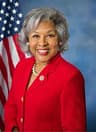 Joyce Beatty
Democrat · Ohio
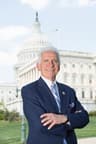 Jim Costa
Democrat · California
 Yvette Clarke
Democrat · New York
 Judy Chu
Democrat · California
 Salud Carbajal
Democrat · California
 Troy Carter
Democrat · Louisiana
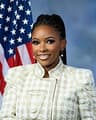 Jasmine Crockett
Democrat · Texas
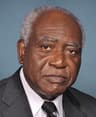 Danny Davis
Democrat · Illinois
 Mark DeSaulnier
Democrat · California
 Madeleine Dean
Democrat · Pennsylvania
 Dwight Evans
Democrat · Pennsylvania
 Veronica Escobar
Democrat · Texas
 Jesús García
Democrat · Illinois
 Sylvia Garcia
Democrat · Texas
 Adelita Grijalva
Democrat · Arizona
 Steven Horsford
Democrat · Nevada
 Jared Huffman
Democrat · California
 Jahana Hayes
Democrat · Connecticut
 Pramila Jayapal
Democrat · Washington
 Jonathan Jackson
Democrat · Illinois
 Raja Krishnamoorthi
Democrat · Illinois
 Stephen Lynch
Democrat · Massachusetts
 Gwen Moore
Democrat · Wisconsin
 Seth Moulton
Democrat · Massachusetts
 Christian Menefee
Democrat · Texas
 Eleanor Norton
Democrat · District of Columbia
 Jimmy Panetta
Democrat · California
 Deborah Ross
Democrat · North Carolina
 Adam Smith
Democrat · Washington
 Janice Schakowsky
Democrat · Illinois
 Melanie Stansbury
Democrat · New Mexico
 Lateefah Simon
Democrat · California
 Rashida Tlaib
Democrat · Michigan
 Jill Tokuda
Democrat · Hawaii
 Frederica Wilson
Democrat · Florida
 Bonnie Watson Coleman
Democrat · New Jersey