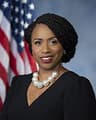
Ayanna Pressley (D-MA)
Survivors’ Rights Restitution Act of 2026
A Democratic bill with 46 Democratic cosponsors · See all 46 cosponsors
Last activity — Referred to the Committee on the Judiciary, and in addition to the Committee on Ways and Means, for a period to be subsequently determined by the Speaker, in each case for consideration of such provisions as fall within the jurisdiction of the committee concerned.
In committee
Introduced and handed to a committee in the chamber it started in.
The committee holds it, and most bills are never heard from again. A hearing or a committee vote would be news; silence is the usual outcome, and it kills the bill without anyone voting against it.
Its path through Congress
- Introduced
- In Committee
What this bill would do
The Survivors' Rights Restitution Act of 2026 sets up a program to give financial compensation to certain survivors of sexual violence. It creates a special office within the United States Court of Federal Claims to handle these claims through an informal process. The program is managed by the Attorney General and pays awards using a newly established federal fund. Petitioners must meet specific criteria regarding sexual abuse or federal rights violations related to Jeffrey Epstein, Ghislaine Maxwell, or other federal offenses. The bill also establishes minimum payout amounts, protections from taxes on the awards, and rules for attorneys' fees.
Yes· 3 of 11
- Scored +5
Would women be better off under this?
The legislation directly benefits survivors of sexual violence, sex trafficking, and abuse, who are disproportionately women.
- Scored +4
Would households on low incomes be better off under this?
Restitution payments are explicitly excluded from calculations determining eligibility for means-tested benefits.
- Scored +4
Does this narrow the gap between how men and women are treated?
The legislation provides targeted restitution and legal recourse for survivors of sexual violence, predominantly women.
The opposite
- Scored -2
Does this reduce what the federal government spends?
The bill creates a new federal restitution program, fund, and administrative office funded by the Treasury.
- Scored -1
Does this make the government pay for what it commits to?
The establishment of a permanent restitution fund with mandatory outlays increases government fiscal commitments.
Who it would affect, and how
Potential Positive Impacts for People
-
Financial Support for Survivors: Under Section 5(f), the bill establishes a minimum payment amount of $123,000 for eligible petitioners after considering economic and noneconomic losses, providing tangible financial help to survivors.
-
Tax-Free and Benefit-Protected Payments: Under Section 5(h), any payments made to claimants are excluded from gross income calculations and will not count against an individual's eligibility for means-tested benefits, ensuring recipients keep the full value of their compensation.
-
Trauma-Informed Expertise: Under Section 4(c)(2), the appointments for special adjudicators require that at least four individuals be licensed mental health professionals with clinical experience in trauma-informed care for sexual assault, abuse, or trafficking survivors.
-
Streamlined Legal Process: Under Section 4(d)(2), the rules for the court proceedings are designed to be less adversarial, expeditious, and informal, which can reduce the stress of the legal process for survivors.
Potential Negative Impacts for People
-
Single Petition Limit: Under Section 3(d), individuals or those acting on behalf of a deceased individual are restricted to submitting not more than one petition under this Act, which could limit options if new information or circumstances arise later.
-
Strict Information Restrictions: Under Section 4(d)(4)(A), information submitted to a special adjudicator or the court cannot be disclosed to anyone who is not a party to the proceeding without express written consent, which might create hurdles for public transparency or outside oversight.
Groups and Interests Ranking
Every group the model scored this bill for, from -10 to +10. Tap or hover a score for the reason it gave.
- Demographic And Interest Groups
- Would women be better off under this? — The legislation directly benefits survivors of sexual violence, sex trafficking, and abuse, who are disproportionately women. Would households on low incomes be better off under this? — Restitution payments are explicitly excluded from calculations determining eligibility for means-tested benefits. Would people with disabilities be better off under this? — Trauma-informed adjudication and support provisions assist survivors managing psychological injuries and trauma. Would people in their twenties and thirties be better off under this? — Young adult survivors of sexual abuse or trafficking are eligible for financial restitution under the program.
- Social Issues And Justice
- Does this narrow the gap between how men and women are treated? — The legislation provides targeted restitution and legal recourse for survivors of sexual violence, predominantly women. Does this shorten or soften prison sentences? — The bill establishes an administrative restitution process outside traditional adversarial courts for victims of sexual violence. Is this likely to lift people out of poverty? — Providing guaranteed minimum compensation of $123,000 exempt from means-tested benefit calculations helps lift survivors out of financial distress.
- Governance And Ideology
- Does this protect the right to fair treatment by the courts? — The bill establishes a specialized, trauma-informed adjudication process with rights to representation, evidence presentation, and judicial review. Does this give the federal government more power? — The bill establishes a new federal Office of Special Adjudicators and a dedicated Treasury fund administered by the Attorney General. Does this make what the government does easier for the public to see? — The chief special adjudicator is required to report annually to Congress on petitions, dispositions, and award types.
- Economy And Finance
- Does this reduce what the federal government spends? — The bill creates a new federal restitution program, fund, and administrative office funded by the Treasury. Does this make the government pay for what it commits to? — The establishment of a permanent restitution fund with mandatory outlays increases government fiscal commitments.
- Healthcare
- Does this make health care easier to get in general? — The program mandates the appointment of licensed mental health professionals specializing in trauma-informed care.
- 10/22/2026
- 1 Cosponsor added.
- 9/16/2026
- 1 Cosponsor added.
- 9/15/2026
- Referred to the Committee on the Judiciary, and in addition to the Committee on Ways and Means, for a period to be subsequently determined by the Speaker, in each case for consideration of such provisions as fall within the jurisdiction of the committee concerned.
- 44 Cosponsors added.
- Introduced in House
 Yassamin Ansari
Democrat · Arizona
 Joyce Beatty
Democrat · Ohio
 Brendan Boyle
Democrat · Pennsylvania
 Becca Balint
Democrat · Vermont
 Wesley Bell
Democrat · Missouri
 Jim Costa
Democrat · California
 Yvette Clarke
Democrat · New York
 André Carson
Democrat · Indiana
 J. Correa
Democrat · California
 Salud Carbajal
Democrat · California
 Debbie Dingell
Democrat · Michigan
 Madeleine Dean
Democrat · Pennsylvania
 Maxine Dexter
Democrat · Oregon
 Maxwell Frost
Democrat · Florida
 Jesús García
Democrat · Illinois
 Sylvia Garcia
Democrat · Texas
 Robert Garcia
Democrat · California
 Adelita Grijalva
Democrat · Arizona
 Henry Johnson
Democrat · Georgia
 Pramila Jayapal
Democrat · Washington
 Sydney Kamlager-Dove
Democrat · California
 Teresa Leger Fernandez
Democrat · New Mexico
 Stephen Lynch
Democrat · Massachusetts
 Summer Lee
Democrat · Pennsylvania
 Kweisi Mfume
Democrat · Maryland
 Gwen Moore
Democrat · Wisconsin
 Jennifer McClellan
Democrat · Virginia
 LaMonica McIver
Democrat · New Jersey
 Sarah McBride
Democrat · Delaware
 Christian Menefee
Democrat · Texas
 Eleanor Norton
Democrat · District of Columbia
 Chellie Pingree
Democrat · Maine
 Mike Quigley
Democrat · Illinois
 Deborah Ross
Democrat · North Carolina
 Delia Ramirez
Democrat · Illinois
 Emily Randall
Democrat · Washington
 Melanie Stansbury
Democrat · New Mexico
 Emilia Sykes
Democrat · Ohio
 Andrea Salinas
Democrat · Oregon
 Lateefah Simon
Democrat · California
 Paul Tonko
Democrat · New York
 Rashida Tlaib
Democrat · Michigan
 Shri Thanedar
Democrat · Michigan
 Debbie Wasserman Schultz
Democrat · Florida
 Frederica Wilson
Democrat · Florida
 James Walkinshaw
Democrat · Virginia