
A Democratic bill with 60 Democratic cosponsors · See all 60 cosponsors
Last activity — Referred to the House Committee on the Judiciary.
In committee
Introduced and handed to a committee in the chamber it started in.
The committee holds it, and most bills are never heard from again. A hearing or a committee vote would be news; silence is the usual outcome, and it kills the bill without anyone voting against it.
Its path through Congress
- Introduced
- In Committee
What this bill would do
This bill, titled the "Protect American Values Act," aims to prevent the use of Federal funds for a specific Department of Homeland Security rule. The target of this restriction is the rule entitled "Public Charge Ground of Inadmissibility" (91 Fed. Reg. 45324). It prohibits all Federal funds and fees from being used to implement, administer, enforce, or carry out this rule. Additionally, it covers any guidance or sub-regulatory policy that implements or clarifies the rule. The bill is intended to address concerns regarding how this rule impacts immigrants and their families.
Yes· 3 of 15
- Scored +7
Would immigrants be better off under this?
The bill directly protects immigrants and their families from restrictive public charge policies.
- Scored +5
Would children be better off under this?
The bill seeks to prevent the public charge rule from increasing poverty among children.
- Scored +5
Would households on low incomes be better off under this?
The bill protects access to essential food and medical care for low-income immigrant families.
The opposite
- Scored -2
Does this give the federal government more power?
The bill limits the authority of a federal agency to implement a specific rule.
Who it would affect, and how
Potential Positive Impacts for People
-
Protection of essential resources: The bill seeks to prevent the rule that could impede access to essential food, medical care, and housing for many families (Sec. 2, Clause 4).
-
Maintenance of community stability: By preventing the rule, the bill aims to avoid impacts such as increased poverty of certain families and children, including U.S. Citizen children (Sec. 2, Clause 5).
-
Protection of public health: The bill aims to mitigate potential negative health outcomes mentioned in the rule's preamble, such as increased prevalence of obesity and malnutrition, or a higher prevalence of communicable diseases (Sec. 2, Clause 5).
-
Economic and service stability: The bill aims to prevent damage to State and local economies and the burdening of health and service providers (Sec. 2, Clause 5).
Potential Negative Impacts for People
- No negative impacts are explicitly listed in the text provided.
Groups and Interests Ranking
Every group the model scored this bill for, from -10 to +10. Tap or hover a score for the reason it gave.
- Demographic And Interest Groups
- Would immigrants be better off under this? — The bill directly protects immigrants and their families from restrictive public charge policies. Would Asian Americans be better off under this? — The bill protects immigrant families from the negative impacts of the public charge rule. Would children be better off under this? — The bill seeks to prevent the public charge rule from increasing poverty among children. Would Hispanic Americans be better off under this? — The bill protects immigrant families from the negative impacts of the public charge rule. Would households on low incomes be better off under this? — The bill protects access to essential food and medical care for low-income immigrant families. Would business owners be better off under this? — The bill protects businesses from the economic disruptions described in the public charge rule.
- Social Issues And Justice
- Does this make housing cost less? — The bill protects access to essential housing for many families by blocking the public charge rule. Is this likely to lift people out of poverty? — The bill aims to prevent increased poverty among families and children caused by the public charge rule. Does this make it easier for immigrants already here to become citizens? — The bill helps stabilize the status of immigrants adjusting to lawful permanent resident status. Is this likely to reduce homelessness? — The bill helps ensure continued access to housing resources for vulnerable populations.
- Economy And Finance
- Does this reduce what the federal government spends? — The bill restricts the use of federal funds for a specific regulatory rule. Is this likely to grow the economy? — The bill aims to prevent economic damage to state and local economies caused by the public charge rule. Does this make it easier to run a small business? — The bill seeks to protect small businesses from the economic instability caused by the public charge rule.
- Healthcare
- Does this make health care easier to get in general? — By blocking the public charge rule, the bill protects access to essential medical care for immigrant families. Does this lower what a hospital stay costs? — The bill aims to reduce the burden on health providers by preventing the public charge rule.
- Governance And Ideology
- Does this give the federal government more power? — The bill limits the authority of a federal agency to implement a specific rule.
- 10/6/2026
- 2 Cosponsors added.
- 10/1/2026
- 1 Cosponsor added.
- 9/3/2026
- 1 Cosponsor added.
- 8/20/2026
- 1 Cosponsor added.
- 8/17/2026
- 1 Cosponsor added.
- 8/13/2026
- 1 Cosponsor added.
- 8/6/2026
- Referred to the House Committee on the Judiciary.
- 53 Cosponsors added.
- Introduced in House
One bill Congress.gov lists as related to this one — companions in the other chamber, earlier versions, and bills this one absorbed or was folded into.
 Yassamin Ansari
Democrat · Arizona
 Suzanne Bonamici
Democrat · Oregon
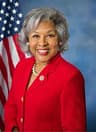 Joyce Beatty
Democrat · Ohio
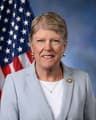 Julia Brownley
Democrat · California
 Nanette Barragán
Democrat · California
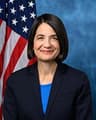 Becca Balint
Democrat · Vermont
 Yvette Clarke
Democrat · New York
 André Carson
Democrat · Indiana
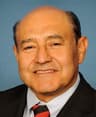 J. Correa
Democrat · California
 Salud Carbajal
Democrat · California
 Gilbert Cisneros
Democrat · California
 Danny Davis
Democrat · Illinois
 Diana DeGette
Democrat · Colorado
 Suzan DelBene
Democrat · Washington
 Mark DeSaulnier
Democrat · California
 Maxine Dexter
Democrat · Oregon
 Dwight Evans
Democrat · Pennsylvania
 Adriano Espaillat
Democrat · New York
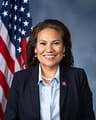 Veronica Escobar
Democrat · Texas
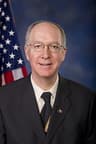 Bill Foster
Democrat · Illinois
 Jesús García
Democrat · Illinois
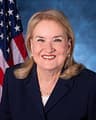 Sylvia Garcia
Democrat · Texas
 Adelita Grijalva
Democrat · Arizona
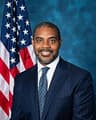 Steven Horsford
Democrat · Nevada
 Henry Johnson
Democrat · Georgia
 Pramila Jayapal
Democrat · Washington
 Raja Krishnamoorthi
Democrat · Illinois
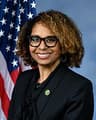 Sydney Kamlager-Dove
Democrat · California
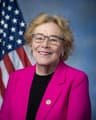 Zoe Lofgren
Democrat · California
 John Larson
Democrat · Connecticut
 Ted Lieu
Democrat · California
 James McGovern
Democrat · Massachusetts
 Betty McCollum
Democrat · Minnesota
 Gwen Moore
Democrat · Wisconsin
 Doris Matsui
Democrat · California
 Seth Moulton
Democrat · Massachusetts
 Jerrold Nadler
Democrat · New York
 Eleanor Norton
Democrat · District of Columbia
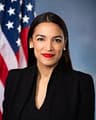 Alexandria Ocasio-Cortez
Democrat · New York
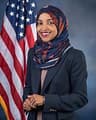 Ilhan Omar
Democrat · Minnesota
 Jimmy Panetta
Democrat · California
 Mike Quigley
Democrat · Illinois
 Delia Ramirez
Democrat · Illinois
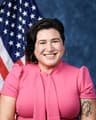 Emily Randall
Democrat · Washington
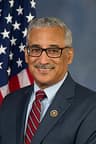 Robert Scott
Democrat · Virginia
 Adam Smith
Democrat · Washington
 Janice Schakowsky
Democrat · Illinois
 Linda Sánchez
Democrat · California
 Melanie Stansbury
Democrat · New Mexico
 Andrea Salinas
Democrat · Oregon
 Lateefah Simon
Democrat · California
 Mike Thompson
Democrat · California
 Paul Tonko
Democrat · New York
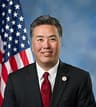 Mark Takano
Democrat · California
 Rashida Tlaib
Democrat · Michigan
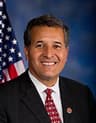 Juan Vargas
Democrat · California
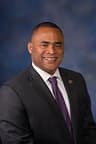 Marc Veasey
Democrat · Texas
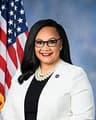 Nikema Williams
Democrat · Georgia
 Debbie Wasserman Schultz
Democrat · Florida
 Frederica Wilson
Democrat · Florida