
Richard Durbin (D-IL)
Crypto ATM Fraud Prevention Act of 2025
A Democratic bill with 1 Republican cosponsor · See all 6 cosponsors
Last activity — Read twice and referred to the Committee on Banking, Housing, and Urban Affairs. (Sponsor introductory remarks on measure: CR S1347-1348; text: CR S1348-1350)
In committee
Introduced and handed to a committee in the chamber it started in.
The committee holds it, and most bills are never heard from again. A hearing or a committee vote would be news; silence is the usual outcome, and it kills the bill without anyone voting against it.
Its path through Congress
- Introduced
- In Committee
What this bill would do
The Crypto ATM Fraud Prevention Act of 2025 aims to amend title 31 of the United States Code to prevent fraudulent transactions at virtual currency kiosks. It requires kiosk operators to register their locations and specific details with the Secretary of the Treasury. Operators must provide clear disclosures regarding transaction terms and warnings about common fraud schemes. The bill mandates that operators implement anti-fraud policies, employ a qualified compliance officer, and use blockchain analytics. It also establishes specific refund procedures for customers who are fraudulently induced into transactions. Finally, it sets transaction limits for new customers and establishes civil penalties for non-compliance.
Yes· 3 of 7
- Scored +7
Does this give people more protection from unfair business practices?
The bill mandates fraud warnings, blockchain analytics, and a refund process for victims of virtual currency kiosk scams.
- Scored +5
Would people over 65 be better off under this?
The bill provides targeted fraud warnings and refund mechanisms that help protect older populations frequently targeted by scams.
- Scored +4
Would households on low incomes be better off under this?
The bill protects individuals from losing their funds to fraudulent transactions at virtual currency kiosks.
The opposite
No question was scored the opposite.
Who it would affect, and how
Potential Positive Impacts for People
-
Enhanced Consumer Protection: Operators are required to provide clear warnings about common fraudulent schemes, such as impersonation of officials or threats of jail time, which helps protect people from scams (Section 3(b)(2)).
-
Refund Rights for Fraud Victims: The bill establishes a process where customers who are fraudulently induced to engage in a transaction can receive a refund, including the full amount of the virtual currency and fees for new customers (Section 3(j)(1)(A)).
-
Verification of Intent: For new customers making transactions of $500 or more, operators must obtain verbal confirmation via a live phone or video call to ensure the person is not being fraudulently induced (Section 3(i)).
-
Increased Transparency: Operators must provide customers with a physical receipt that includes specific transaction details, such as the transaction hash and the operator's contact information (Section 3(d) and 3(e)).
-
Fraud Prevention Technology: The bill requires operators to use blockchain analytics to detect transaction patterns indicative of fraud and prevent sending money to wallets known to be affiliated with fraudulent activity (Section 3(h)).
Potential Negative Impacts for People
-
Restrictions on Transaction Amounts: New customers will face limits on how much they can transact, specifically no more than $2,000 in a 24-hour period and a total of $10,000 (Section 3(k)).
-
Increased Burden for Operators: Companies operating these kiosks must fund and maintain a full-time compliance officer, a live customer service helpline available during all operating hours, and a dedicated contact method for law enforcement (Section 3(g), 3(l), and 3(m)).
-
Financial Risk of Non-Compliance: Operators face significant financial penalties, including civil penalties of $10,000 for each violation and potential liability of three times the refund amount or $10,000 for willfully denying a refund (Section 3(j)(3) and 3(n)).
Groups and Interests Ranking
Every group the model scored this bill for, from -10 to +10. Tap or hover a score for the reason it gave.
- Demographic And Interest Groups
- Would people over 65 be better off under this? — The bill provides targeted fraud warnings and refund mechanisms that help protect older populations frequently targeted by scams. Would households on low incomes be better off under this? — The bill protects individuals from losing their funds to fraudulent transactions at virtual currency kiosks. Would people in cities be better off under this? — The bill implements fraud prevention measures that affect the availability and safety of virtual currency kiosks often found in urban areas.
- Economy And Finance
- Does this give people more protection from unfair business practices? — The bill mandates fraud warnings, blockchain analytics, and a refund process for victims of virtual currency kiosk scams.
- Governance And Ideology
- Does this make what the government does easier for the public to see? — The bill requires kiosk operators to register their locations and specific details with the Secretary of the Treasury.
- Education And Technology
- Does this give people more control over their personal data? — The bill requires more transparent tracking of transaction information and operator identities.
- Social Issues And Justice
- Is this likely to lift people out of poverty? — The bill protects vulnerable individuals from losing significant sums of money to fraudulent schemes.
- 9/30/2026
- 1 Cosponsor added.
- 6/3/2026
- 1 Cosponsor added.
- 10/21/2025
- 1 Cosponsor added.
- 2/25/2025
- Read twice and referred to the Committee on Banking, Housing, and Urban Affairs. (Sponsor introductory remarks on measure: CR S1347-1348; text: CR S1348-1350)
- 3 Cosponsors added.
- Introduced in Senate
 Richard Blumenthal
Democrat · Connecticut
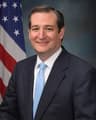 Ted Cruz
Republican · Texas
 Jeff Merkley
Democrat · Oregon
 John Reed
Democrat · Rhode Island
 Jeanne Shaheen
Democrat · New Hampshire
 Peter Welch
Democrat · Vermont