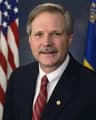
John Hoeven (R-ND)
Air Traffic Control Workforce Development Act of 2025
A Republican bill with 6 Democratic cosponsors · See all 11 cosponsors
Last activity — Read twice and referred to the Committee on Commerce, Science, and Transportation.
In committee
Introduced and handed to a committee in the chamber it started in.
The committee holds it, and most bills are never heard from again. A hearing or a committee vote would be news; silence is the usual outcome, and it kills the bill without anyone voting against it.
Its path through Congress
- Introduced
- In Committee
What this bill would do
The Air Traffic Control Workforce Development Act of 2025 aims to amend title 49 of the United States Code to improve air traffic control training. It focuses on enhancing the Collegiate Training Initiative and creating an Enhanced-Collegiate Training Initiative grant program for higher education institutions. The bill establishes an aviation rulemaking committee to review and modernize curricula and the Air Traffic Skills Assessment exam. Additionally, it authorizes funding for training equipment at air traffic control facilities. The act also introduces qualification and retention incentive programs for air traffic controllers. Finally, it addresses mental health training and requires a report on the Airport Non-Cooperative Surveillance Radar program.
Yes· 3 of 13
- Scored +7
Would students be better off under this?
The bill provides direct grant support for institutions to provide faculty, simulators, and classroom supplies to students.
- Scored +6
Would people in their twenties and thirties be better off under this?
The bill creates clear, funded career paths and noncompetitive appointment opportunities for students in higher education.
- Scored +5
Is this likely to create jobs?
The bill establishes grant programs and noncompetitive appointment pathways for air traffic controller positions.
The opposite
No question was scored the opposite.
Who it would affect, and how
Potential Positive Impacts for People
-
Higher Education Grants: The Administrator will establish a grant program for institutions of higher education to develop curriculum and provide faculty, simulators, and classroom supplies for the Enhanced-Collegiate Training Initiative program (Section 3(a)(3)).
-
Streamlined Career Paths: Graduates of approved training programs may be appointed noncompetitively to air traffic controller positions, with the possibility of converting to career status upon reaching full performance level (Section 3(a)(2)).
-
Faculty Support: An annuity supplement is added for air traffic control instructors or supervisors at institutions participating in the Enhanced-Collegiate Training Initiative program (Section 3(b)).
-
Facility Equipment: Authorization of funding is provided for the procurement and placement of training equipment at air traffic control facilities (Section 4(a)).
-
Financial Incentives: The Secretary of Transportation will establish qualification incentive programs for trainees and retention incentive programs for Certified Professional Controllers (Section 4(b)).
-
Mental Health Support: The Administrator is tasked with establishing a training course to help mental health providers better understand FAA criteria and decision-making regarding air traffic controllers (Section 5(a)(1)).
Potential Negative Impacts for People
-
Employment Terms: Individuals appointed under the Collegiate Training Initiative program serve at the pleasure of the Administrator (Section 3(a)(2)).
-
Committee Restrictions: Members of the aviation rulemaking committee are prohibited from receiving any pay, allowances, or benefits from the Federal Government for their service (Section 3(c)(5)).
Groups and Interests Ranking
Every group the model scored this bill for, from -10 to +10. Tap or hover a score for the reason it gave.
- Demographic And Interest Groups
- Would students be better off under this? — The bill provides direct grant support for institutions to provide faculty, simulators, and classroom supplies to students. Would people in their twenties and thirties be better off under this? — The bill creates clear, funded career paths and noncompetitive appointment opportunities for students in higher education. Would union members be better off under this? — The bill involves union representatives in the rulemaking process and provides retention incentives for professional controllers. Would households on low incomes be better off under this? — The expansion of training grants may provide more accessible pathways into specialized technical careers.
- Economy And Finance
- Is this likely to create jobs? — The bill establishes grant programs and noncompetitive appointment pathways for air traffic controller positions. Is this likely to grow the economy? — Investing in aviation workforce training and infrastructure supports the efficiency of the aviation industry. Does this strengthen the rights of workers to organise? — The bill includes the exclusive bargaining representative of air traffic controllers as a member of the aviation rulemaking committee.
- Education And Technology
- Does this make college cost less? — The bill provides substantial grants to higher education institutions to support specialized training programs. Does this put more money into scientific research? — The bill authorizes funding for training equipment and curriculum development using educational technology.
- Healthcare
- Does this make mental health care easier to get? — The bill mandates a training course to help mental health providers understand FAA criteria for air traffic controllers.
- Governance And Ideology
- Does this make what the government does easier for the public to see? — The bill requires the Administrator to submit reports to Congress regarding rulemaking and radar programs.
- Environment Energy And Infrastructure
- Does this repair or build roads and bridges? — While focused on aviation, the bill addresses the modernization of technical infrastructure for air traffic control.
- National Security And Foreign Policy
- Does this better protect the country from computer attacks? — The bill discusses updating radar technology to mitigate threats from non-cooperative flying objects.
- 10/28/2025
- 2 Cosponsors added.
- 9/2/2025
- 2 Cosponsors added.
- 6/9/2025
- 2 Cosponsors added.
- 5/5/2025
- 2 Cosponsors added.
- 2/25/2025
- 1 Cosponsor added.
- 2/24/2025
- Read twice and referred to the Committee on Commerce, Science, and Transportation.
- 2 Cosponsors added.
- Introduced in Senate
One bill Congress.gov lists as related to this one — companions in the other chamber, earlier versions, and bills this one absorbed or was folded into.
 Mike Crapo
Republican · Idaho
 Steve Daines
Republican · Montana
 Tammy Duckworth
Democrat · Illinois
 Martin Heinrich
Democrat · New Mexico
 Maggie Hassan
Democrat · New Hampshire
 Cindy Hyde-Smith
Republican · Mississippi
 Andy Kim
Democrat · New Jersey
 Jerry Moran
Republican · Kansas
 James Risch
Republican · Idaho
 Jeanne Shaheen
Democrat · New Hampshire
 Raphael Warnock
Democrat · Georgia