
A Democratic bill with 2 Republican cosponsors · See all 3 cosponsors
Last activity — Placed on Senate Legislative Calendar under General Orders. Calendar No. 251.
Cleared committee, waiting for its first floor vote
A committee approved it and it is on the calendar of the chamber it started in.
This is further than most bills get, and still no promise of a vote: the calendar is a queue, and the majority leadership decides what is called. A bill can sit here until the Congress ends.
Its path through Congress
- Introduced
- On Calendar
What this bill would do
This bill, known as the ``Shadow Wolves Improvement Act'', aims to increase the effectiveness of the Shadow Wolves Program. It directs the Director of U.S. Immigration and Customs Enforcement to establish the program's mission and goals in coordination with partnering Tribal governments. The legislation requires the development of staffing assessments, recruitment strategies, and a succession plan for future retirements. It also mandates that the Director provide specific information to GS-1801 Tactical Officers regarding reclassification as special agents. Additionally, the bill provides for the noncompetitive conversion of experienced Shadow Wolves into the competitive service.
Yes· 3 of 10
- Scored +5
Would Native Americans be better off under this?
The bill mandates coordination with Tribal governments, including the Tohono O'odham Nation, to define program goals.
- Scored +5
Does this make the government pay for what it commits to?
The bill explicitly states that no additional funds are authorized to be appropriated for its implementation.
- Scored +3
Would union members be better off under this?
The bill facilitates the noncompetitive conversion of certain employees into the competitive service.
The opposite
No question was scored the opposite.
Who it would affect, and how
Potential Positive Impacts for People
-
Tribal Collaboration: The Director must coordinate with representatives of partnering Tribal governments, including the Tohono O'odham Nation, to specify program mission and goals (Section 2(a)).
-
Informed Career Decisions: Current GS-1801 Tactical Officers will receive written, individualized information regarding how reclassifying as special agents would affect their pay, overtime, and retirement (Section 2(d)).
-
Career Advancement: Experienced Shadow Wolves can be noncompetitively converted from the excepted service to career or career conditional appointments in the competitive service after three years of successful service (Section s 4).
-
Program Expansion: The bill establishes criteria for selecting additional tribal lands for Shadow Wolves units, which includes considering proximity to existing Federal law enforcement training facilities (Section 2(f)).
Potential Negative Impacts for People
- No New Funding: The bill explicitly states that no additional funds are authorized to be appropriated to carry out the Act (Section 5).
Groups and Interests Ranking
Every group the model scored this bill for, from -10 to +10. Tap or hover a score for the reason it gave.
- Demographic And Interest Groups
- Would Native Americans be better off under this? — The bill mandates coordination with Tribal governments, including the Tohono O'odham Nation, to define program goals. Would union members be better off under this? — The bill facilitates the noncompetitive conversion of certain employees into the competitive service. Would business owners be better off under this? — The bill provides a pathway for competitive service appointments for experienced personnel. Would people in rural areas be better off under this? — The bill allows for the selection of additional tribal lands for Shadow Wolves units. Would people over 65 be better off under this? — The bill includes a succession plan to manage anticipated retirements.
- Economy And Finance
- Does this make the government pay for what it commits to? — The bill explicitly states that no additional funds are authorized to be appropriated for its implementation. Is this likely to create jobs? — The bill directs the development of recruitment and retention strategies for special agents.
- Governance And Ideology
- Does this make what the government does easier for the public to see? — The bill requires the Director to provide written, individualized information to tactical officers regarding pay and retirement changes.
- Social Issues And Justice
- Does this strengthen Social Security? — The bill provides information to officers regarding how reclassification affects their retirement compensation.
- National Security And Foreign Policy
- Does this increase the pay, pensions or support veterans receive? — The bill includes a succession plan to address future retirements within the program.
- 11/3/2025
- Committee on Homeland Security and Governmental Affairs. Reported by Senator Paul with an amendment in the nature of a substitute. Without written report.
- Placed on Senate Legislative Calendar under General Orders. Calendar No. 251.
- 7/30/2025
- Committee on Homeland Security and Governmental Affairs. Ordered to be reported with an amendment in the nature of a substitute favorably.
- 2/13/2025
- Read twice and referred to the Committee on Homeland Security and Governmental Affairs.
- 3 Cosponsors added.
- Introduced in Senate
One bill Congress.gov lists as related to this one — companions in the other chamber, earlier versions, and bills this one absorbed or was folded into.
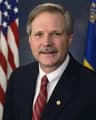 John Hoeven
Republican · North Dakota
 Mark Kelly
Democrat · Arizona
 James Lankford
Republican · Oklahoma