
A Democratic bill with 4 Democratic cosponsors · See all 4 cosponsors
Last activity — Read twice and referred to the Committee on Banking, Housing, and Urban Affairs. (Sponsor introductory remarks on measure: CR S4520-4521)
In committee
Introduced and handed to a committee in the chamber it started in.
The committee holds it, and most bills are never heard from again. A hearing or a committee vote would be news; silence is the usual outcome, and it kills the bill without anyone voting against it.
Its path through Congress
- Introduced
- In Committee
What this bill would do
The Insider Trading Prohibition Act seeks to amend the Securities Exchange Act of 1934. It introduces a new section to prohibit trading securities or security-based swaps while in possession of material, nonpublic information. The bill also bans the wrongful communication of such information to others. It defines wrongful actions to include theft, bribery, or breaches of fiduciary duty. Additionally, the act establishes specific standards for knowledge and provides for certain affirmative defenses.
Yes· 3 of 7
- Scored +6
Does this give people more protection from unfair business practices?
The bill protects all investors from unfair advantages gained through material, nonpublic information.
- Scored +5
Is this likely to grow the economy?
By ensuring market integrity and fairness, the bill helps maintain investor confidence which supports long-term economic growth.
- Scored +4
Does this give people more control over their personal data?
The bill includes protections against the misuse of computer data and privacy-related information in the context of trading.
The opposite· 3 of 6
- Scored -3
Would high-income households be better off under this?
The bill may restrict trading strategies or information access available to highly successful professionals.
- Scored -3
Would people with substantial wealth be better off under this?
Increased regulations on material nonpublic information may restrict personal wealth management tactics.
- Scored -3
Would the very wealthiest people be better off under this?
Heightened scrutiny and broader standards of liability could affect high-level financial transactions.
Who it would affect, and how
Potential Positive Impacts for People
-
Prohibition on Trading with Nonpublic Information: Under Section 2(a), it would be unlawful for persons to trade securities or swaps if they have access to material, nonpublic information that was obtained wrongfully. This aims to stop unfair advantages in the market.
-
Prohibition on Wrongful Communication: Per Section 2(b), the bill prevents people from wrongfully communicating material, nonpublic information to others for the purpose of trading. This targets those who pass on sensitive information to influence others' trades.
-
Addressing Breaches of Fiduciary Duty: Section 2(c)(1)(D) defines wrongful trading to include a breach of fiduciary duty to shareholders for personal benefit, such as a gift of confidential information to a relative or friend. This protects shareholders from those who misuse their position for private gain.
Potential Negative Impacts for People
-
Broad Standard for Knowledge: Under Section 2(a) and Section 2(c)(2), the law applies if a person "recklessly disregards" that information is material, nonpublic, or obtained wrongfully. This means a person could be held liable even if they did not have specific knowledge of how the information was obtained.
-
Broad Scope of Communication: Section 2(b) creates a prohibition on communicating information that would result in a purchase or sale. This could impact those communicating information if they are aware, or recklessly disregard, that such a communication would lead to a trade.
Groups and Interests Ranking
Every group the model scored this bill for, from -10 to +10. Tap or hover a score for the reason it gave.
- Economy And Finance
- Does this give people more protection from unfair business practices? — The bill protects all investors from unfair advantages gained through material, nonpublic information. Is this likely to grow the economy? — By ensuring market integrity and fairness, the bill helps maintain investor confidence which supports long-term economic growth.
- Demographic And Interest Groups
- Would middle-income households be better off under this? — A more level playing field in the stock market can protect the investments of the general public. Would retired people be better off under this? — Protects retirement funds and market stability for those relying on long-term investment growth. Would billionaires be better off under this? — The bill targets the types of information advantages often utilized by the wealthiest market participants. Would high-income households be better off under this? — The bill may restrict trading strategies or information access available to highly successful professionals. Would people with substantial wealth be better off under this? — Increased regulations on material nonpublic information may restrict personal wealth management tactics. Would the very wealthiest people be better off under this? — Heightened scrutiny and broader standards of liability could affect high-level financial transactions.
- Education And Technology
- Does this give people more control over their personal data? — The bill includes protections against the misuse of computer data and privacy-related information in the context of trading.
- Governance And Ideology
- Does this give the federal government more power? — The bill expands federal oversight of securities trading through the Securities Exchange Act. Does this make what the government does easier for the public to see? — Providing clearer standards for insider trading can increase the perceived transparency of financial markets. Does this protect the individual right to speak freely? — The broad scope of communication prohibitions could potentially chill the sharing of market-related information. Does this protect the right to fair treatment by the courts? — The 'reckless disregard' standard could be seen as a potential threat to strict due process requirements for intent.
- 8/6/2026
- Read twice and referred to the Committee on Banking, Housing, and Urban Affairs. (Sponsor introductory remarks on measure: CR S4520-4521)
- 4 Cosponsors added.
- Introduced in Senate
One bill Congress.gov lists as related to this one — companions in the other chamber, earlier versions, and bills this one absorbed or was folded into.
 Angela Alsobrooks
Democrat · Maryland
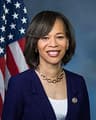 Lisa Blunt Rochester
Democrat · Delaware
 Andy Kim
Democrat · New Jersey
 Chris Van Hollen
Democrat · Maryland