
A Democratic bill with 6 Democratic cosponsors · See all 7 cosponsors
Last activity — Read twice and referred to the Committee on Finance.
In committee
Introduced and handed to a committee in the chamber it started in.
The committee holds it, and most bills are never heard from again. A hearing or a committee vote would be news; silence is the usual outcome, and it kills the bill without anyone voting against it.
Its path through Congress
- Introduced
- In Committee
What this bill would do
The "Mamas First Act" is a bill that would change the Social Security Act to make Medicaid cover services from doulas, midwives, tribal midwives, and lactation support providers. It covers care during pregnancy, labor, and the postpartum period, including services provided via telehealth or in various settings like homes and hospitals. The bill requires states to provide this coverage and prohibits cost-sharing for these specific services. It also defines the qualifications for these providers to be eligible for Medicaid reimbursement.
Yes· 3 of 25
- Scored +10
Would households on low incomes be better off under this?
Provides free (no cost-sharing) access to essential maternal support services via Medicaid.
- Scored +10
Would Native Americans be better off under this?
Specifically includes tribal midwives and targets Indigenous maternal health disparities.
- Scored +10
Would women be better off under this?
Directly improves health outcomes, support, and financial accessibility of maternal care.
The opposite· 3 of 4
- Scored -4
Does this leave more decisions to the states?
Reduces state discretion by requiring mandatory coverage of these specific services.
- Scored -2
Does this reduce what the federal government owes?
Expanding Medicaid coverage for new services likely increases federal government spending.
- Scored -2
Does this reduce what the federal government spends?
The bill mandates additional coverage under the Medicaid program, increasing expenditures.
Who it would affect, and how
Potential Positive Impacts for People
-
Expanded Access to Care: Medicaid would cover prenatal, labor, and postpartum care provided by doulas, midwives, tribal midwives, and lactation support providers (Section 3(a)(1)).
-
Removal of Financial Barriers: The bill prohibits cost-sharing for services and care provided by these specific professionals (Section 3(c)).
-
Flexible Care Locations: Services can be provided in the home, community, hospital, birth center, clinic, health unit, or via telehealth (Section 3(a)(1)).
-
Support for Diverse Needs: The bill specifically includes "tribal midwives" and requires care to be provided in a "culturally congruent manner" (Section 3(a)(1)).
Potential Negative Impacts for People
-
Strict Certification Requirements: Doulas must be certified by an organization requiring continuing education and must provide specific recommendations from former clients or health care providers to qualify (Section 3(a)(2)(ll)(1)).
-
Delayed Implementation: The benefits may not be available until January 1, 2027, and could be delayed even further if a state needs to pass its own legislation first (Section 3(d)).
Groups and Interests Ranking
Every group the model scored this bill for, from -10 to +10. Tap or hover a score for the reason it gave.
- Demographic And Interest Groups
- Would households on low incomes be better off under this? — Provides free (no cost-sharing) access to essential maternal support services via Medicaid. Would Native Americans be better off under this? — Specifically includes tribal midwives and targets Indigenous maternal health disparities. Would women be better off under this? — Directly improves health outcomes, support, and financial accessibility of maternal care. Would Black Americans be better off under this? — Addresses the severe maternal mortality gap that disproportionately affects Black women. Would Hispanic Americans be better off under this? — Improves access to culturally congruent maternal care for Hispanic populations. Would people in rural areas be better off under this? — Expands care through telehealth and home-based services, critical for rural access. Would children be better off under this? — Increases the likelihood of healthier birth outcomes and breastfeeding initiation. Would Asian Americans be better off under this? — Increases access to maternal support services for low-income Asian Americans. Would immigrants be better off under this? — May benefit eligible immigrants who qualify for Medicaid coverage. Would LGBTQ people be better off under this? — Expands support for birthing people regardless of gender identity through inclusive care models. Would people in cities be better off under this? — Increases access to community-based maternal support in urban areas. Would white Americans be better off under this? — Increases access to these services for low-income White women. Would people in their twenties and thirties be better off under this? — Provides expanded health coverage for young women and birthing people. Would business owners be better off under this? — Creates new reimbursement opportunities for practitioners of midwifery and doula services.
- Healthcare
- Does this make health care easier to get in general? — Significantly expands access to prenatal, labor, and postpartum care for Medicaid recipients. Does this put more money into Medicaid, the health coverage for people on low incomes? — Directly expands the scope of mandatory Medicaid benefits to include maternal support services. Does this make mental health care easier to get? — Doulas provide emotional support during pregnancy, childbirth, and the postpartum period. Does this lower what a hospital stay costs? — Midwifery-led care is associated with cost savings and decreased rates of medical intervention.
- Social Issues And Justice
- Does this narrow racial gaps in how people are treated? — Specifically targets maternal mortality disparities that disproportionately affect Black and Indigenous women. Does this narrow the gap between how men and women are treated? — Focuses on improving health outcomes and support for women and birthing people. Is this likely to lift people out of poverty? — Reduces the financial burden of maternal healthcare for low-income families by prohibiting cost-sharing.
- Environment Energy And Infrastructure
- Does this invest in rural communities? — Increases access to care in diverse settings including home and community, benefiting rural areas.
- Economy And Finance
- Is this likely to create jobs? — Increases demand for certified doulas, midwives, and lactation support providers as Medicaid providers. Does this make it easier to run a small business? — Provides a steady reimbursement stream for small independent midwifery and doula practices. Does this reduce what the federal government spends? — The bill mandates additional coverage under the Medicaid program, increasing expenditures. Does this reduce what the federal government owes? — Expanding Medicaid coverage for new services likely increases federal government spending. Does this make the government pay for what it commits to? — Increases mandatory spending without specifying an offsetting funding source.
- Governance And Ideology
- Does this give the federal government more power? — Mandates that states must provide specific coverages within their state Medicaid plans. Does this leave more decisions to the states? — Reduces state discretion by requiring mandatory coverage of these specific services.
- 8/5/2026
- 1 Cosponsor added.
- 7/30/2026
- 6 Cosponsors added.
- 7/15/2026
- Read twice and referred to the Committee on Finance.
- Introduced in Senate
One bill Congress.gov lists as related to this one — companions in the other chamber, earlier versions, and bills this one absorbed or was folded into.
 Richard Blumenthal
Democrat · Connecticut
 Cory Booker
Democrat · New Jersey
 Tammy Duckworth
Democrat · Illinois
 Martin Heinrich
Democrat · New Mexico
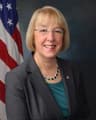 Patty Murray
Democrat · Washington
 Alex Padilla
Democrat · California
 Bernie Sanders
Independent · Vermont