
A Republican bill with 2 Democratic cosponsors · See all 13 cosponsors
Last activity — Read twice and referred to the Committee on Health, Education, Labor, and Pensions.
In committee
Introduced and handed to a committee in the chamber it started in.
The committee holds it, and most bills are never heard from again. A hearing or a committee vote would be news; silence is the usual outcome, and it kills the bill without anyone voting against it.
Its path through Congress
- Introduced
- In Committee
What this bill would do
This bill, titled the "Family Farm and Small Business Exemption Act," seeks to change how assets are defined under the Higher Education Act of 1965. It aims to restore exemptions for certain types of assets when conducting need analysis for financial aid. Specifically, it targets family farms where the family lives and small businesses owned and controlled by a family. These businesses must have no more than 100 full-time or full-time equivalent employees. The changes would apply to need analysis for award years starting after the Act is enacted.
Yes· 3 of 8
- Scored +6
Would business owners be better off under this?
Business owners who control small businesses with under 100 employees will see their assets protected during their children's financial aid assessments.
- Scored +6
Would farmers be better off under this?
Farmers who reside on their land will benefit from the exemption of their farm's net value from higher education asset calculations.
- Scored +6
Does this make it easier to run a small business?
The bill increases support for small businesses by exempting their net value from being counted as assets during financial aid need analysis.
The opposite
No question was scored the opposite.
Who it would affect, and how
Potential Positive Impacts for People
-
Exemption of family farms: This provision would exclude the net value of a family farm on which the family resides from the definition of assets under the Higher Education Act of 1965 (Section 2(a)(1)).
-
Exemption of small businesses: This would exempt the net value of a small business from being counted as an asset, provided it is owned and controlled by a family and has no more than 100 full-time or full-time equivalent employees (Section 2(a)(1)).
Potential Negative Impacts for People
- No negative impacts are explicitly stated in the text provided.
Groups and Interests Ranking
Every group the model scored this bill for, from -10 to +10. Tap or hover a score for the reason it gave.
- Demographic And Interest Groups
- Would business owners be better off under this? — Business owners who control small businesses with under 100 employees will see their assets protected during their children's financial aid assessments. Would farmers be better off under this? — Farmers who reside on their land will benefit from the exemption of their farm's net value from higher education asset calculations. Would students be better off under this? — The bill directly benefits students by making it easier for them to receive financial aid through the exclusion of family business and farm assets. Would middle-income households be better off under this? — Middle-class families owning small businesses or farms will benefit from having those assets excluded from financial aid need analysis. Would people in their twenties and thirties be better off under this? — Young adults seeking higher education may benefit from increased financial aid eligibility due to the asset exemptions.
- Economy And Finance
- Does this make it easier to run a small business? — The bill increases support for small businesses by exempting their net value from being counted as assets during financial aid need analysis.
- Education And Technology
- Does this make college cost less? — The bill increases college affordability for families by preventing their farm or small business assets from reducing their financial aid eligibility.
- Social Issues And Justice
- Is this likely to lift people out of poverty? — By excluding family farm and small business assets from financial aid calculations, more households may qualify for higher levels of financial assistance.
- 7/27/2026
- 1 Cosponsor added.
- 9/2/2025
- 1 Cosponsor added.
- 6/11/2025
- 1 Cosponsor added.
- 2/11/2025
- 1 Cosponsor added.
- 2/6/2025
- Read twice and referred to the Committee on Health, Education, Labor, and Pensions.
- 9 Cosponsors added.
- Introduced in Senate
One bill Congress.gov lists as related to this one — companions in the other chamber, earlier versions, and bills this one absorbed or was folded into.
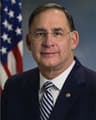 John Boozman
Republican · Arkansas
 Michael Bennet
Democrat · Colorado
 Chuck Grassley
Republican · Iowa
 Ruben Gallego
Democrat · Arizona
 John Hoeven
Republican · North Dakota
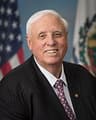 James Justice
Republican · West Virginia
 Jerry Moran
Republican · Kansas
 Roger Marshall
Republican · Kansas
 David McCormick
Republican · Pennsylvania
 Mike Rounds
Republican · South Dakota
 Pete Ricketts
Republican · Nebraska
 Tommy Tuberville
Republican · Alabama
 Thomas Tillis
Republican · North Carolina