
A Republican bill with 2 Democratic cosponsors · See all 3 cosponsors
Last activity — Read twice and referred to the Committee on the Judiciary.
In committee
Introduced and handed to a committee in the chamber it started in.
The committee holds it, and most bills are never heard from again. A hearing or a committee vote would be news; silence is the usual outcome, and it kills the bill without anyone voting against it.
Its path through Congress
- Introduced
- In Committee
What this bill would do
S. 4678, known as the Stopping Illegal Minor Simulations Act or the SIMS Act, makes it illegal for anyone to provide a chatbot that simulates a minor engaging in sexually explicit conduct or conversations. The bill applies to chatbots that use text, audio, visual, or other means to mimic human interaction and produce adaptive responses. It exempts law enforcement agencies involved in investigating child sexual exploitation from the prohibition. The legislation also allows for research and evaluation activities to assess whether a chatbot violates the law. People who willfully violate the prohibition face criminal fines, civil penalties, and civil enforcement actions brought by the Attorney General.
Yes· 3 of 5
- Scored +8
Would children be better off under this?
The bill provides significant protection for minors by banning sexually explicit simulations that mimic children.
- Scored +5
Does this put more rules on large technology companies?
The bill regulates chatbot providers by establishing strict prohibitions against offering minor-simulating sexually explicit features.
- Scored +3
Does this give the federal government more power?
The legislation increases federal oversight and enforcement authority through the Department of Justice regarding AI chatbots.
The opposite
No question was scored the opposite.
Who it would affect, and how
Potential Positive Impacts for People
-
Protection from Explicit Simulations: Section 2(a) enacting Section 2260B(b)(1) makes it unlawful for covered entities to make available chatbots that simulate a minor in sexually explicit conduct or conversation. This protects individuals from harm by banning the creation and availability of these specific harmful simulations.
-
Support for Law Enforcement: Section 2(a) enacting Section 2260B(b)(2) allows the Attorney General to grant exemptions to Federal, State, local, and foreign law enforcement agencies. This is a positive provision because it ensures law enforcement can investigate child sexual exploitation.
-
Safeguards for Research: Section 2(a) enacting Section 2260B(b)(3)(A) clarifies that the law does not prohibit internal or external research, red-teaming, or other evaluation. This allows experts to test and study chatbots to ensure they comply with the law without fear of legal liability.
Potential Negative Impacts for People
- Burdens of Criminal and Civil Penalties: Section 2(a) enacting Section 2260B(c) and Section 2260B(d)(3) imposes fines and civil penalties of up to $100,000 for violations. While aimed at enforcement, these heavy financial burdens could negatively impact entities that fail to comply with the new rules.
Groups and Interests Ranking
Every group the model scored this bill for, from -10 to +10. Tap or hover a score for the reason it gave.
- Demographic And Interest Groups
- Would children be better off under this? — The bill provides significant protection for minors by banning sexually explicit simulations that mimic children.
- Education And Technology
- Does this put more rules on large technology companies? — The bill regulates chatbot providers by establishing strict prohibitions against offering minor-simulating sexually explicit features.
- Governance And Ideology
- Does this give the federal government more power? — The legislation increases federal oversight and enforcement authority through the Department of Justice regarding AI chatbots. Does this make what the government does easier for the public to see? — The bill mandates annual reporting by the Attorney General regarding enforcement actions and investigations.
- Economy And Finance
- Does this give people more protection from unfair business practices? — The legislation protects consumers and users by prohibiting harmful and explicit minor-simulating chatbots.
- 6/3/2026
- Read twice and referred to the Committee on the Judiciary.
- 3 Cosponsors added.
- Introduced in Senate
 Christopher Coons
Democrat · Delaware
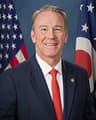 Jon Husted
Republican · Ohio
 Christopher Murphy
Democrat · Connecticut