
A Republican bill with 9 Democratic cosponsors · See all 14 cosponsors
Last activity — Held at the desk.
Passed one chamber, waiting for the other to take it up
Passed one chamber, and the other has not yet sent it to a committee or put it on its calendar.
The other chamber will hand it to a committee, place it on its calendar, or leave it where it is. Nothing has been decided, and a bill can sit here indefinitely.
Its path through Congress
- Introduced
- Passed Senate voice vote
- Awaiting House
The Senate by voice vote (members called out yes or no together): no senator's position on it was recorded.
What this bill would do
The Promoting Police Leadership Act aims to improve the COPS program by focusing on training command-level personnel. It directs the Attorney General to develop or identify specific training curricula for law enforcement officers who manage or oversee operations. This training covers topics such as leadership, critical incident response, risk management, and building community trust. The Act also establishes a process for certifying these training programs and encourages collaboration with educational institutions. Additionally, it requires the Attorney General to publish a list of agencies with trained officers and submit regular reports to Congress. Finally, it mandates a review by the Comptroller General to ensure accountability.
Yes· 3 of 5
- Scored +5
Does this change how police departments operate?
The bill mandates leadership, risk management, and community trust training for law enforcement command-level personnel.
- Scored +3
Does this make what the government does easier for the public to see?
The bill requires the Attorney General to publish a list of agencies with trained officers and submit regular reports to Congress.
- Scored +2
Does this narrow racial gaps in how people are treated?
The bill focuses on building community trust and understanding the effects of critical incidents on communities, which can help reduce racial disparities in policing.
The opposite
No question was scored the opposite.
Who it would affect, and how
Potential Positive Impacts for People
-
Improved Law Enforcement Effectiveness: The training curriculum includes leadership, strategic thinking, data-sriven policing, and evidence-based decision making, which aims to improve the management of law enforcement operations (Section 2(b)(1)(A)).
-
Enhanced Community Relations: The curriculum includes training specifically related to building community trust and understanding the effects of critical incidents on communities (Section 2(b)(1)(A)(ii)).
-
Focus on Officer Well-being: The proposed training includes the topic of officer wellness (Section 2(b)(1)(A)(iv)).
-
Practical Problem Solving: The training requires a practical component where personnel develop solutions to specific leadership or operational challenges relevant to their own agencies (Section 2(b)(1)(B)(i)).
-
Accountability and Oversight: The Act requires the Attorney General to submit annual reports to Congress and mandates a review by the Comptroller General to evaluate the effectiveness of the curricula and the certification process (Section 3 and Section 4).
Potential Negative Impacts for People
- No specific negative impacts are explicitly identified within the provided text.
Groups and Interests Ranking
Every group the model scored this bill for, from -10 to +10. Tap or hover a score for the reason it gave.
- Social Issues And Justice
- Does this change how police departments operate? — The bill mandates leadership, risk management, and community trust training for law enforcement command-level personnel. Does this narrow racial gaps in how people are treated? — The bill focuses on building community trust and understanding the effects of critical incidents on communities, which can help reduce racial disparities in policing.
- Demographic And Interest Groups
- Would Black Americans be better off under this? — Improved community trust training may lead to better interactions between law enforcement and Black communities. Would union members be better off under this? — The training includes a specific component focused on officer wellness.
- Governance And Ideology
- Does this make what the government does easier for the public to see? — The bill requires the Attorney General to publish a list of agencies with trained officers and submit regular reports to Congress.
- 6/15/2026
- Held at the desk.
- Received in the House.
- 6/12/2026
- Message on Senate action sent to the House.
- 6/10/2026
- Passed/agreed to in Senate: Passed Senate with an amendment by Voice Vote.
- Passed Senate with an amendment by Voice Vote. (consideration: CR S2724, S2727; text of amendment in the nature of a substitute: CR S2724)
- 5/20/2026
- 1 Cosponsor added.
- 5/19/2026
- Committee on the Judiciary. Reported by Senator Grassley with an amendment in the nature of a substitute. Without written report.
- Placed on Senate Legislative Calendar under General Orders. Calendar No. 414.
- 5/18/2026
- 7 Cosponsors added.
- 5/14/2026
- Committee on the Judiciary. Ordered to be reported with an amendment in the nature of a substitute favorably.
- 5/11/2026
- 5 Cosponsors added.
- 4/27/2026
- Read twice and referred to the Committee on the Judiciary.
- 1 Cosponsor added.
- Introduced in Senate
One bill Congress.gov lists as related to this one — companions in the other chamber, earlier versions, and bills this one absorbed or was folded into.
 Marsha Blackburn
Republican · Tennessee
 Richard Blumenthal
Democrat · Connecticut
 Shelley Capito
Republican · West Virginia
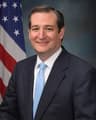 Ted Cruz
Republican · Texas
 Catherine Cortez Masto
Democrat · Nevada
 Richard Durbin
Democrat · Illinois
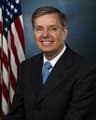 Lindsey Graham
Republican · South Carolina
 Mazie Hirono
Democrat · Hawaii
 Amy Klobuchar
Democrat · Minnesota
 Mark Kelly
Democrat · Arizona
 Alex Padilla
Democrat · California
 Thomas Tillis
Republican · North Carolina
 Peter Welch
Democrat · Vermont
 Sheldon Whitehouse
Democrat · Rhode Island