
A Democratic bill with 20 Democratic cosponsors · See all 21 cosponsors
Last activity — Read twice and referred to the Committee on Health, Education, Labor, and Pensions.
In committee
Introduced and handed to a committee in the chamber it started in.
The committee holds it, and most bills are never heard from again. A hearing or a committee vote would be news; silence is the usual outcome, and it kills the bill without anyone voting against it.
Its path through Congress
- Introduced
- In Committee
What this bill would do
This bill, titled the ``Fair Wages for Home Care Workers Act'', seeks to amend the Fair Labor Standards Act of 1938. The primary goal is to ensure that certain caregiving employees are no longer exempt from minimum wage and overtime protections. It specifically targets the definition of babysitting services and the casual basis of such work. By amending existing laws, the act changes how domestic service employment is classified.
Yes· 3 of 5
- Scored +5
Does this raise the lowest wage an employer may pay?
The bill amends the Fair Labor Standards Act to ensure certain caregiving employees are no longer exempt from minimum wage protections.
- Scored +4
Would households on low incomes be better off under this?
Low-income workers performing casual caregiving services will gain access to mandatory minimum wage and overtime pay.
- Scored +3
Would people in their twenties and thirties be better off under this?
The bill benefits young adults who may perform irregular or intermittent babysitting services for pay.
The opposite
No question was scored the opposite.
Who it would affect, and how
Potential Positive Impacts for People
-
Protection for certain caregiving employees: The bill amends the Fair Labor Standards Act to ensure these workers are no longer exempt from minimum wage and overtime protections (Section 2(a)).
-
Clarification of babysitting services: The bill defines babysitting services as the custodial care and protection of infants or children in or about a private home where they reside (Section 2(b)).
-
Specific criteria for casual basis work: The bill defines casual basis as employment that is irregular or intermittent and not performed by an individual whose vocation is babysitting (Section 2(b)).
Potential Negative Impacts for People
- Exclusion of trained personnel: The bill specifies that the new definitions for babysitting services do not include services performed by trained personnel, such as registered, vocational, or practical nurses, or home care workers like home health aides and personal care aides (Section 2(b)).
Groups and Interests Ranking
Every group the model scored this bill for, from -10 to +10. Tap or hover a score for the reason it gave.
- Demographic And Interest Groups
- Would households on low incomes be better off under this? — Low-income workers performing casual caregiving services will gain access to mandatory minimum wage and overtime pay. Would women be better off under this? — The bill provides increased wage protections for a type of domestic labor frequently performed by women. Would people in their twenties and thirties be better off under this? — The bill benefits young adults who may perform irregular or intermittent babysitting services for pay.
- Economy And Finance
- Does this raise the lowest wage an employer may pay? — The bill amends the Fair Labor Standards Act to ensure certain caregiving employees are no longer exempt from minimum wage protections.
- Social Issues And Justice
- Is this likely to lift people out of poverty? — By extending minimum wage and overtime protections to casual babysitters, the bill provides higher income potential for these workers.
- 6/15/2026
- 1 Cosponsor added.
- 4/13/2026
- 1 Cosponsor added.
- 3/25/2026
- 1 Cosponsor added.
- 3/12/2026
- Read twice and referred to the Committee on Health, Education, Labor, and Pensions.
- 18 Cosponsors added.
- Introduced in Senate
One bill Congress.gov lists as related to this one — companions in the other chamber, earlier versions, and bills this one absorbed or was folded into.
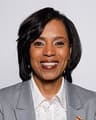 Angela Alsobrooks
Democrat · Maryland
 Tammy Baldwin
Democrat · Wisconsin
 Richard Blumenthal
Democrat · Connecticut
 Cory Booker
Democrat · New Jersey
 Richard Durbin
Democrat · Illinois
 Tammy Duckworth
Democrat · Illinois
 Kirsten Gillibrand
Democrat · New York
 Ruben Gallego
Democrat · Arizona
 John Hickenlooper
Democrat · Colorado
 Mazie Hirono
Democrat · Hawaii
 Timothy Kaine
Democrat · Virginia
 Andy Kim
Democrat · New Jersey
 Edward Markey
Democrat · Massachusetts
 Christopher Murphy
Democrat · Connecticut
 Alex Padilla
Democrat · California
 Bernie Sanders
Independent · Vermont
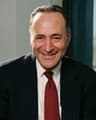 Charles Schumer
Democrat · New York
 Chris Van Hollen
Democrat · Maryland
 Ron Wyden
Democrat · Oregon
 Peter Welch
Democrat · Vermont
 Elizabeth Warren
Democrat · Massachusetts