
A Democratic bill with 2 Republican cosponsors · See all 3 cosponsors
Last activity — Held at the desk.
Passed one chamber, waiting for the other to take it up
Passed one chamber, and the other has not yet sent it to a committee or put it on its calendar.
The other chamber will hand it to a committee, place it on its calendar, or leave it where it is. Nothing has been decided, and a bill can sit here indefinitely.
Its path through Congress
- Introduced
- Passed Senate unanimous consent
- Awaiting House
The Senate by unanimous consent (no one objected, so there was no vote): no senator's position on it was recorded.
What this bill would do
The "Bridging Agency Data Gaps and Ensuring Safety for Native Communities Act" aims to improve how Federal law enforcement reports on missing or murdered Indians. It establishes Tribal facilitators to coordinate information and tracking within the National Missing and Unidentified Persons System. The bill mandates reports on staffing and resource needs for law enforcement in Indian country. It also creates a demonstration program for Bureau of Indian Affairs background checks and a grant program for response coordination. Additionally, the Act directs GAO studies on evidence processing and mandates coordination for law enforcement officer wellness.
Yes· 3 of 9
- Scored +8
Would Native Americans be better off under this?
The bill improves the tracking of missing persons, increases law enforcement resources, and funds regional response coordination for Indian Tribes.
- Scored +2
Does this make mental health care easier to get?
The act directs coordination to make culturally appropriate mental health and wellness programs available to law enforcement officers.
- Scored +1
Would Black Americans be better off under this?
The bill does not explicitly target African Americans.
The opposite
No question was scored the opposite.
Who it would affect, and how
Potential Positive Impacts for People
-
Improved Case Tracking: The appointment of Tribal facilitators will help coordinate the reporting, documentation, and tracking of missing persons, unclaimed remains, and unidentified remains cases of interest to Indian Tribes (Sec. 101(b)).
-
Increased Transparency and Information: The Attorney General is required to publish annual reports on the activities and accomplishments of Tribal facilitators on a public website (Sec. 101(c)(2)).
-
Addressing Resource Gaps: The bill requires reports on unmet staffing needs, infrastructure needs, and equipment needs for Tribal and Bureau justice agencies (Sec. 102(a)).
-
Streamlined Employment Processes: A demonstration program for Bureau of Indian Affairs law enforcement background investigations may expedite the process of receiving security clearances (Sec. 201(a)).
-
Support for Investigative Coordination: A grant program is established to help entities establish regional centers to document cases and improve coordination between different law enforcement agencies (Sec. 202(c)).
-
Mental Health and Wellness Support: The Act directs coordination to ensure that culturally appropriate mental health and wellness programs are available to law enforcement officers (Sec. 204(1)).
Potential Negative Impacts for People
- No specific negative impacts are explicitly stated in the provided text.
Groups and Interests Ranking
Every group the model scored this bill for, from -10 to +10. Tap or hover a score for the reason it gave.
- Demographic And Interest Groups
- Would Native Americans be better off under this? — The bill improves the tracking of missing persons, increases law enforcement resources, and funds regional response coordination for Indian Tribes. Would Black Americans be better off under this? — The bill does not explicitly target African Americans. Would Asian Americans be better off under this? — The bill does not explicitly target Asian Americans. Would Hispanic Americans be better off under this? — The bill does not explicitly target Hispanic Americans. Would white Americans be better off under this? — The bill does not explicitly target white Americans.
- Healthcare
- Does this make mental health care easier to get? — The act directs coordination to make culturally appropriate mental health and wellness programs available to law enforcement officers.
- Economy And Finance
- Does this make the government pay for what it commits to? — The bill establishes a grant program and a demonstration program which requires federal oversight and reporting.
- National Security And Foreign Policy
- Does this increase the pay, pensions or support veterans receive? — The bill provides resources for law enforcement wellness which may benefit veterans serving in these roles.
- Social Issues And Justice
- Is this likely to lift people out of poverty? — The bill focuses on safety and law enforcement infrastructure rather than direct poverty alleviation.
- 12/15/2025
- Message on Senate action sent to the House.
- Held at the desk.
- Received in the House.
- 12/11/2025
- Passed/agreed to in Senate: Passed Senate without amendment by Unanimous Consent.
- Passed Senate without amendment by Unanimous Consent. (consideration: CR S8685; text: CR S8685-8687)
- 7/31/2025
- Committee on Indian Affairs. Reported by Senator Murkowski without amendment. With written report No. 119-53.
- Placed on Senate Legislative Calendar under General Orders. Calendar No. 138.
- 3/5/2025
- Committee on Indian Affairs. Ordered to be reported without amendment favorably.
- 2/4/2025
- Read twice and referred to the Committee on Indian Affairs.
- 3 Cosponsors added.
- Introduced in Senate
One bill Congress.gov lists as related to this one — companions in the other chamber, earlier versions, and bills this one absorbed or was folded into.
 Ruben Gallego
Democrat · Arizona
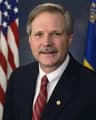 John Hoeven
Republican · North Dakota
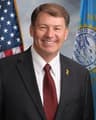 Mike Rounds
Republican · South Dakota