
Sheldon Whitehouse (D-RI)
Empowering States' Rights To Protect Consumers Act of 2026
A Democratic bill with 3 Democratic cosponsors · See all 3 cosponsors
Last activity — Read twice and referred to the Committee on Banking, Housing, and Urban Affairs.
In committee
Introduced and handed to a committee in the chamber it started in.
The committee holds it, and most bills are never heard from again. A hearing or a committee vote would be news; silence is the usual outcome, and it kills the bill without anyone voting against it.
Its path through Congress
- Introduced
- In Committee
What this bill would do
This bill, titled the "Empowering States' Rights To Protect Consumers Act of 2026," seeks to amend the Truth in Lending Act. The primary goal is to allow states to set the maximum annual percentage rates for consumer credit transactions. This would include any fees associated with those transactions. However, the bill specifically excludes residential mortgage transactions from these limits.
Yes· 3 of 5
- Scored +7
Does this leave more decisions to the states?
The bill empowers states to establish their own maximum annual percentage rates and fee limits for consumer credit.
- Scored +6
Does this give people more protection from unfair business practices?
The bill allows states to cap annual percentage rates and associated fees for consumer credit transactions to protect against high costs.
- Scored +5
Would households on low incomes be better off under this?
State-mandated interest rate caps can prevent predatory lending practices that often disproportionately affect low-income consumers.
The opposite
No question was scored the opposite.
Who it would affect, and how
Potential Positive Impacts for People
- State-Level Interest Rate Caps: The bill allows the annual percentage rate and associated fees for consumer credit transactions to be limited by the laws of the state where the consumer lives (Section 2(a)). This could provide protection for consumers depending on the specific laws their state chooses to implement.
Potential Negative Impacts for People
- Exclusion of Mortgages: The bill specifically states that these new limits on annual percentage rates and fees do not apply to residential mortgage transactions (Section 2(a)). This means mortgage holders would not be covered by these specific provisions.
Groups and Interests Ranking
Every group the model scored this bill for, from -10 to +10. Tap or hover a score for the reason it gave.
- Demographic And Interest Groups
- Would households on low incomes be better off under this? — State-mandated interest rate caps can prevent predatory lending practices that often disproportionately affect low-income consumers. Would middle-income households be better off under this? — The ability for states to cap credit costs provides potential financial relief for middle-income families. Would people in cities be better off under this? — Consumers in states that choose to implement these caps may benefit from lower credit costs.
- Governance And Ideology
- Does this leave more decisions to the states? — The bill empowers states to establish their own maximum annual percentage rates and fee limits for consumer credit.
- Economy And Finance
- Does this give people more protection from unfair business practices? — The bill allows states to cap annual percentage rates and associated fees for consumer credit transactions to protect against high costs.
- 1/29/2026
- Read twice and referred to the Committee on Banking, Housing, and Urban Affairs.
- 3 Cosponsors added.
- Introduced in Senate
 Jeff Merkley
Democrat · Oregon
 John Reed
Democrat · Rhode Island
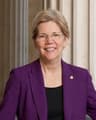 Elizabeth Warren
Democrat · Massachusetts