
A Republican bill with 1 Democratic cosponsor · See all 2 cosponsors
Last activity — Held at the desk.
Passed one chamber, waiting for the other to take it up
Passed one chamber, and the other has not yet sent it to a committee or put it on its calendar.
The other chamber will hand it to a committee, place it on its calendar, or leave it where it is. Nothing has been decided, and a bill can sit here indefinitely.
Its path through Congress
- Introduced
- Passed Senate voice vote
- Awaiting House
The Senate by voice vote (members called out yes or no together): no senator's position on it was recorded.
What this bill would do
This bill establishes the "Recycling Infrastructure and Accessibility Program," a pilot grant program designed to improve recycling access through infrastructure investments. The program targets underserved communities using a hub-and-spoke model to increase transfer stations and expand curbside collection. Additionally, it directs the EPA Administrator to collect and disseminate data regarding national recycling and composting programs. The legislation requires various reports on infrastructure capabilities, end-market sales, and Federal agency activities. It also mandates a study on how recyclable materials are diverted from circular markets.
Yes· 3 of 8
- Scored +6
Does this better protect air, water and wildlife?
The bill establishes a grant program and data collection requirements to improve recycling and composting infrastructure and rates.
- Scored +5
Would Native Americans be better off under this?
The bill explicitly includes Indian Tribes as eligible entities for recycling infrastructure grants and data collection collaborations.
- Scored +5
Does this make what the government does easier for the public to see?
The bill requires the Comptroller General and the EPA Administrator to submit various reports to Congress regarding recycling and composting activities.
The opposite
No question was scored the opposite.
Who it would affect, and how
Potential Positive Impacts for People
-
Improved Recycling Access in Underserved Areas: The pilot grant program aims to fund projects that improve accessibility to recycling systems, specifically targeting underserved communities through infrastructure investments (Section 2(c)).
-
Increased Infrastructure for Local Communities: Eligible entities can use grant funds to increase the number of transfer stations and expand curbside recycling collection programs (Section 2(g)).
-
Support for Local Governments and Tribes: The bill provides grant opportunities for States, units of local government, and Indian Tribes to improve local recycling accessibility (Section 2(b)).
-
Data-Driven Improvements: The Administrator is tasked with collecting information on the costs and benefits of recycling and composting programs, which can help in understanding how to improve these services (Section 3(b)(1)(B)).
-
Increased Accountability for Federal Agencies: The Comptroller General will provide reports detailing the recycling and composting rates and product purchases of all Federal agencies (Section 3(c)).
Potential Negative Impacts for People
-
Prohibition on Educational Funding: Grant funds from the pilot program cannot be used for projects that are strictly recycling education programs (Section 2(h)).
-
Potential Financial Risks in Partnerships: When considering public-private partnerships for grants, the Administrator must evaluate the financial health of the private entities involved, suggesting a potential risk of instability (Section 2(e)(3)).
Groups and Interests Ranking
Every group the model scored this bill for, from -10 to +10. Tap or hover a score for the reason it gave.
- Demographic And Interest Groups
- Would Native Americans be better off under this? — The bill explicitly includes Indian Tribes as eligible entities for recycling infrastructure grants and data collection collaborations. Would households on low incomes be better off under this? — The bill specifically targets underserved communities for recycling infrastructure improvements, which often correlate with lower-income areas. Would people in cities be better off under this? — Improved collection and transfer station infrastructure can enhance waste management efficiency in urban and underserved areas.
- Environment Energy And Infrastructure
- Does this better protect air, water and wildlife? — The bill establishes a grant program and data collection requirements to improve recycling and composting infrastructure and rates. Does this invest in rural communities? — The bill's focus on underserved communities and the hub-and-spoke model can provide significant infrastructure improvements to rural areas lacking recycling access.
- Governance And Ideology
- Does this make what the government does easier for the public to see? — The bill requires the Comptroller General and the EPA Administrator to submit various reports to Congress regarding recycling and composting activities.
- Economy And Finance
- Does this make it easier to run a small business? — The bill encourages public-private partnerships to reduce the costs associated with collecting and transporting recyclable materials.
- Social Issues And Justice
- Is this likely to lift people out of poverty? — By targeting underserved communities for infrastructure investments, the bill aims to improve local waste management accessibility.
- 11/20/2025
- Passed/agreed to in Senate: Passed Senate without amendment by Voice Vote.
- Passed Senate without amendment by Voice Vote. (consideration: CR S8395-8398; text: CR S8395-8398)
- Message on Senate action sent to the House.
- Held at the desk.
- Received in the House.
- 2/5/2025
- Committee on Environment and Public Works. Ordered to be reported without amendment favorably.
- Committee on Environment and Public Works. Committee consideration held. Business Meeting printed. S. Hrg. 119-267.
- Committee on Environment and Public Works. Reported by Senator Capito without amendment. Without written report.
- Placed on Senate Legislative Calendar under General Orders. Calendar No. 7.
- 1/30/2025
- Read twice and referred to the Committee on Environment and Public Works.
- 2 Cosponsors added.
- Introduced in Senate
2 bills Congress.gov lists as related to this one — companions in the other chamber, earlier versions, and bills this one absorbed or was folded into.
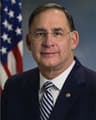 John Boozman
Republican · Arkansas
 Sheldon Whitehouse
Democrat · Rhode Island