
Shelley Capito (R-WV)
Brownfields Reauthorization Act of 2025
A Republican bill with 1 Democratic cosponsor · See the cosponsor
Last activity — Placed on Senate Legislative Calendar under General Orders. Calendar No. 6.
Cleared committee, waiting for its first floor vote
A committee approved it and it is on the calendar of the chamber it started in.
This is further than most bills get, and still no promise of a vote: the calendar is a queue, and the majority leadership decides what is called. A bill can sit here until the Congress ends.
Its path through Congress
- Introduced
- On Calendar
What this bill would do
The Brownfields Reauthorization Act of 2025 aims to amend the Comprehensive Environmental Response, Compensation, and Liability Act of 1980. This bill focuses on reauthorizing brownfields revitalization funding for the period of 2025 through 2030. It includes provisions to improve access to grant opportunities for small and disadvantaged communities. The bill also increases the amount of money available for site remediation. Additionally, it modifies state response programs and requires a report to streamline the application process. Finally, it expands brownfield revitalization funding opportunities for Alaska Native entities.
Yes· 3 of 12
- Scored +8
Would Native Americans be better off under this?
The bill explicitly expands brownfield revitalization funding to include Alaska Native Regional and Village Corporations.
- Scored +7
Does this better protect air, water and wildlife?
The bill increases the maximum amount available for site remediation and expands funding opportunities for brownfield revitalization.
- Scored +5
Does this invest in rural communities?
The bill provides increased support and waived matching requirements for small communities and disadvantaged areas.
The opposite
No question was scored the opposite.
Who it would affect, and how
Potential Positive Impacts for People
-
Increased Funding for Site Remediation: The bill increases the amount of money available for each site to be remediated from $500,000 to $1,000,000 (Section 3).
-
Support for Small and Disadvantaged Communities: The bill allows the Administrator to waive matching share requirements for eligible entities located in small communities or disadvantaged areas (Section 2).
-
Enhanced Community Involvement: Applicants must now show plans to engage diverse local groups and involve the local community in decision-making for proposed projects (Section 2).
-
Expanded Eligibility for Organizations: The bill expands the types of eligible organizations by including 501(c)(6) entities (Section 2).
-
Increased State Response Funding: The bill authorizes increased appropriations for state response programs, rising from $50,000,000 in 2025 up to $75,000,000 in 2030 (Section 4).
-
Funding for Alaska Native Entities: The bill expands brownfield revitalization funding to include Regional Corporations or Village Corporations as defined in the Alaska Native Claims Settlement Act (Section 6).
-
Streamlining the Application Process: The Administrator is required to evaluate shortcomings and update guidance to reduce the complexity of the application process (Section 5).
Potential Negative Impacts for People
- No specific negative impacts or burdens are explicitly stated in the provided text.
Groups and Interests Ranking
Every group the model scored this bill for, from -10 to +10. Tap or hover a score for the reason it gave.
- Demographic And Interest Groups
- Would Native Americans be better off under this? — The bill explicitly expands brownfield revitalization funding to include Alaska Native Regional and Village Corporations. Would households on low incomes be better off under this? — The bill targets support toward disadvantaged areas which often include low-income populations. Would people in rural areas be better off under this? — The bill provides specific assistance to small communities which often include rural areas. Would people in cities be better off under this? — Remediation of brownfields can improve the living conditions of residents in affected areas. Would middle-income households be better off under this? — Community revitalization through brownfield cleanup can improve local property values and environments.
- Environment Energy And Infrastructure
- Does this better protect air, water and wildlife? — The bill increases the maximum amount available for site remediation and expands funding opportunities for brownfield revitalization. Does this invest in rural communities? — The bill provides increased support and waived matching requirements for small communities and disadvantaged areas.
- Social Issues And Justice
- Does this narrow racial gaps in how people are treated? — The bill expands brownfield funding eligibility specifically for Alaska Native entities. Is this likely to lift people out of poverty? — By supporting disadvantaged areas through environmental remediation, the bill aims to revitalize local economies.
- Economy And Finance
- Does this make it easier to run a small business? — The bill expands eligibility for 501(c)(6) entities and helps small communities access remediation funds. Is this likely to create jobs? — Increasing site remediation funding for brownfields often facilitates local redevelopment and job opportunities.
- Governance And Ideology
- Does this make what the government does easier for the public to see? — The bill requires a report to evaluate and streamline the grant application process.
- 2/5/2025
- Committee on Environment and Public Works. Ordered to be reported without amendment favorably.
- Committee on Environment and Public Works. Committee consideration held. Business Meeting printed. S. Hrg. 119-267.
- Committee on Environment and Public Works. Reported by Senator Capito without amendment. Without written report.
- Placed on Senate Legislative Calendar under General Orders. Calendar No. 6.
- 1/30/2025
- Read twice and referred to the Committee on Environment and Public Works.
- 1 Cosponsor added.
- Introduced in Senate
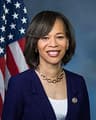 Lisa Blunt Rochester
Democrat · Delaware