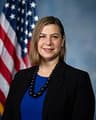
Elissa Slotkin (D-MI)
No Troops in Our Streets Act of 2025
A Democratic bill with 4 Democratic cosponsors · See all 4 cosponsors
Last activity — Read twice and referred to the Committee on the Judiciary.
In committee
Introduced and handed to a committee in the chamber it started in.
The committee holds it, and most bills are never heard from again. A hearing or a committee vote would be news; silence is the usual outcome, and it kills the bill without anyone voting against it.
Its path through Congress
- Introduced
- In Committee
What this bill would do
The "No Troops in Our Streets Act of 2025" allows Congress to terminate certain military deployments and activations through joint resolutions of disapproval. It establishes specific procedures for how the Senate and House of Representatives introduce and vote on these resolutions. The bill also provides additional funding for state and local law enforcement, including grants for community violence prevention and hiring officers. Finally, it prohibits the use of these new funds to pay for Federal law enforcement personnel assigned to states and localities.
Yes· 3 of 11
- Scored +6
Does this leave more decisions to the states?
Provides significant funding to state/local law enforcement while prohibiting federal law enforcement assignments to states.
- Scored +5
Would people in cities be better off under this?
Significant funding for urban policing and community violence intervention.
- Scored +3
Would households on low incomes be better off under this?
Community violence intervention grants often target low-income neighborhoods.
The opposite· 3 of 5
- Scored -5
Does this reduce what the federal government spends?
Appropriates nearly $900 million in additional spending for justice and policing programs.
- Scored -5
Does this give the government more power to monitor people inside the country?
Increases funding for law enforcement but limits federal personnel use, creating a complex impact on security infrastructure.
- Scored -4
Does this give the federal government more power?
Limits the Executive's ability to deploy troops by giving Congress an expedited joint resolution of disapproval process.
Who it would affect, and how
Potential Positive Impacts for People
-
Increased Congressional Oversight: Congress can stop specific military deployments in certain locations by passing a joint resolution of disapproval (Section 2(b)).
-
Financial Support for Local Justice: The bill provides $600,000,000 for the Edward Byrne Memorial Justice Assistance Grant program (Section 4(a)(1)).
-
Violence Prevention: It allocates $150,000,000 for an initiative focused on preventing and intervening in community violence (Section 4(a)(2)).
-
Emergency Law Enforcement Aid: It provides $50,000,000 for emergency law enforcement assistance to support state and local efforts (Section 4(a)(3)).
-
Increased Local Police Staffing: There is an appropriation of $100,000,000 for grants to hire or rehire career law enforcement officers (Section 4(b)).
Potential Negative Impacts for People
- Restriction on Federal Personnel: The bill prohibits using the appropriated funds to pay for Federal law enforcement personnel to be assigned to states and localities (Section 4(c)).
Groups and Interests Ranking
Every group the model scored this bill for, from -10 to +10. Tap or hover a score for the reason it gave.
- Demographic And Interest Groups
- Would people in cities be better off under this? — Significant funding for urban policing and community violence intervention. Would Black Americans be better off under this? — Violence prevention initiatives frequently support historically marginalized communities. Would Hispanic Americans be better off under this? — Violence prevention initiatives frequently support historically marginalized communities. Would households on low incomes be better off under this? — Community violence intervention grants often target low-income neighborhoods. Would children be better off under this? — Funding for community violence prevention typically benefits youth in high-crime areas. Would people in rural areas be better off under this? — Provides general Justice Assistance Grants which are available to rural jurisdictions. Would people in their twenties and thirties be better off under this? — Funding for community violence prevention typically benefits young adults.
- Economy And Finance
- Is this likely to create jobs? — Appropriates $100 million for grants to hire or rehire career law enforcement officers. Does this reduce what the federal government spends? — Appropriates nearly $900 million in additional spending for justice and policing programs. Does this make the government pay for what it commits to? — Uses emergency designations to increase spending outside of standard budget constraints. Does this reduce what the federal government owes? — Increases federal spending through new appropriations for law enforcement grants.
- National Security And Foreign Policy
- Does this give the government more power to monitor people inside the country? — Increases funding for law enforcement but limits federal personnel use, creating a complex impact on security infrastructure.
- Social Issues And Justice
- Does this change how police departments operate? — Provides funding for community-oriented policing and violence prevention. Does this narrow racial gaps in how people are treated? — Allocates $150 million specifically for community violence intervention and prevention.
- Governance And Ideology
- Does this leave more decisions to the states? — Provides significant funding to state/local law enforcement while prohibiting federal law enforcement assignments to states. Does this give the federal government more power? — Limits the Executive's ability to deploy troops by giving Congress an expedited joint resolution of disapproval process.
- 11/7/2025
- Read twice and referred to the Committee on the Judiciary.
- 4 Cosponsors added.
- Introduced in Senate
One bill Congress.gov lists as related to this one — companions in the other chamber, earlier versions, and bills this one absorbed or was folded into.
 Richard Blumenthal
Democrat · Connecticut
 Tammy Duckworth
Democrat · Illinois
 Mark Kelly
Democrat · Arizona
 Ron Wyden
Democrat · Oregon