
A Republican bill with 5 Democratic cosponsors · See all 9 cosponsors
Last activity — Read twice and referred to the Committee on Finance. (Sponsor introductory remarks on measure: CR S7964)
In committee
Introduced and handed to a committee in the chamber it started in.
The committee holds it, and most bills are never heard from again. A hearing or a committee vote would be news; silence is the usual outcome, and it kills the bill without anyone voting against it.
Its path through Congress
- Introduced
- In Committee
What this bill would do
The CARE Act of 2025 requires the Center for Medicare and Medicaid Innovation to test a new model for emergency responses under Medicare. This model allows for payment when a ground ambulance is dispatched for an emergency call but does not actually transport the patient. These services must follow state and local licensure and protocols, which can include audiovisual telecommunications. The model will run for five years. Additionally, the Comptroller General must provide a report analyzing the model's impact on beneficiary outcomes and resource utilization.
Yes· 3 of 6
- Scored +7
Would people over 65 be better off under this?
Seniors, as primary Medicare beneficiaries, will have improved access to emergency medical responses.
- Scored +7
Would retired people be better off under this?
Retirees using Medicare will benefit from expanded emergency response options.
- Scored +5
Does this make health care easier to get in general?
It expands access to emergency medical services by allowing payment for responses that do not result in transport.
The opposite
No question was scored the opposite.
Who it would affect, and how
Potential Positive Impacts for People
-
Payment for Non-Transport Emergency Services: Section 2(a)(2)(1) allows for payment under Medicare part B for ground ambulance services that involve dispatching a vehicle but do not result in a transport. This could ensure that emergency medical responses are provided even if a patient is not taken to a hospital.
-
Use of Telecommunications: Section 2(a)(2)(1)(C) allows for protocols that include online medical direction through audiovisual telecommunications technology, potentially expanding how medical direction is delivered during emergencies.
-
Analysis of Access and Outcomes: Section 2(b) requires a report to evaluate beneficiary outcomes, resource utilization, and the impact of regional variations and demographics on emergency medical services. This could lead to recommendations for improving these services for the public.
Potential Negative Impacts for People
- Limited Duration: Section 2(a)(2)(3) states that the model shall be carried out for a period of 5 years, meaning the benefits of this specific testing model are not permanent.
Groups and Interests Ranking
Every group the model scored this bill for, from -10 to +10. Tap or hover a score for the reason it gave.
- Demographic And Interest Groups
- Would retired people be better off under this? — Retirees using Medicare will benefit from expanded emergency response options. Would people over 65 be better off under this? — Seniors, as primary Medicare beneficiaries, will have improved access to emergency medical responses. Would people in rural areas be better off under this? — Rural areas often face transport challenges; non-transport payment models and telecommunications can improve EMS viability.
- Healthcare
- Does this make health care easier to get in general? — It expands access to emergency medical services by allowing payment for responses that do not result in transport. Does this put more money into Medicare, the health coverage for people over 65? — The bill expands Medicare Part B payments to cover non-transport emergency services. Does this lower what a hospital stay costs? — Payment for non-transport services may reduce unnecessary emergency room visits.
- 4/29/2026
- 2 Cosponsors added.
- 1/5/2026
- 2 Cosponsors added.
- 12/18/2025
- 2 Cosponsors added.
- 12/8/2025
- 2 Cosponsors added.
- 11/6/2025
- Read twice and referred to the Committee on Finance. (Sponsor introductory remarks on measure: CR S7964)
- 1 Cosponsor added.
- Introduced in Senate
One bill Congress.gov lists as related to this one — companions in the other chamber, earlier versions, and bills this one absorbed or was folded into.
 Shelley Capito
Republican · West Virginia
 Bill Cassidy
Republican · Louisiana
 Christopher Coons
Democrat · Delaware
 Cindy Hyde-Smith
Republican · Mississippi
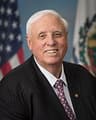 James Justice
Republican · West Virginia
 Amy Klobuchar
Democrat · Minnesota
 Andy Kim
Democrat · New Jersey
 Peter Welch
Democrat · Vermont
 Sheldon Whitehouse
Democrat · Rhode Island