
A bill from an independent · See the cosponsor
Last activity — Committee on Health, Education, Labor, and Pensions. Hearings held.
In committee
Introduced and handed to a committee in the chamber it started in.
The committee holds it, and most bills are never heard from again. A hearing or a committee vote would be news; silence is the usual outcome, and it kills the bill without anyone voting against it.
Its path through Congress
- Introduced
- In Committee
What this bill would do
This bill is called the Stand Strong Falls Prevention Act. It amends the Older Americans Act of 1965 to create an Advisory Committee on Falls Prevention within the Administration on Aging. This committee will help develop a national plan, coordinate research across federal agencies, and review existing federal falls prevention programs. The committee must also provide Congress and the Assistant Secretary with an initial report containing recommendations for Medicare pilot programs, public education, and home modifications. Additionally, the Assistant Secretary must submit regular reports to Congress every four years evaluating federal falls prevention efforts and progress. The bill authorizes the appropriation of necessary funds for fiscal years 2026 through 2030 to carry out these activities.
Yes· 3 of 22
- Scored +8
Would people over 65 be better off under this?
The bill directly targets older Americans by establishing a national falls prevention strategy and recommending home modifications and Medicare pilot programs.
- Scored +8
Would retired people be better off under this?
Retirees are the primary beneficiaries of enhanced federal falls prevention programs, research, and safety recommendations.
- Scored +6
Does this put more money into Medicare, the health coverage for people over 65?
The bill recommends pilot and demonstration programs within Medicare to cover basic home modifications and falls prevention services.
The opposite
- Scored -1
Does this reduce what the federal government owes?
The bill authorizes the appropriation of necessary funds for fiscal years 2026 through 2030, potentially increasing federal expenditures.
- Scored -1
Does this reduce what the federal government spends?
Authorizing appropriations for a new advisory committee and related reporting activities increases federal spending.
Who it would affect, and how
Potential Positive Impacts for People
-
Coordinated National Strategy: Section 2 (adding section 203B(a)(2)(A)) establishes an integrated national plan to address falls prevention, which could help accelerate the development of programs and interventions aimed at reducing the severity of injuries from falls.
-
Targeted Recommendations for Medicare and Home Safety: Section 2 (adding section 203B(a)(5)(A)(iii)) requires the advisory committee to recommend pilot or demonstration programs providing coverage for basic home modifications and evidence-based falls prevention programs for Medicare beneficiaries, which could help individuals make their living spaces safer.
-
Regular Accountability and Progress Reports: Section 2 (adding section 203B(b)(2)) requires the Assistant Secretary to submit regular reports to Congress evaluating federal falls prevention programs, assessing the nation's progress, and recommending priority actions to improve health outcomes and reduce financial impacts.
Potential Negative Impacts for People
- Increased Government Spending: Section 2 (adding section 203B(c)(1)) authorizes the appropriation of such sums as may be necessary for fiscal years 2026 through 2030 to carry out the section, which could lead to increased federal expenditures.
Groups and Interests Ranking
Every group the model scored this bill for, from -10 to +10. Tap or hover a score for the reason it gave.
- Demographic And Interest Groups
- Would retired people be better off under this? — Retirees are the primary beneficiaries of enhanced federal falls prevention programs, research, and safety recommendations. Would people over 65 be better off under this? — The bill directly targets older Americans by establishing a national falls prevention strategy and recommending home modifications and Medicare pilot programs. Would people with disabilities be better off under this? — The inclusion of disability service providers and assistive technology experts helps address mobility and safety needs. Would households on low incomes be better off under this? — Home modification recommendations can assist low-income seniors who might otherwise struggle to afford safety improvements. Would veterans be better off under this, taking everything together? — The Department of Veterans Affairs' participation helps ensure veteran-specific falls prevention efforts are coordinated. Would middle-income households be better off under this? — Middle-class seniors and their families benefit from coordinated falls prevention strategies and potential Medicare coverage expansions. Would Native Americans be better off under this? — The Indian Health Service is included as a member agency on the advisory committee to coordinate care. Would people in rural areas be better off under this? — The inclusion of the USDA Office of Rural Development helps address falls prevention in rural communities. Would women be better off under this? — Older women statistically experience a higher incidence of fall-related injuries and stand to benefit from prevention initiatives.
- Healthcare
- Does this put more money into Medicare, the health coverage for people over 65? — The bill recommends pilot and demonstration programs within Medicare to cover basic home modifications and falls prevention services. Does this lower what a hospital stay costs? — Coordinated falls prevention initiatives and home modifications aim to reduce severe fall injuries and related hospital admissions. Does this make health care easier to get in general? — The legislation promotes screening, assessment, and intervention tools like STEADI across health care providers. Does this put more money into medical research? — The bill promotes coordinated falls prevention research across multiple federal agencies including the NIH and CDC. Does this help veterans get medical care? — The Department of Veterans Affairs is included in interagency coordination and research efforts for falls prevention. Does this put more money into Medicaid, the health coverage for people on low incomes? — The bill involves Medicaid agencies in data sharing and evaluating federal falls prevention efforts.
- Social Issues And Justice
- Does this make housing cost less? — The advisory committee includes housing assistance experts and recommends basic home modifications to improve safety for older adults. Does this expand the rights of people with disabilities? — The advisory committee includes disability service providers with experience in assistive technology to help improve safety.
- Governance And Ideology
- Does this make what the government does easier for the public to see? — The bill institutes regular congressional reporting requirements and comprehensive evaluations of federal falls prevention programs. Does this give the federal government more power? — The bill establishes a new federal advisory committee and reporting mandates within the Administration on Aging.
- Education And Technology
- Does this put more money into scientific research? — The legislation enhances federal research coordination and data sharing across agencies like the NIH and CDC.
- National Security And Foreign Policy
- Does this increase the pay, pensions or support veterans receive? — The Department of Veterans Affairs participates in the advisory committee to coordinate falls prevention for veterans.
- Economy And Finance
- Does this reduce what the federal government spends? — Authorizing appropriations for a new advisory committee and related reporting activities increases federal spending. Does this reduce what the federal government owes? — The bill authorizes the appropriation of necessary funds for fiscal years 2026 through 2030, potentially increasing federal expenditures.
- Environment Energy And Infrastructure
- Does this invest in rural communities? — The Office of Rural Development of the Department of Agriculture is included as a member of the advisory committee.
- 3/19/2026
- Committee on Health, Education, Labor, and Pensions. Hearings held.
- 9/17/2025
- Read twice and referred to the Committee on Health, Education, Labor, and Pensions.
- 1 Cosponsor added.
- Introduced in Senate
One bill Congress.gov lists as related to this one — companions in the other chamber, earlier versions, and bills this one absorbed or was folded into.
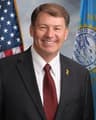 Mike Rounds
Republican · South Dakota