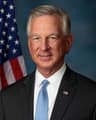
Tommy Tuberville (R-AL)
Veterans National Traumatic Brain Injury Treatment Act
A Republican bill with no cosponsors
Last activity — Committee on Veterans' Affairs. Hearings held. Hearings printed: S.Hrg. 119-247.
In committee
Introduced and handed to a committee in the chamber it started in.
The committee holds it, and most bills are never heard from again. A hearing or a committee vote would be news; silence is the usual outcome, and it kills the bill without anyone voting against it.
Its path through Congress
- Introduced
- In Committee
What this bill would do
The Veterans National Traumatic Brain Injury Treatment Act requires the Secretary of Veterans Affairs to start a pilot program for hyperbaric oxygen therapy (HBOT). This program is intended for veterans dealing with traumatic brain injury or post-traumatic stress disorder. The therapy would be provided through community care providers in two selected Veterans Integrated Service Networks. To ensure quality, medical facilities must meet specific accreditation standards. The program is funded solely through specific donations and is set to terminate three years after the Act is passed. Additionally, the bill requires the Comptroller General to update a previous report regarding HBOT research.
Yes· 3 of 4
- Scored +8
Would veterans be better off under this, taking everything together?
The bill provides direct medical benefit through a new pilot program for veterans with specific injuries.
- Scored +7
Does this help veterans get medical care?
The bill implements a new pilot program specifically for veterans suffering from traumatic brain injuries and PTSD.
- Scored +6
Does this increase the pay, pensions or support veterans receive?
The act provides a new potential treatment avenue for veterans with brain injuries and PTSD.
The opposite
No question was scored the opposite.
Who it would affect, and how
Potential Positive Impacts for People
-
Access to Specialized Treatment: The bill establishes a pilot program to provide hyperse oxygen therapy (HBOT) to veterans with traumatic brain injury or post-traumatic stress disorder through community care providers (Section 2(a)).
-
Quality Assurance: The Secretary is required to ensure that any medical facility used in the pilot program is accredited by recognized organizations like the Joint Commission on Accreditation of Hospital Organizations or the Undersea and Hyperbaric Medical Society (Section 2(c)).
-
Medical Safety: The definition of HBOT ensures that the therapy is provided using medical devices that are either approved by the Food and Drug Administration or have an investigational device exemption (Section 2(f)).
-
Updated Clinical Research: The Comptroller General is tasked with providing an updated assessment of clinical trials regarding the use of HBOT to treat traumatic brain injury and post-traumatic stress disorder (Section 3).
Potential Negative Impacts for People
-
Limited Funding Source: The pilot program relies on a fund that is solely supported by donations received by the Secretary for the express purpose of providing HBOT (Section 2(d)(2)).
-
Program Duration: The pilot program and its associated fund are scheduled to terminate three years after the Act is enacted (Section 2(e)).
Groups and Interests Ranking
Every group the model scored this bill for, from -10 to +10. Tap or hover a score for the reason it gave.
- Healthcare
- Does this help veterans get medical care? — The bill implements a new pilot program specifically for veterans suffering from traumatic brain injuries and PTSD. Does this make mental health care easier to get? — The bill creates a pilot program to provide HBOT for veterans with PTSD, potentially improving access to specialized care.
- Demographic And Interest Groups
- Would veterans be better off under this, taking everything together? — The bill provides direct medical benefit through a new pilot program for veterans with specific injuries.
- National Security And Foreign Policy
- Does this increase the pay, pensions or support veterans receive? — The act provides a new potential treatment avenue for veterans with brain injuries and PTSD.
- 12/10/2025
- Committee on Veterans' Affairs. Hearings held. Hearings printed: S.Hrg. 119-247.
- 9/9/2025
- Read twice and referred to the Committee on Veterans' Affairs.
- Introduced in Senate
One bill Congress.gov lists as related to this one — companions in the other chamber, earlier versions, and bills this one absorbed or was folded into.