
A Democratic bill with 1 Republican cosponsor · See the cosponsor
Last activity — Read twice and referred to the Committee on Veterans' Affairs.
In committee
Introduced and handed to a committee in the chamber it started in.
The committee holds it, and most bills are never heard from again. A hearing or a committee vote would be news; silence is the usual outcome, and it kills the bill without anyone voting against it.
Its path through Congress
- Introduced
- In Committee
What this bill would do
The MEDIC Careers Act of 2025 aims to help military medics transition into civilian healthcare roles. It directs the Secretaries of Defense and Homeland Security to develop recommendations to improve how military medical credentials translate to civilian jobs. The bill looks at removing barriers such as lack of standardization and improving access to programs like SkillBridge. Additionally, the bill establishes a pilot program that provides grants to eligible healthcare providers. These grants are intended to support the hiring, training, and retention of separating service members.
Yes· 3 of 9
- Scored +7
Would veterans be better off under this, taking everything together?
The bill focuses on improving the career transition and credentialing of separating service members into the civilian workforce.
- Scored +6
Does this increase the pay, pensions or support veterans receive?
The act specifically helps military medics transition more effectively into civilian healthcare careers.
- Scored +5
Would people in rural areas be better off under this?
The bill mandates that rural providers be adequately represented in the grant allocation process.
The opposite
No question was scored the opposite.
Who it would affect, and how
Potential Positive Impacts for People
-
Improved Career Transitions: The bill requires the development of recommendations to help medics move into roles like certified nurse aides, licensed practical nurses, or medical assistants (Section 2(a)).
-
Streamlined Credentialing: The act directs officials to identify ways to better communicate how military experience translates to civilian employment and to work toward ensuring members earn equivalent civilian credentials before they separate (Section 2(b)(1)).
-
Enhanced Training Opportunities: The bill considers the expansion of accelerated or bridge programs to assist separating members in translating their military experience into civilian credentials (Section 2(b)(1)(C)).
-
Increased Support via SkillBridge: It looks at increasing the availability of preparatory activities under the SkillBridge program within the healthcare sector (Section 2(b)(1)(D)).
-
Grant-Funded Employment Support: A new pilot program will award grants to eligible providers to help them hire, train, and retain separating service members (Section 3(a)(1)).
-
Support for Underserved Areas: The grant program specifically targets providers in medically underserved areas, with a requirement that rural providers are adequately represented (Section 3(a)(3) and Section 3(a)(6)).
Potential Negative Impacts for People
- Coordination Requirements for Training: There is a specific rule that if training is already covered by certain educational assistance under title 38, grant funds cannot be used for that training (Section 3(a)(4)(2)).
Groups and Interests Ranking
Every group the model scored this bill for, from -10 to +10. Tap or hover a score for the reason it gave.
- Demographic And Interest Groups
- Would veterans be better off under this, taking everything together? — The bill focuses on improving the career transition and credentialing of separating service members into the civilian workforce. Would people in rural areas be better off under this? — The bill mandates that rural providers be adequately represented in the grant allocation process. Would people in their twenties and thirties be better off under this? — The bill assists those in early career stages, such as separating service members, in establishing civilian careers. Would households on low incomes be better off under this? — Expanding the healthcare workforce in underserved areas can benefit low-income communities.
- Economy And Finance
- Is this likely to create jobs? — The bill provides grants to help healthcare providers hire and retain separating service members. Does this make it easier to run a small business? — The grant program supports eligible healthcare providers in their hiring and training efforts.
- National Security And Foreign Policy
- Does this increase the pay, pensions or support veterans receive? — The act specifically helps military medics transition more effectively into civilian healthcare careers.
- Healthcare
- Does this make health care easier to get in general? — The pilot program aims to improve access to healthcare services through the hiring and training of service members in underserved areas.
- Social Issues And Justice
- Is this likely to lift people out of poverty? — By easing the transition into civilian healthcare jobs, the bill helps service members secure stable employment.
- 8/1/2025
- Read twice and referred to the Committee on Veterans' Affairs.
- 1 Cosponsor added.
- Introduced in Senate
One bill Congress.gov lists as related to this one — companions in the other chamber, earlier versions, and bills this one absorbed or was folded into.
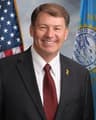 Mike Rounds
Republican · South Dakota