
A Republican bill with 3 Democratic cosponsors · See all 6 cosponsors
Last activity — Committee on Small Business and Entrepreneurship. Hearings held.
In committee
Introduced and handed to a committee in the chamber it started in.
The committee holds it, and most bills are never heard from again. A hearing or a committee vote would be news; silence is the usual outcome, and it kills the bill without anyone voting against it.
Its path through Congress
- Introduced
- In Committee
What this bill would do
The Made in America Manufacturing Finance Act of 2025 increases loan limits for small manufacturers. It defines a small manufacturer as a small business in specific industrial sectors with all production facilities located in the United States. The bill raises loan caps under the Small Business Act and the Small Business Investment Act of 1958. It also requires the Inspector General to analyze default risks associated with these higher limits. Finally, the Small Business Administration must provide annual reports on job creation and retention resulting from these larger loans.
Yes· 3 of 8
- Scored +9
Would business owners be better off under this?
Directly benefits small business owners in the manufacturing sector through higher loan caps.
- Scored +8
Does this make it easier to run a small business?
Significantly increases the maximum loan amounts available to small manufacturers.
- Scored +5
Is this likely to create jobs?
Higher loan limits for manufacturers are intended to stimulate growth and the bill specifically tracks job creation and retention.
The opposite
- Scored -2
Does this make the government pay for what it commits to?
The bill introduces additional risk of loan defaults and potential costs to the government.
Who it would affect, and how
Potential Positive Impacts for People
- Increased Access to Capital: Small manufacturers can access significantly higher loan amounts, such as increasing certain limits to $7,500,000, $9,000,000, or $10,000,000 depending on the loan type (Section 3 and Section 4).
- Support for Domestic Production: The benefits are specifically targeted at businesses where all production facilities are located in the United States (Section 2).
- Job Preservation: The bill includes a requirement to analyze whether these larger loans prevent the loss of jobs for employees of small manufacturers (Section 6(b)(2)).
Potential Negative Impacts for People
- Increased Financial Risk: The bill acknowledges the potential for "additional risk," including increased default amounts and larger guaranty purchase amounts (Section 5(1)(C)).
- Potential Cost to Government: There is a concern regarding whether these changes impact the requirement for loan programs to operate at no cost to the Government (Section 5(1)(C)).
Groups and Interests Ranking
Every group the model scored this bill for, from -10 to +10. Tap or hover a score for the reason it gave.
- Demographic And Interest Groups
- Would business owners be better off under this? — Directly benefits small business owners in the manufacturing sector through higher loan caps. Would people in rural areas be better off under this? — Supports domestic production facilities which are often located in rural communities. Would union members be better off under this? — Potential for job preservation and creation in domestic manufacturing plants.
- Economy And Finance
- Does this make it easier to run a small business? — Significantly increases the maximum loan amounts available to small manufacturers. Is this likely to create jobs? — Higher loan limits for manufacturers are intended to stimulate growth and the bill specifically tracks job creation and retention. Is this likely to grow the economy? — Increased capital access for domestic manufacturers can lead to expanded production and economic activity. Does this make the government pay for what it commits to? — The bill introduces additional risk of loan defaults and potential costs to the government.
- Environment Energy And Infrastructure
- Does this invest in rural communities? — Many small manufacturing facilities are located in rural areas, benefiting from increased capital.
- Governance And Ideology
- Does this make what the government does easier for the public to see? — Requires the SBA to provide annual reports on job creation and default risks.
- 5/13/2026
- Committee on Small Business and Entrepreneurship. Hearings held.
- 4/20/2026
- 1 Cosponsor added.
- 3/23/2026
- 1 Cosponsor added.
- 3/11/2026
- Committee on Small Business and Entrepreneurship. Hearings held.
- 3/5/2026
- 1 Cosponsor added.
- 1/14/2026
- Committee on Small Business and Entrepreneurship. Hearings held.
- 9/17/2025
- Committee on Small Business and Entrepreneurship. Hearings held.
- 7/29/2025
- Committee on Small Business and Entrepreneurship. Reported by Senator Ernst with an amendment in the nature of a substitute. Without written report.
- Placed on Senate Legislative Calendar under General Orders. Calendar No. 130.
- 7/16/2025
- Committee on Small Business and Entrepreneurship. Ordered to be reported with an amendment in the nature of a substitute favorably.
- 6/27/2025
- 2 Cosponsors added.
- 5/21/2025
- Committee on Small Business and Entrepreneurship. Hearings held.
- 5/14/2025
- Committee on Small Business and Entrepreneurship. Hearings held.
- 5/1/2025
- Read twice and referred to the Committee on Small Business and Entrepreneurship.
- 1 Cosponsor added.
- Introduced in Senate
One bill Congress.gov lists as related to this one — companions in the other chamber, earlier versions, and bills this one absorbed or was folded into.
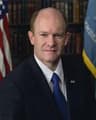 Christopher Coons
Democrat · Delaware
 Catherine Cortez Masto
Democrat · Nevada
 John Hickenlooper
Democrat · Colorado
 Jon Husted
Republican · Ohio
 Tim Scott
Republican · South Carolina
 Todd Young
Republican · Indiana