
James Risch (R-ID)
A bill to amend the Public Lands Corps Act of 1993 to modify the cost-sharing requirement for conservation projects carried out by a qualified youth or conservation corps, and for other purposes.
A Republican bill with 3 Democratic cosponsors · See all 5 cosponsors
Last activity — Committee on Energy and Natural Resources Subcommittee on Public Lands, Forests, and Mining. Hearings held. With printed Hearing: S.Hrg. 119-237.
In committee
Introduced and handed to a committee in the chamber it started in.
The committee holds it, and most bills are never heard from again. A hearing or a committee vote would be news; silence is the usual outcome, and it kills the bill without anyone voting against it.
Its path through Congress
- Introduced
- In Committee
What this bill would do
This bill proposes to amend the Public Lands Corps Act of 1993. The primary goal is to modify the cost-sharing requirements for conservation projects. These projects are carried out by a qualified youth or conservation corps. Specifically, it seeks to change the percentage split for project costs.
Yes· 3 of 7
- Scored +5
Does this better protect public land such as parks and forests?
The bill directly enhances the ability to fund and execute conservation projects on public lands via the Public Lands Corps.
- Scored +4
Does this better protect air, water and wildlife?
By increasing the federal share of costs for conservation projects, the bill facilitates more environmental preservation work.
- Scored +3
Would people in their twenties and thirties be better off under this?
The bill supports conservation corps which often provide opportunities for youth and young adults.
The opposite
- Scored -2
Does this reduce what the federal government owes?
Increasing the federal share of project costs from 75% to 90% increases federal spending.
- Scored -2
Does this reduce what the federal government spends?
The bill increases the federal government's financial responsibility for conservation projects.
Who it would affect, and how
Potential Positive Impacts for People
- Increased federal support for conservation projects: By changing the cost-sharing requirement, the federal government would cover a larger portion of the costs, increasing the share from 75% to 90% (Section 1). This could allow more conservation projects to be completed.
Potential Negative Impacts for People
- Reduced cost-sharing responsibility for local entities: The requirement for non-federal entities to pay would decrease from 25% to 10% (Section 1). While this reduces the burden on those entities, the text does not provide further details on the impact of this change.
Groups and Interests Ranking
Every group the model scored this bill for, from -10 to +10. Tap or hover a score for the reason it gave.
- Environment Energy And Infrastructure
- Does this better protect public land such as parks and forests? — The bill directly enhances the ability to fund and execute conservation projects on public lands via the Public Lands Corps. Does this better protect air, water and wildlife? — By increasing the federal share of costs for conservation projects, the bill facilitates more environmental preservation work.
- Demographic And Interest Groups
- Would people in their twenties and thirties be better off under this? — The bill supports conservation corps which often provide opportunities for youth and young adults. Would people in rural areas be better off under this? — Increased funding for conservation can benefit rural areas where much of this work occurs. Would students be better off under this? — The bill facilitates more conservation corps opportunities which are often utilized by students.
- Governance And Ideology
- Does this give the federal government more power? — The bill shifts more financial responsibility from local/non-federal entities to the federal government.
- Economy And Finance
- Is this likely to create jobs? — Increasing federal cost-sharing for conservation projects likely incentivizes more project completions and associated conservation corps employment. Does this reduce what the federal government spends? — The bill increases the federal government's financial responsibility for conservation projects. Does this reduce what the federal government owes? — Increasing the federal share of project costs from 75% to 90% increases federal spending.
- 1/29/2026
- 2 Cosponsors added.
- 12/2/2025
- Committee on Energy and Natural Resources Subcommittee on Public Lands, Forests, and Mining. Hearings held. With printed Hearing: S.Hrg. 119-237.
- 4/1/2025
- Read twice and referred to the Committee on Energy and Natural Resources.
- 3 Cosponsors added.
- Introduced in Senate
One bill Congress.gov lists as related to this one — companions in the other chamber, earlier versions, and bills this one absorbed or was folded into.
 Mike Crapo
Republican · Idaho
 Catherine Cortez Masto
Democrat · Nevada
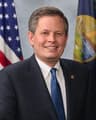 Steve Daines
Republican · Montana
 John Hickenlooper
Democrat · Colorado
 Jeff Merkley
Democrat · Oregon