
A Republican bill with 2 Republican cosponsors · See all 2 cosponsors
Last activity — Placed on Senate Legislative Calendar under General Orders. Calendar No. 36.
Cleared committee, waiting for its first floor vote
A committee approved it and it is on the calendar of the chamber it started in.
This is further than most bills get, and still no promise of a vote: the calendar is a queue, and the majority leadership decides what is called. A bill can sit here until the Congress ends.
Its path through Congress
- Introduced
- On Calendar
What this bill would do
This bill, titled the "Assisting Small Businesses Not Fraudsters Act," aims to prevent individuals who have defrauded the government from getting help from the Small Business Administration. It would prohibit associates of a small business from receiving financial assistance if they are finally convicted of crimes involving financial misconduct or false statements regarding specific loans or grants. Additionally, any small business concern that has such an individual as an associate would also be ineligible for most financial assistance. The restrictions exclude assistance provided under section 7(b). These new rules would not apply to contracts or agreements made by the government before this Act is passed.
Yes· 3 of 4
- Scored +2
Does this make the government pay for what it commits to?
The bill enhances fiscal responsibility by penalizing financial misconduct and false statements.
- Scored +1
Does this give the federal government more power?
The bill increases federal oversight of small business eligibility based on criminal convictions.
- Scored +1
Does this make what the government does easier for the public to see?
The bill promotes more transparent and accountable use of government financial assistance.
The opposite
- Scored -2
Would business owners be better off under this?
Business owners with specific associates may face loss of financial assistance due to their associates' convictions.
- Scored -2
Does this make it easier to run a small business?
The bill may negatively impact small businesses if an associate is convicted of financial crimes, potentially losing access to many SBA programs.
Who it would affect, and how
Potential Positive Impacts for People
-
Prevention of financial assistance for those convicted of fraud: An associate of a small business who is finally convicted of crimes involving financial misconduct or false statements regarding covered loans or grants would be ineligible for financial assistance from the Administrator (Section 2(a)(1)).
-
Restricting ineligible business concerns: Small business concerns that have an associate subject to the fraud conviction requirements would be ineligible to receive financial assistance from the Administrator, with the exception of assistance under section 7(b) (Section 2(a)(2)).
Potential Negative Impacts for People
-
Impact on business associates and entities: A small business concern could lose eligibility for financial assistance if one of its associates—such as an officer, director, owner of more than 20 percent equity, or a key employee—is finally convicted of certain financial crimes (Section 2(a)(3)(A)).
-
Restriction on assistance types: The prohibition limits the types of financial assistance available, though it does explicitly allow assistance under section 7(b) (Section 2(a)(1) and Section 2(a)(2)).
Groups and Interests Ranking
Every group the model scored this bill for, from -10 to +10. Tap or hover a score for the reason it gave.
- Demographic And Interest Groups
- Would business owners be better off under this? — Business owners with specific associates may face loss of financial assistance due to their associates' convictions.
- Governance And Ideology
- Does this make what the government does easier for the public to see? — The bill promotes more transparent and accountable use of government financial assistance. Does this give the federal government more power? — The bill increases federal oversight of small business eligibility based on criminal convictions.
- Economy And Finance
- Does this make the government pay for what it commits to? — The bill enhances fiscal responsibility by penalizing financial misconduct and false statements. Does this reduce what the federal government spends? — The bill may indirectly reduce spending by preventing fraudulent actors from accessing SBA resources. Does this make it easier to run a small business? — The bill may negatively impact small businesses if an associate is convicted of financial crimes, potentially losing access to many SBA programs.
- 8/4/2026
- 1 Cosponsor added.
- 4/1/2025
- Committee on Small Business and Entrepreneurship. Reported by Senator Ernst without amendment. Without written report.
- Placed on Senate Legislative Calendar under General Orders. Calendar No. 36.
- 3/27/2025
- Committee on Small Business and Entrepreneurship. Ordered to be reported without amendment favorably.
- 1 Cosponsor added.
- 3/13/2025
- Read twice and referred to the Committee on Small Business and Entrepreneurship.
- Introduced in Senate
One bill Congress.gov lists as related to this one — companions in the other chamber, earlier versions, and bills this one absorbed or was folded into.
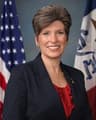 Joni Ernst
Republican · Iowa
 David McCormick
Republican · Pennsylvania