
Mike Thompson (D-CA)
Supporting the designation of the week beginning on October 12, 2025, as "National Wildlife Refuge Week".
A Democratic resolution with 1 Republican cosponsor · See all 5 cosponsors
Last activity — Referred to the House Committee on Natural Resources.
In committee
Introduced and handed to a committee in the chamber it started in.
The committee holds it, and most bills are never heard from again. A hearing or a committee vote would be news; silence is the usual outcome, and it kills the bill without anyone voting against it.
Its path through Congress
- Introduced
- In Committee
A House resolution is the House speaking for itself: stating a position, honouring someone, or setting its own rules. Adopting it is the whole process. Once the House agrees to it, it is officially the House's word; it is not a law, so the Senate and the President have no part in it.
What this bill would do
This resolution supports designating the week of October 12, 2025, as "National Wildlife Refuge Week." It recognizes the role of the National Wildlife Refuge System in conserving fish, wildlife, and plant resources across the United States. The text highlights the historical significance of these refuges and their role in protecting endangered species and ecosystems. Additionally, the resolution notes the economic contributions these lands make to local communities through tourism and recreation. Finally, it encourages the observance of this week through various events and activities to raise awareness about wildlife conservation.
Yes· 3 of 13
- Scored +5
Does this better protect air, water and wildlife?
The resolution recognizes the role of the refuge system in conserving fish, wildlife, plant resources, and protecting endangered species.
- Scored +4
Would Native Americans be better off under this?
The resolution emphasizes co-stewardship and engagement with Tribes, Alaska Native Corporations, and the Native Hawaiian community.
- Scored +4
Does this better protect public land such as parks and forests?
The resolution emphasizes the management of refuges to reduce wildfire risk and protect ecosystems.
The opposite
No question was scored the opposite.
Who it would affect, and how
Potential Positive Impacts for People
-
Economic Benefits: National wildlife refuges generate over $3,200,000,000 for local economies and support 41,000 jobs (Whereas clause).
-
Recreation and Heritage: The refuges provide opportunities for sustainable hunting, fishing, wildlife observation, photography, and environmental education (Whereas clause).
-
Community Protection: More than 180 refuges help protect communities by reducing the risk of storm-surge flooding in low-lying and coastal areas (Whereas clause).
-
Disaster Risk Reduction: Many refuges are managed to reduce wildfire risk by thinning overgrown forests and removing invasive species (Whereas clause).
-
Urban Community Engagement: The Urban Wildlife Conservation Program works to dismantle barriers for underserved communities, providing education, employment for youth, and connections to nature (Whereas clause and Resolution section 7).
-
Cultural Preservation: The system protects important cultural and historic resources, including archaeological sites and traditional sacred spaces (Whereas clause).
Potential Negative Impacts for People
- No negative impacts or burdens are explicitly stated in the provided text.
Groups and Interests Ranking
Every group the model scored this bill for, from -10 to +10. Tap or hover a score for the reason it gave.
- Demographic And Interest Groups
- Would Native Americans be better off under this? — The resolution emphasizes co-stewardship and engagement with Tribes, Alaska Native Corporations, and the Native Hawaiian community. Would children be better off under this? — The resolution states that national wildlife refuges provide opportunities for children to discover and gain appreciation for the natural world. Would people in cities be better off under this? — The Urban Wildlife Conservation Program specifically aims to connect urban communities with nature. Would gun owners be better off under this? — The resolution notes that national wildlife refuges support sustainable hunting programs. Would households on low incomes be better off under this? — The Urban Wildlife Conservation Program works to dismantle barriers for underserved communities to access outdoor recreation. Would people in their twenties and thirties be better off under this? — The Urban Wildlife Conservation Program provides employment opportunities for youth.
- Environment Energy And Infrastructure
- Does this better protect air, water and wildlife? — The resolution recognizes the role of the refuge system in conserving fish, wildlife, plant resources, and protecting endangered species. Does this better protect public land such as parks and forests? — The resolution emphasizes the management of refuges to reduce wildfire risk and protect ecosystems.
- Economy And Finance
- Does this make it easier to run a small business? — The text states that national wildlife refuges are important to local businesses and gateway communities. Is this likely to create jobs? — The resolution notes that national wildlife refuges support approximately 41,000 jobs.
- Social Issues And Justice
- Does this narrow racial gaps in how people are treated? — The Urban Wildlife Conservation Program works to dismantle barriers for underserved communities to participate in outdoor recreation. Is this likely to lift people out of poverty? — The resolution highlights that the Urban Wildlife Conservation Program provides employment opportunities to youth in underserved communities.
- Education And Technology
- Does this make it easier to use public money at a school other than the local one? — The resolution highlights that national wildlife refuges provide opportunities for environmental education.
- 10/15/2026
- 1 Cosponsor added.
- 10/17/2025
- Submitted in House
- Referred to the House Committee on Natural Resources.
- 4 Cosponsors added.
2 bills Congress.gov lists as related to this one — companions in the other chamber, earlier versions, and bills this one absorbed or was folded into.
 Debbie Dingell
Democrat · Michigan
 Melanie Stansbury
Democrat · New Mexico
 Jill Tokuda
Democrat · Hawaii
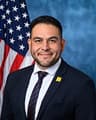 Gabe Vasquez
Democrat · New Mexico
 Robert Wittman
Republican · Virginia