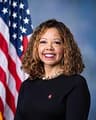
Lucy McBath (D-GA)
Expressing support for designation of the week of September 14 through 20, 2025, as "National Adult Education and Family Literacy Week".
A Democratic resolution with 2 Republican cosponsors · See all 14 cosponsors
Last activity — Referred to the House Committee on Education and Workforce.
In committee
Introduced and handed to a committee in the chamber it started in.
The committee holds it, and most bills are never heard from again. A hearing or a committee vote would be news; silence is the usual outcome, and it kills the bill without anyone voting against it.
Its path through Congress
- Introduced
- In Committee
A House resolution is the House speaking for itself: stating a position, honouring someone, or setting its own rules. Adopting it is the whole process. Once the House agrees to it, it is officially the House's word; it is not a law, so the Senate and the President have no part in it.
What this bill would do
This resolution expresses support for designating the week of September 14 through 20, 2025, as ``National Adult Education and Family Literacy Week''. The measure aims to raise public awareness regarding the importance of adult education, workforce skills, and family literacy. It recognizes that many adults in the United States lack essential literacy, numeracy, and digital skills. The resolution highlights how these skills are necessary for economic and societal well-being. Finally, it encourages support for programs that assist individuals in these areas.
Yes· 3 of 11
- Scored +2
Would children be better off under this?
The resolution notes that family literacy programs can increase parental involvement in a child's education.
- Scored +2
Would people over 65 be better off under this?
The bill addresses the need for older individuals to gain literacy skills to safely follow medical instructions.
- Scored +2
Would households on low incomes be better off under this?
The resolution aims to support those who may be receiving public assistance by providing skills for better employment.
The opposite
No question was scored the opposite.
Who it would affect, and how
Potential Positive Impacts for People
-
Raising Awareness: The resolution supports designating a specific week to raise public awareness about adult education, workforce skills, and family literacy (Resolution Section 1).
-
Encouraging Program Support: It encourages people across the country to support programs that help individuals needing adult education and workforce skills (Resolution Section 2).
-
Increasing Access to Programs: The measure calls on public, private, and nonprofit entities to support increased access to adult education and family literacy programs (Resolution Section 4).
-
Societal and Economic Benefits: The text notes that the United States reaps economic benefits from individuals who improve their literacy, numeracy, and English-language skills (Resolution Whereas clauses).
Potential Negative Impacts for People
- No negative impacts or burdens are explicitly mentioned in the provided text.
Groups and Interests Ranking
Every group the model scored this bill for, from -10 to +10. Tap or hover a score for the reason it gave.
- Demographic And Interest Groups
- Would children be better off under this? — The resolution notes that family literacy programs can increase parental involvement in a child's education. Would immigrants be better off under this? — The bill explicitly mentions the importance of literacy skills for immigrants to succeed in the United States. Would households on low incomes be better off under this? — The resolution aims to support those who may be receiving public assistance by providing skills for better employment. Would people over 65 be better off under this? — The bill addresses the need for older individuals to gain literacy skills to safely follow medical instructions. Would students be better off under this? — The resolution supports programs that improve the educational success and stability of children through family literacy.
- Economy And Finance
- Is this likely to grow the economy? — The resolution states that the United States reaps economic benefits from individuals who improve their literacy and numeracy skills. Is this likely to create jobs? — The resolution notes that literacy and workforce skills are essential for obtaining and retaining employment.
- Social Issues And Justice
- Is this likely to lift people out of poverty? — The resolution suggests that literacy and workforce skills help individuals obtain jobs that provide a living wage.
- Education And Technology
- Does this get reliable internet to more people? — The resolution highlights the need for adults to acquire essential digital skills.
- Healthcare
- Does this make health care easier to get in general? — The bill notes that literacy skills are necessary for older individuals to follow medical instructions and read prescriptions.
- National Security And Foreign Policy
- Does this increase the pay, pensions or support veterans receive? — The text links literacy and skill development to personal and societal success which can benefit all service members.
- 9/19/2025
- 1 Cosponsor added.
- 9/18/2025
- 2 Cosponsors added.
- 9/15/2025
- Submitted in House
- Referred to the House Committee on Education and Workforce.
- 11 Cosponsors added.
One bill Congress.gov lists as related to this one — companions in the other chamber, earlier versions, and bills this one absorbed or was folded into.
 Sanford Bishop
Democrat · Georgia
 Danny Davis
Democrat · Illinois
 Dwight Evans
Democrat · Pennsylvania
 Cleo Fields
Democrat · Louisiana
 Brian Fitzpatrick
Republican · Pennsylvania
 Erin Houchin
Republican · Indiana
 Henry Johnson
Democrat · Georgia
 Stephen Lynch
Democrat · Massachusetts
 Frank Mrvan
Democrat · Indiana
 John Mannion
Democrat · New York
 Eleanor Norton
Democrat · District of Columbia
 Chellie Pingree
Democrat · Maine
 Eric Swalwell
Democrat · California
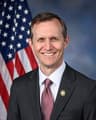 George Whitesides
Democrat · California