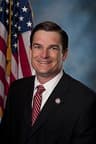
Austin Scott (R-GA)
Providing for consideration of the bill (H.R. 3838) to authorize appropriations for fiscal year 2026 for military activities of the Department of Defense, for military construction, and for defense activities of the Department of Energy, to prescribe military personnel strengths for such fiscal year, and for other purposes, and providing for consideration of the bill (H.R. 3486) to amend the Immigration and Nationality Act to increase penalties for individuals who illegally enter and reenter the United States after being removed, and for other purposes.
A Republican resolution with no cosponsors
Last activity — Motion to reconsider laid on the table Agreed to without objection.
Adopted
The chamber formally agreed to it, and for a resolution that is the finish line: what it says is now officially the chamber's position, rule or tribute.
Nothing more is needed. A resolution is how a chamber speaks for itself or sets its own rules, so adopting it is what puts it into effect. It is not a law, so there is nothing for the President to sign.
Its path through Congress
- Introduced
- Adopted by the House 210–207
A House resolution is the House speaking for itself: stating a position, honouring someone, or setting its own rules. Adopting it is the whole process. Once the House agrees to it, it is officially the House's word; it is not a law, so the Senate and the President have no part in it.
What this bill would do
This resolution provides for the consideration of two different bills in the House. The first bill, H.R. 3838, seeks to authorize appropriations for fiscal year 2026 regarding military activities for the Department of Defense, military construction, and defense activities for the Department of Energy. It also intends to prescribe military personnel strengths for that fiscal year. The second bill, H.R. 3486, aims to amend the Immigration and Nationality Act. This amendment would increase penalties for individuals who illegally enter and reenter the United States after being removed.
Yes
- Scored +3
Does this tighten control of the border?
The bill increases penalties for those who illegally enter or reenter the United States.
- Scored +1
Does this increase the pay, pensions or support veterans receive?
The bill authorizes appropriations for military personnel strengths and activities.
The opposite· 3 of 4
- Scored -5
Would immigrants be better off under this?
The bill increases legal penalties for individuals entering or reentering the country illegally.
- Scored -3
Would Hispanic Americans be better off under this?
The bill increases penalties for illegal entry and reentry, which often impacts Hispanic communities.
- Scored -2
Would households on low incomes be better off under this?
Increased penalties for illegal entry may disproportionately affect low-income immigrant populations.
What Congress actually voted on
2 recorded votes have been taken on this bill. One of them decided something; the rest moved it along.
- The House: the vote on whether to adopt the resolution A resolution is one chamber speaking for itself — setting its own rules, taking a position, honouring someone — and it never goes to the President. Agreeing to it is the whole decision. Passed 210 yes · 207 no
09/09/2025 · Roll call 243 · recorded as “On Agreeing to the Resolution”
- The House: a vote to stop debate and move to the decision A House procedural vote that closes off further debate and amendments. It is about the schedule, not the substance, and it usually falls along party lines. Previous question agreed to 213 yes · 207 no
09/09/2025 · Roll call 242 · recorded as “On Ordering the Previous Question”
Who it would affect, and how
Potential Positive Impacts for People
- Military Funding and Personnel: H.R. 3838 authorizes appropriations for military activities of the Department of Defense, military construction, and defense activities of the Department of Energy for fiscal year 2026. This includes prescribing military personnel strengths.
Potential Negative Impacts for People
- Increased Penalties for Illegal Entry: H.R. 3486 seeks to increase penalties for individuals who illegally enter and reenter the United States after being removed.
Groups and Interests Ranking
Every group the model scored this bill for, from -10 to +10. Tap or hover a score for the reason it gave.
- Demographic And Interest Groups
- Would immigrants be better off under this? — The bill increases legal penalties for individuals entering or reentering the country illegally. Would Hispanic Americans be better off under this? — The bill increases penalties for illegal entry and reentry, which often impacts Hispanic communities. Would households on low incomes be better off under this? — Increased penalties for illegal entry may disproportionately affect low-income immigrant populations.
- Social Issues And Justice
- Does this tighten control of the border? — The bill increases penalties for those who illegally enter or reenter the United States.
- Economy And Finance
- Does this reduce what the federal government spends? — The bill authorizes significant new appropriations for military activities and construction.
- National Security And Foreign Policy
- Does this increase the pay, pensions or support veterans receive? — The bill authorizes appropriations for military personnel strengths and activities.
- 9/9/2025
- The House Committee on Rules reported an original measure, H. Rept. 119-255, by Mr. Scott, Austin.
- Placed on the House Calendar, Calendar No. 43.
- Motion to reconsider laid on the table Agreed to without objection.
- Passed/agreed to in House: On agreeing to the resolution Agreed to by recorded vote: 210 - 207 (Roll no. 243). (text: CR H3907: 2)
- On agreeing to the resolution Agreed to by recorded vote: 210 - 207 (Roll no. 243). (text: CR H3907)
- On ordering the previous question Agreed to by the Yeas and Nays: 213 - 207 (Roll no. 242).
- Considered as unfinished business. (consideration: CR H3914)
- POSTPONED PROCEEDINGS - At the conclusion of debate on H. Res. 682, the Chair put the question on ordering the previous question and by voice vote, announced the ayes had prevailed. Ms. Scanlon demanded the yeas and nays and Chair postponed further proceedings until a time to be announced.
- DEBATE - The House proceeded with one hour of debate on H. Res. 682.
- Considered as privileged matter. (consideration: CR H3907)
- The resolution provides for consideration of H.R. 3838 under a structured rule and H.R. 3486 under a closed rule with one hour of general debate and one motion to recommit on each bill.
- Bill introduced.
2 bills Congress.gov lists as related to this one — companions in the other chamber, earlier versions, and bills this one absorbed or was folded into.