
Sydney Kamlager-Dove (D-CA)
Recognizing National Foster Care Month as an opportunity to raise awareness about the challenges of children in the foster care system and encouraging Congress to implement policy to improve the lives of children in, or at risk of entering, the foster care system.
A Democratic resolution with 3 Republican cosponsors · See all 5 cosponsors
Last activity — Referred to the House Committee on Ways and Means.
In committee
Introduced and handed to a committee in the chamber it started in.
The committee holds it, and most bills are never heard from again. A hearing or a committee vote would be news; silence is the usual outcome, and it kills the bill without anyone voting against it.
Its path through Congress
- Introduced
- In Committee
A House resolution is the House speaking for itself: stating a position, honouring someone, or setting its own rules. Adopting it is the whole process. Once the House agrees to it, it is officially the House's word; it is not a law, so the Senate and the President have no part in it.
What this bill would do
H. Res. 390 supports the designation of National Foster Care Month to raise awareness about the challenges children face in the foster care system. The resolution recognizes the hard work of foster parents, social workers, and advocates. It encourages Congress to create policies that improve the lives of children currently in or at risk of entering foster care. The resolution also reaffirms the need to continue using specific Social Security Act programs to support families and children.
Yes· 3 of 17
- Scored +8
Would children be better off under this?
The bill is specifically designed to improve the safety, well-being, and permanency of children in foster care.
- Scored +6
Would people in their twenties and thirties be better off under this?
The bill focuses on improving the transition to adulthood for those aging out of the system.
- Scored +5
Would households on low incomes be better off under this?
The bill supports vulnerable families and prevention services to keep families together.
The opposite
No question was scored the opposite.
Who it would affect, and how
Potential Positive Impacts for People
-
Support for vulnerable families and children: The resolution reaffirms the need for programs to support vulnerable families, invest in prevention and reunification services, and adequately serve children in foster care (Resolved section 8).
-
Improved transitions to adulthood: The resolution seeks to facilitate a more successful transition into adulthood for those who "age out" of the foster care system (Resolved section 8E).
-
Promotion of permanent homes: The resolution encourages the promotion of adoption when reunification is not in the best interest of the child to ensure children have permanent homes (Resolved section 8C).
Potential Negative Impacts for People
- The provided text does not list any specific provisions that would result in negative consequences or burdens for individuals.
Groups and Interests Ranking
Every group the model scored this bill for, from -10 to +10. Tap or hover a score for the reason it gave.
- Demographic And Interest Groups
- Would children be better off under this? — The bill is specifically designed to improve the safety, well-being, and permanency of children in foster care. Would people in their twenties and thirties be better off under this? — The bill focuses on improving the transition to adulthood for those aging out of the system. Would households on low incomes be better off under this? — The bill supports vulnerable families and prevention services to keep families together. Would Black Americans be better off under this? — The bill explicitly mentions the disproportionate challenges faced by children of color in the foster system. Would Asian Americans be better off under this? — The bill explicitly mentions the disproportionate challenges faced by children of color in the foster system. Would Hispanic Americans be better off under this? — The bill explicitly mentions the disproportionate challenges faced by children of color in the foster system. Would Native Americans be better off under this? — The bill explicitly mentions the disproportionate challenges faced by children of color in the foster system. Would students be better off under this? — The bill addresses educational instability for youth in foster care. Would people with disabilities be better off under this? — The bill acknowledges the special needs of children in the foster care system. Would white Americans be better off under this? — The bill improves the system for all children in foster care regardless of race.
- Social Issues And Justice
- Is this likely to lift people out of poverty? — By supporting vulnerable families and prevention services, the bill aims to reduce the impact of poverty on child placement. Does this narrow racial gaps in how people are treated? — The bill acknowledges that children of color are disproportionately affected by longer stays in foster care. Is this likely to reduce homelessness? — Specifically targets the issue of youth aging out of foster care who become instantly homeless. Does this make housing cost less? — The resolution highlights the homelessness risk for youth aging out and encourages policies to improve their transition to adulthood. Does this strengthen Social Security? — The resolution reaffirms the need for specific Social Security Act programs to support foster families.
- Education And Technology
- Does this make college cost less? — The bill recognizes the struggles of foster youth in pursuing higher education.
- Healthcare
- Does this make health care easier to get in general? — The resolution identifies healthcare gaps for foster youth and encourages policies to improve their lives.
- 5/6/2025
- Submitted in House
- Referred to the House Committee on Ways and Means.
- 5 Cosponsors added.
One bill Congress.gov lists as related to this one — companions in the other chamber, earlier versions, and bills this one absorbed or was folded into.
 Don Bacon
Republican · Nebraska
 Erin Houchin
Republican · Indiana
 Gwen Moore
Democrat · Wisconsin
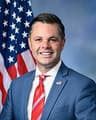 Zachary Nunn
Republican · Iowa
 Mary Gay Scanlon
Democrat · Pennsylvania