
Shri Thanedar (D-MI)
Impeaching Donald John Trump, President of the United States, for high crimes and misdemeanors.
A Democratic resolution with 5 Democratic cosponsors · See all 5 cosponsors
Last activity — NOTIFICATION OF INTENT TO OFFER RESOLUTION - Mr. Thanedar notified the House of his intent to offer a privileged resolution pursuant to clause 2(a)(1) of rule IX. The Chair announced that a determination will be made at the time designated for consideration of the resolution.
Introduced, nothing more yet
Formally proposed, and not yet handed to a committee.
Nearly every bill is sent to a committee within days. Introduction alone is not a sign of support, of momentum, or of any likelihood of passing — any member may introduce any bill.
Its path through Congress
- Introduced
A House resolution is the House speaking for itself: stating a position, honouring someone, or setting its own rules. Adopting it is the whole process. Once the House agrees to it, it is officially the House's word; it is not a law, so the Senate and the President have no part in it.
What this bill would do
H. Res. 353 is a resolution introduced in the House of Representatives to impeach Donald John Trump, President of the United States, for high crimes and misdemeanors. The resolution lists seven articles of impeachment to be presented to the Senate. These articles include obstruction of justice, usurpation of appropriations power, abuse of trade powers and international aggression, violation of First Amendment rights, creation of unlawful office, bribery and corruption, and tyranny.
Potential Positive Impacts for People:
The document does not explicitly state any positive impacts for people. It is focused on the alleged wrongdoings of the President.
Potential Negative Impacts for People:
-
Article I: Obstruction of Justice, violation of due process, and a breach of the duty to faithfully execute laws: Allegedly, Donald John Trump directed his subordinates to dismiss bribery and fraud charges against New York City Mayor Eric Adams, thus abusing the criminal laws. He also allegedly defied court orders, including those related to the removal of persons from the United States and acted in contempt of court for violating a court-sanctioned settlement agreement, which could have negative impacts on individuals affected by these actions.
-
Article II: Usurpation of the appropriations power: The alleged dismantling of the Department of Education and the elimination of the United States Agency for International Development (USAID) could negatively impact students, educational institutions, recipients of foreign aid, and individuals relying on disaster relief, conflict relief, and other USAID programs.
-
Article III: Abuse of trade powers and international aggression: The alleged imposition of unjustifiable tariffs on foreign nations could cause a sharp decline in the United States economy and the economies of countries around the world. The alleged threats of invasion, the annexation of territory, and the occupation of sovereign territory through the use of military action could implicate the United States in violations of international law and create hostilities towards Americans.
-
Article IV: Violation of first amendment rights: The alleged retaliation against law firms and attorneys who have advised or represented, or been associated with those who advise or represent, litigants who displease him, could have a chilling effect on the public discourse, and striking at the core freedoms essential to a free society and democratic elections under the Constitution.
-
Article V: Creation of unlawful office: The alleged creation of an unlawful office, the so-called Department of Government Efficiency (``DOGE''), could negatively impact government employees through impoundment of funds appropriated by Congress; violations of privacy and security laws with respect to sensitive information systems, personally identifiable information, and classified material; and termination of government employees under false pretenses and in violation of civil service laws.
-
Article VI: Bribery and corruption: The alleged solicitation and acceptance of bribes in exchange for official actions could have a significant detrimental effect on the fairness and integrity of government operations, potentially harming the public interest.
-
Article VII: Tyranny: The alleged denial and violation of the right of the People of the United States to freedom of speech, and of assembly, and to petition the government for redress of grievances, as well as, the suggestion that he intends to violate the Presidential term limits established by the 22d Amendment to the Constitution, could have a significant detrimental effect on the public.
Yes· 3 of 22
- Scored +8
Does this protect the individual right to speak freely?
The bill targets alleged retaliation against critics and the suppression of dissent.
- Scored +8
Does this protect the right to fair treatment by the courts?
The bill opposes the alleged enforced disappearances and violation of due process rights.
- Scored +8
Does this protect what people are allowed to say in public life?
The bill seeks to remove a President alleged to have violated First Amendment rights and suppressed dissent.
The opposite· 3 of 11
- Scored -8
Does this make it easier for immigrants already here to become citizens?
The bill alleges an attempt to abrogate the citizenship clause of the 14th Amendment for certain persons born in the U.S.
- Scored -7
Is this likely to grow the economy?
The bill alleges that unjustified tariffs caused a sharp decline in the U.S. and global economies.
- Scored -5
Would billionaires be better off under this?
The bill targets an unlawful office (DOGE) headed by a high-net-worth individual (Elon Musk).
Groups and Interests Ranking
Every group the model scored this bill for, from -10 to +10. Tap or hover a score for the reason it gave.
- Demographic And Interest Groups
- Would immigrants be better off under this? — Opposes the alleged enforced disappearances and the denial of 14th Amendment birthright citizenship. Would students be better off under this? — Opposes the dismantling of the Department of Education. Would veterans be better off under this, taking everything together? — Opposes the unlawful blockage of funds to the Department of Veterans Affairs. Would children be better off under this? — Protects the Department of Education which distributes aid to students. Would farmers be better off under this? — Opposes damaging tariffs that lead to retaliatory tariffs on U.S. goods. Would Hispanic Americans be better off under this? — Opposes the alleged unlawful removal of persons to El Salvador and threats to Mexico. Would households on low incomes be better off under this? — Opposes the removal of humanitarian aid (USAID) and educational support. Would people in their twenties and thirties be better off under this? — Protects educational funding and opposes arbitrary removal of due process. Would billionaires be better off under this? — The bill targets an unlawful office (DOGE) headed by a high-net-worth individual (Elon Musk).
- Governance And Ideology
- Does this protect the right to fair treatment by the courts? — The bill opposes the alleged enforced disappearances and violation of due process rights. Does this protect the individual right to speak freely? — The bill targets alleged retaliation against critics and the suppression of dissent. Does this make what the government does easier for the public to see? — The bill targets alleged bribery, corruption, and the unlawful creation of DOGE to restore government integrity. Does this protect people from being watched or searched? — The bill cites violations of the Privacy Act and unauthorized transmission of personal info. Does this leave more decisions to the states? — The bill seeks to stop the alleged violation of state sovereignty by the federal executive. Does this give the federal government more power? — The bill opposes the President's alleged effort to commandeer state officers and units of government.
- National Security And Foreign Policy
- Does this favour talking over confrontation abroad? — The bill addresses the alleged abuse of trade powers and international aggression that damaged diplomatic relations. Does this strengthen ties with allied countries? — The bill seeks to end alleged threats of annexation of allies like Canada and Denmark/Greenland. Does this make trade with other countries easier? — The bill opposes the imposition of unjustifiable tariffs that have harmed the U.S. and global economies. Does this send more money or help to other countries? — The bill opposes the alleged elimination of USAID and the freezing of foreign assistance. Does this increase the pay, pensions or support veterans receive? — The bill alleges an unlawful blockage of funds to the Department of Veterans Affairs.
- Economy And Finance
- Is this likely to grow the economy? — The bill alleges that unjustified tariffs caused a sharp decline in the U.S. and global economies. Does this make the government pay for what it commits to? — The bill alleges the President unlawfully usurped the appropriations power and violated the Impoundment Control Act. Is this likely to create jobs? — The bill alleges the administration cut jobs through the unlawful impoundment of funds via DOGE.
- Education And Technology
- Does this give people more control over their personal data? — The bill alleges the President violated the Privacy Act and transmitted sensitive personal information. Does this put more money into public schools? — The bill opposes the alleged dismantling of the Department of Education. Does this put more money into scientific research? — The bill opposes the unlawful blocking of funds to the National Institutes of Health.
- Healthcare
- Does this make health care easier to get in general? — The bill alleges the blockage of funds to the National Institutes of Health. Does this help veterans get medical care? — The bill alleges that DOGE blocked funds to the Department of Veterans Affairs. Does this put more money into medical research? — The bill alleges the unlawful impoundment of funds intended for the National Institutes of Health.
- Environment Energy And Infrastructure
- Does this improve help for people hit by a disaster? — The bill opposes the alleged elimination of USAID, which provides critical disaster relief.
- Social Issues And Justice
- Does this protect what people are allowed to say in public life? — The bill seeks to remove a President alleged to have violated First Amendment rights and suppressed dissent. Does this make it easier for immigrants already here to become citizens? — The bill alleges an attempt to abrogate the citizenship clause of the 14th Amendment for certain persons born in the U.S. Is this likely to lift people out of poverty? — The bill alleges the elimination of USAID, which impacts food security and disaster relief for vulnerable populations.
- 5/13/2025
- Sponsor introductory remarks on measure. (CR H1953)
- NOTIFICATION OF INTENT TO OFFER RESOLUTION - Mr. Thanedar notified the House of his intent to offer a privileged resolution pursuant to clause 2(a)(1) of rule IX. The Chair announced that a determination will be made at the time designated for consideration of the resolution.
- 5/5/2025
- 1 Cosponsor added.
- 4/29/2025
- 1 Cosponsor added.
- 4/28/2025
- Submitted in House
- Referred to the House Committee on the Judiciary.
- 3 Cosponsors added.
 Al Green
Democrat · Texas
 Robin Kelly
Democrat · Illinois
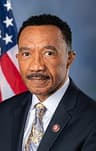 Kweisi Mfume
Democrat · Maryland
 Jerrold Nadler
Democrat · New York
 Janice Schakowsky
Democrat · Illinois