
Young Kim (R-CA)
Supporting the goals and ideals of Mathematics and Statistics Awareness Month.
A Republican resolution with 2 Democratic cosponsors · See all 4 cosponsors
Last activity — Referred to the House Committee on Education and Workforce.
In committee
Introduced and handed to a committee in the chamber it started in.
The committee holds it, and most bills are never heard from again. A hearing or a committee vote would be news; silence is the usual outcome, and it kills the bill without anyone voting against it.
Its path through Congress
- Introduced
- In Committee
A House resolution is the House speaking for itself: stating a position, honouring someone, or setting its own rules. Adopting it is the whole process. Once the House agrees to it, it is officially the House's word; it is not a law, so the Senate and the President have no part in it.
What this bill would do
This House Resolution supports the goals and ideals of Mathematics and Statistics Awareness Month. It aims to increase the visibility of these fields of study and communicate the benefits of education in mathematics and statistics. It also recognizes the importance of mathematics and statistics to STEM disciplines and celebrates their role in everyday life.
Potential Positive Impacts for People:
-
Increasing visibility of mathematics and statistics as fields of study (Resolved, (1)): This could encourage more students to pursue careers in these fields, potentially leading to increased job opportunities and a more skilled workforce.
-
Communicating the benefits of education in mathematics and statistics (Resolved, (1)): Highlighting the importance of these subjects could lead to increased investment in education and improved mathematical and statistical literacy among the general population.
-
Recognizing the importance of mathematics and statistics to STEM (Resolved, (2)): This acknowledgment could lead to greater support for STEM education and research, benefiting students, educators, and the economy as a whole.
-
Celebrating the role of mathematics and statistics in everyday life (Resolved, (3)): Raising awareness of the prevalence of these fields could increase public appreciation for their importance and impact on society.
-
Addressing underrepresentation (Whereas clauses regarding women and minorities): By acknowledging the disparity in representation, the resolution implicitly supports efforts to create a more diverse and inclusive workforce in mathematical sciences.
Potential Negative Impacts for People:
This resolution primarily expresses support and recognition, and does not appear to have any inherent negative impacts on people.
Yes· 3 of 19
- Scored +4
Would students be better off under this?
Directly supports the goals of increasing visibility and communicating the benefits of math and stats education.
- Scored +3
Would children be better off under this?
Inspires future generations of talent through engagement in hands-on mathematical activities.
- Scored +3
Would people in their twenties and thirties be better off under this?
Encourages students to pursue higher education and careers in mathematics and statistics.
The opposite
No question was scored the opposite.
Groups and Interests Ranking
Every group the model scored this bill for, from -10 to +10. Tap or hover a score for the reason it gave.
- Demographic And Interest Groups
- Would students be better off under this? — Directly supports the goals of increasing visibility and communicating the benefits of math and stats education. Would Black Americans be better off under this? — Explicitly supports the inclusion of underrepresented minorities, including African Americans, in the workforce. Would children be better off under this? — Inspires future generations of talent through engagement in hands-on mathematical activities. Would Hispanic Americans be better off under this? — Explicitly supports the inclusion of underrepresented minorities, including Hispanics or Latinos, in the workforce. Would Native Americans be better off under this? — Explicitly supports the inclusion of American Indians or Alaska natives in the workforce. Would women be better off under this? — Explicitly supports the transformation of the workforce through greater inclusion of women. Would people in their twenties and thirties be better off under this? — Encourages students to pursue higher education and careers in mathematics and statistics. Would Asian Americans be better off under this? — General support for STEM education benefits students and professionals across all ethnic groups. Would business owners be better off under this? — A more skilled mathematical workforce benefits innovation in business and manufacturing. Would households on low incomes be better off under this? — Increased visibility of STEM education can provide pathways to higher-paying careers. Would men be better off under this? — General support for STEM education benefits students and professionals. Would middle-income households be better off under this? — Promotes educational benefits that contribute to workforce competitiveness. Would white Americans be better off under this? — General support for STEM education benefits students and professionals.
- Economy And Finance
- Is this likely to grow the economy? — Advancing mathematical and statistical sciences is recognized as critical to economic prosperity. Is this likely to create jobs? — Promoting education in mathematics and statistics can lead to a more skilled workforce and increased job opportunities in STEM.
- Social Issues And Justice
- Does this narrow the gap between how men and women are treated? — The bill explicitly mentions the need for greater inclusion of women in the mathematical sciences workforce. Does this narrow racial gaps in how people are treated? — The bill recognizes underrepresentation of minorities in math PhDs and supports greater inclusion.
- Education And Technology
- Does this put more money into scientific research? — The bill promotes the visibility and goals of mathematical and statistical research.
- National Security And Foreign Policy
- Does this better protect the country from computer attacks? — The bill recognizes the role of mathematics and statistics in cybersecurity.
- 4/28/2025
- 1 Cosponsor added.
- 4/24/2025
- Submitted in House
- Referred to the House Committee on Education and Workforce.
- 3 Cosponsors added.
 Raja Krishnamoorthi
Democrat · Illinois
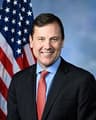 Thomas Kean
Republican · New Jersey
 Michael Lawler
Republican · New York
 Paul Tonko
Democrat · New York