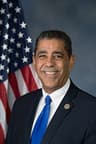
Adriano Espaillat (D-NY)
Recognizing the significant impact and legacy of Cecil Corbin-Mark in the environmental justice community and further recognizing that climate change most severely impacts vulnerable and disadvantaged communities in the United States and around the world, and that it is the responsibility of the United States Government to work with its global partners to promote environmental justice.
A Democratic resolution with no cosponsors
Last activity — Referred to the House Committee on Foreign Affairs.
In committee
Introduced and handed to a committee in the chamber it started in.
The committee holds it, and most bills are never heard from again. A hearing or a committee vote would be news; silence is the usual outcome, and it kills the bill without anyone voting against it.
Its path through Congress
- Introduced
- In Committee
A House resolution is the House speaking for itself: stating a position, honouring someone, or setting its own rules. Adopting it is the whole process. Once the House agrees to it, it is officially the House's word; it is not a law, so the Senate and the President have no part in it.
What this bill would do
This bill acknowledges the impact of climate change on vulnerable communities and the legacy of Cecil Corbin-Mark in environmental justice. It emphasizes the U.S. government's responsibility to promote environmental justice with global partners. The resolution urges global cooperation to prioritize climate adaptation for disadvantaged communities and reduce greenhouse gas emissions.
Potential Positive Impacts for People
-
Focus on Vulnerable Communities: The bill specifically recognizes that climate change impacts communities of color, indigenous peoples, and other frontline communities most severely (Resolution sections 1, 2, 4). This focus could lead to policies and resources directed toward these groups, offering them greater protection and support.
-
Global Cooperation: The bill promotes the idea that the US Government should work with global partners to promote environmental justice and climate justice (Resolution sections 1, 3, 4). This cooperation could lead to more effective solutions and resource sharing to combat climate change and its effects, benefiting people worldwide.
-
Climate Adaptation: The bill urges the United States Government to expand collaboration and cooperation among its global partners to pursue policies that prioritize climate adaptation among vulnerable and disadvantaged communities (Resolution section 4). It also expresses the need for all countries to promote vulnerable community-focused adaptation to occur across all sectors, including in agriculture, infrastructure, and health (Resolution section 5).
Potential Negative Impacts for People
- This resolution does not seem to have any negative impacts for people.
Yes· 3 of 35
- Scored +8
Would Black Americans be better off under this?
Specifically highlights the disproportionate harm to people of color and calls for environmental justice.
- Scored +8
Would Hispanic Americans be better off under this?
Specifically focuses on environmental justice for communities of color and Central American regions.
- Scored +8
Would Asian Americans be better off under this?
Addresses the disproportionate impact of climate change on people of color.
The opposite
No question was scored the opposite.
Groups and Interests Ranking
Every group the model scored this bill for, from -10 to +10. Tap or hover a score for the reason it gave.
- Demographic And Interest Groups
- Would Black Americans be better off under this? — Specifically highlights the disproportionate harm to people of color and calls for environmental justice. Would Asian Americans be better off under this? — Addresses the disproportionate impact of climate change on people of color. Would Hispanic Americans be better off under this? — Specifically focuses on environmental justice for communities of color and Central American regions. Would Native Americans be better off under this? — Explicitly recognizes the specific protections needed for indigenous peoples. Would farmers be better off under this? — Focuses on agricultural adaptation and specifically mentions the plight of Central American and rural farmers. Would households on low incomes be better off under this? — Prioritizes climate adaptation and justice for disadvantaged and poor households. Would immigrants be better off under this? — Acknowledges climate change as a driver for migration and refugee crises. Would people in rural areas be better off under this? — Focuses on rural farmers and agrarian communities affected by climate change. Would people in cities be better off under this? — Addresses the specific health risks of urban heat islands. Would children be better off under this? — References the need to protect children from climate change impacts as per the Paris Agreement. Would people with disabilities be better off under this? — References the Paris Agreement's obligations to protect persons with disabilities. Would retired people be better off under this? — Protects elderly populations from extreme heat and environmental hazards. Would people over 65 be better off under this? — Explicitly mentions that heat islands disproportionately harm the health of the elderly. Would students be better off under this? — Focuses on the existential threat to future generations. Would women be better off under this? — References the need for gender equality and empowerment of women in climate action. Would people in their twenties and thirties be better off under this? — Cites climate change as an existential threat to current and future generations. Would men be better off under this? — General environmental benefits for all. Would people in middle age be better off under this? — Provides general environmental protections that benefit all age groups. Would middle-income households be better off under this? — Provides broad environmental protections that benefit the general population. Would white Americans be better off under this? — Provides general environmental benefits, although the bill prioritizes marginalized groups. Would high-income households be better off under this? — General environmental improvements benefit all, though the focus is on the vulnerable.
- Environment Energy And Infrastructure
- Does this better protect air, water and wildlife? — Focuses on protecting frontline communities and promoting environmental and climate justice. Does this cut the pollution that drives climate change? — Expresses the urgent need for multilateral action to drastically reduce global greenhouse gas emissions. Does this reduce how much oil, gas and coal is produced? — Calls for the drastic reduction of greenhouse gas emissions. Does this improve help for people hit by a disaster? — Calls for a global approach to addressing emergency preparedness and climate adaptation. Does this invest in rural communities? — Calls for climate adaptation focused on agriculture and rural sectors to protect agrarian communities. Does this put more money into wind, solar and other renewable power? — Implicitly supports a transition away from carbon emissions through an emphasis on mitigating climate change.
- Social Issues And Justice
- Does this narrow racial gaps in how people are treated? — Explicitly recognizes the disproportionate impact of climate change on communities of color and calls for environmental justice. Is this likely to lift people out of poverty? — Addresses how climate change exacerbates poverty and urges support for disadvantaged communities. Does this expand the rights of people with disabilities? — References the Paris Agreement's obligations to persons with disabilities in the context of climate action. Does this narrow the gap between how men and women are treated? — References the Paris Agreement's goals for gender equality and empowerment of women.
- National Security And Foreign Policy
- Does this favour talking over confrontation abroad? — Promotes the US as a leader in international environmental justice and climate cooperation. Does this strengthen ties with allied countries? — Calls for expanded collaboration and multilateral action with global partners to combat climate change. Does this send more money or help to other countries? — Urges the US to work with global partners to prioritize climate adaptation in vulnerable international communities.
- Healthcare
- Does this make health care easier to get in general? — Urges adaptation policies across the health sector to protect vulnerable communities from climate-related health risks.
- 4/24/2025
- Submitted in House
- Referred to the House Committee on Foreign Affairs.