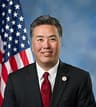
Mark Takano (D-CA)
Supporting the goals and ideals of the Rise Up for LGBTQI+ Youth in Schools Initiative, a call to action to communities across the country to demand equal educational opportunity, basic civil rights protections, and freedom from erasure for all students, particularly LGBTQI+ young people, in K-12 schools.
A Democratic resolution with 13 Democratic cosponsors · See all 13 cosponsors
Last activity — Referred to the House Committee on Education and Workforce.
In committee
Introduced and handed to a committee in the chamber it started in.
The committee holds it, and most bills are never heard from again. A hearing or a committee vote would be news; silence is the usual outcome, and it kills the bill without anyone voting against it.
Its path through Congress
- Introduced
- In Committee
A House resolution is the House speaking for itself: stating a position, honouring someone, or setting its own rules. Adopting it is the whole process. Once the House agrees to it, it is officially the House's word; it is not a law, so the Senate and the President have no part in it.
What this bill would do
This resolution supports the goals of the Rise Up for LGBTQI+ Youth in Schools Initiative. The initiative acts as a call to action for communities to demand equal educational opportunities and basic civil rights protections for all students. It specifically focuses on LGBTQI+ young people in K-12 schools to prevent erasure. The resolution highlights the need for safe and inclusive learning environments free from discrimination and harassment. Finally, it encourages states and localities to adopt policies that prohibit bias-based victimization and exclusion.
Yes· 3 of 11
- Scored +9
Would LGBTQ people be better off under this?
The entire resolution is dedicated to supporting the rights and safety of LGBTQI+ youth.
- Scored +8
Does this expand the rights of LGBTQ people?
The resolution advocates for the protection of civil rights and educational opportunities for LGBTQI+ students.
- Scored +7
Would children be better off under this?
The resolution specifically aims to protect K-12 students from harassment and discrimination.
The opposite
No question was scored the opposite.
Who it would affect, and how
Potential Positive Impacts for People
-
Equal Educational Opportunity: The resolution supports demanding equal educational opportunities for all students, particularly those who are LGBTQI+ (Resolution Section 1).
-
Improved School Climate: By advocating for inclusive learning environments, the resolution aims to provide students with greater physical and psychological safety, better mental well-being, and improved educational and life outcomes (Whereas clauses).
-
Protection from Discrimination: The resolution encourages states and localities to adopt laws and policies that prohibit bias-based victimization, exclusion, and erasure (Resolution Section 3).
-
Support for Vulnerable Groups: The resolution seeks to affirm students who are transgender, nonbinary, intersex, Black, Indigenous, people of color, and people with disabilities (Whereas clauses).
Potential Negative Impacts for People
- No negative impacts are explicitly stated in the text.
Groups and Interests Ranking
Every group the model scored this bill for, from -10 to +10. Tap or hover a score for the reason it gave.
- Demographic And Interest Groups
- Would LGBTQ people be better off under this? — The entire resolution is dedicated to supporting the rights and safety of LGBTQI+ youth. Would children be better off under this? — The resolution specifically aims to protect K-12 students from harassment and discrimination. Would students be better off under this? — The resolution seeks to create safer and more inclusive learning environments for all students. Would people in their twenties and thirties be better off under this? — The initiative focuses on the well-being of young people in the K-12 educational system. Would Black Americans be better off under this? — The resolution explicitly mentions the need to affirm Black students in schools. Would Native Americans be better off under this? — The resolution advocates for the affirmation of Indigenous students. Would people with disabilities be better off under this? — The text includes people with disabilities in its call for inclusive and affirmative school environments.
- Social Issues And Justice
- Does this expand the rights of LGBTQ people? — The resolution advocates for the protection of civil rights and educational opportunities for LGBTQI+ students. Does this expand the rights of people with disabilities? — The text emphasizes the inclusion and affirmation of people with disabilities in the learning environment. Does this narrow the gap between how men and women are treated? — The resolution addresses protections against sexism and the marginalization of gender-diverse individuals. Does this narrow racial gaps in how people are treated? — The text explicitly highlights the need to affirm Black and Indigenous students within inclusive school environments.
- 3/2/2026
- 1 Cosponsor added.
- 2/3/2026
- 1 Cosponsor added.
- 5/21/2025
- 1 Cosponsor added.
- 4/10/2025
- 3 Cosponsors added.
- 4/9/2025
- Submitted in House
- Referred to the House Committee on Education and Workforce.
- 7 Cosponsors added.
One bill Congress.gov lists as related to this one — companions in the other chamber, earlier versions, and bills this one absorbed or was folded into.
 Becca Balint
Democrat · Vermont
 André Carson
Democrat · Indiana
 Josh Gottheimer
Democrat · New Jersey
 Henry Johnson
Democrat · Georgia
 Raja Krishnamoorthi
Democrat · Illinois
 Betty McCollum
Democrat · Minnesota
 Gwen Moore
Democrat · Wisconsin
 Jerrold Nadler
Democrat · New York
 Eleanor Norton
Democrat · District of Columbia
 Linda Sánchez
Democrat · California
 Darren Soto
Democrat · Florida
 Andrea Salinas
Democrat · Oregon
 Lateefah Simon
Democrat · California