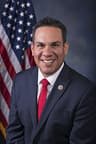
Pete Aguilar (D-CA)
Electing Members to certain standing committees of the House of Representatives.
A Democratic resolution with no cosponsors
Last activity — Motion to reconsider laid on the table Agreed to without objection.
Adopted
The chamber formally agreed to it, and for a resolution that is the finish line: what it says is now officially the chamber's position, rule or tribute.
Nothing more is needed. A resolution is how a chamber speaks for itself or sets its own rules, so adopting it is what puts it into effect. It is not a law, so there is nothing for the President to sign.
Its path through Congress
- Introduced
- Adopted by the House unanimous consent
A House resolution is the House speaking for itself: stating a position, honouring someone, or setting its own rules. Adopting it is the whole process. Once the House agrees to it, it is officially the House's word; it is not a law, so the Senate and the President have no part in it.
The House by unanimous consent (no one objected, so there was no vote): no member's position on it was recorded.
What this bill would do
This resolution deals with electing specific members of the House of Representatives to various standing committees. It formally names individuals to serve on seventeen different committees ranging from agriculture to ways and means. The action took place in the House of Representatives on January 6, 2025. It ensures that these specific elected officials hold these committee positions as resolved. The document concludes with the attestation of the Clerk.
Yes· 3 of 10
- Scored +1
Would veterans be better off under this, taking everything together?
The resolution populates the Committee on Veterans Affairs.
- Scored +1
Would farmers be better off under this?
The resolution assigns members to the Committee on Agriculture.
- Scored +1
Does this make the government pay for what it commits to?
The resolution establishes the Committee on Appropriations and the Committee on the Budget to oversee federal spending.
The opposite
No question was scored the opposite.
Who it would affect, and how
Potential Positive Impacts for People
- Committee Representation: The text explicitly elects specific members to standing committees, such as Ms. Craig to the Committee on Agriculture and Ms. DeLauro to the Committee on Appropriations. This is positive because it officially organizes the House so that elected officials can get to work on the people's business in their assigned areas.
Potential Negative Impacts for People
- No Negative Impacts Found: Based strictly on the provided text, there are no specific sections or provisions identified that outline negative consequences or burdens for individuals or groups of people in the United States.
Groups and Interests Ranking
Every group the model scored this bill for, from -10 to +10. Tap or hover a score for the reason it gave.
- Demographic And Interest Groups
- Would farmers be better off under this? — The resolution assigns members to the Committee on Agriculture. Would veterans be better off under this, taking everything together? — The resolution populates the Committee on Veterans Affairs.
- Economy And Finance
- Does this make the government pay for what it commits to? — The resolution establishes the Committee on Appropriations and the Committee on the Budget to oversee federal spending. Does this make it easier to run a small business? — The resolution populates the Committee on Small Business to oversee small business interests.
- Environment Energy And Infrastructure
- Does this better protect air, water and wildlife? — The resolution populates the Committee on Natural Resources to oversee environmental matters. Does this repair or build roads and bridges? — The resolution elects members to the Committee on Transportation and Infrastructure.
- National Security And Foreign Policy
- Does this strengthen ties with allied countries? — The resolution assigns members to the Committee on Foreign Affairs to handle international relations. Does this increase the pay, pensions or support veterans receive? — The resolution elects members to the Committee on Veterans Affairs to oversee veteran support.
- Education And Technology
- Does this put more money into scientific research? — The resolution populates the Committee on Science, Space, and Technology.
- Governance And Ideology
- Does this make what the government does easier for the public to see? — The resolution populates the Committee on Oversight and Government Reform.
- 1/6/2025
- Submitted in House
- Motion to reconsider laid on the table Agreed to without objection.
- Passed/agreed to in House: On agreeing to the resolution Agreed to without objection. (text: CR H49)
- On agreeing to the resolution Agreed to without objection. (text: CR H49)
- Considered as privileged matter. (consideration: CR H49)