
Greg Casar (D-TX)
Expressing the sense of the House of Representatives that Congress must urgently take all appropriate measures to guarantee civil rights and fair political representation to all Americans.
A Democratic resolution with 48 Democratic cosponsors · See all 48 cosponsors
Last activity — Referred to the House Committee on the Judiciary.
In committee
Introduced and handed to a committee in the chamber it started in.
The committee holds it, and most bills are never heard from again. A hearing or a committee vote would be news; silence is the usual outcome, and it kills the bill without anyone voting against it.
Its path through Congress
- Introduced
- In Committee
A House resolution is the House speaking for itself: stating a position, honouring someone, or setting its own rules. Adopting it is the whole process. Once the House agrees to it, it is officially the House's word; it is not a law, so the Senate and the President have no part in it.
What this bill would do
This resolution expresses the sense of the House of Representatives regarding the need for urgent action to protect civil rights and political representation. It calls for the adoption of legislation to restore and strengthen the Voting Rights Act of 1965. Additionally, the resolution seeks structural changes during the next prodemocracy governing moment. These changes include eliminating the 60-vote threshold in the Senate. The resolution also suggests various reforms for the Supreme Court, such as term limits and a binding code of ethics.
Yes· 3 of 11
- Scored +9
Does this protect the right to vote?
The resolution seeks to restore and strengthen the Voting Rights Act of 1965 to ensure all eligible Americans can vote.
- Scored +8
Would Black Americans be better off under this?
The resolution specifically highlights the need to protect Black representation from being eroded by recent Supreme Court decisions.
- Scored +8
Does this narrow racial gaps in how people are treated?
The resolution calls for restoring the Voting Rights Act to end racial discrimination in voting and elected representation.
The opposite
No question was scored the opposite.
Who it would affect, and how
Potential Positive Impacts for People
-
Restoring and strengthening the Voting Rights Act of 1965: This is intended to end racial discrimination in voting and elected representation, ensuring all eligible Americans can vote. (Resolution Section 1)
-
Elimination of the 60-vote threshold in the Senate: This is listed as a structural change for the next prodemocracy governing moment. (Resolution Section 2A)
-
Establishing a binding judicial code of ethics for Supreme Court Justices: This is proposed as a structural change to the Supreme Court. (Resolution Section 2B)
-
Implementing term limits for Supreme Court Justices: This is proposed as a structural change to the Supreme Court. (Resolution Section 2B)
-
Expanding the size of the Supreme Court: This is proposed as a structural change to the Supreme Court. (Resolution Section 2B)
Potential Negative Impacts for People
- The provided text does not contain any specific provisions or details regarding potential negative impacts or burdens for individuals or groups of people.
Groups and Interests Ranking
Every group the model scored this bill for, from -10 to +10. Tap or hover a score for the reason it gave.
- Demographic And Interest Groups
- Would Black Americans be better off under this? — The resolution specifically highlights the need to protect Black representation from being eroded by recent Supreme Court decisions. Would Asian Americans be better off under this? — The resolution advocates for protecting the political participation of Asian American communities. Would Hispanic Americans be better off under this? — The resolution seeks to protect Latino communities from the effects of partisan gerrymandering. Would Native Americans be better off under this? — The resolution aims to protect the political participation of Native American communities through stronger voting rights. Would immigrants be better off under this? — The resolution calls for addressing racial profiling of noncitizens. Would households on low incomes be better off under this? — The restoration of voting rights can help secure political representation for marginalized communities often found in lower-income brackets.
- Social Issues And Justice
- Does this protect the right to vote? — The resolution seeks to restore and strengthen the Voting Rights Act of 1965 to ensure all eligible Americans can vote. Does this narrow racial gaps in how people are treated? — The resolution calls for restoring the Voting Rights Act to end racial discrimination in voting and elected representation. Does this make casting a ballot easier in practice? — The resolution aims to protect against partisan gerrymandering and disenfranchisement through strengthened voting protections.
- Governance And Ideology
- Does this make what the government does easier for the public to see? — The resolution advocates for a binding judicial code of ethics for Supreme Court Justices to improve accountability. Does this give the federal government more power? — The resolution seeks to restore federal oversight of election laws through the Voting Rights Act.
- 10/13/2026
- 4 Cosponsors added.
- 8/27/2026
- 10 Cosponsors added.
- 7/22/2026
- 4 Cosponsors added.
- 7/14/2026
- 5 Cosponsors added.
- 7/9/2026
- 20 Cosponsors added.
- 6/30/2026
- 1 Cosponsor added.
- 6/24/2026
- Submitted in House
- Referred to the House Committee on the Judiciary.
- 4 Cosponsors added.
 Yassamin Ansari
Democrat · Arizona
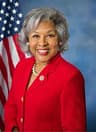 Joyce Beatty
Democrat · Ohio
 Nanette Barragán
Democrat · California
 Shontel Brown
Democrat · Ohio
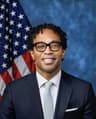 Wesley Bell
Democrat · Missouri
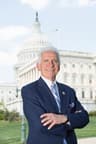 Jim Costa
Democrat · California
 Emanuel Cleaver
Democrat · Missouri
 Yvette Clarke
Democrat · New York
 Steve Cohen
Democrat · Tennessee
 André Carson
Democrat · Indiana
 Judy Chu
Democrat · California
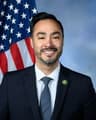 Joaquin Castro
Democrat · Texas
 Troy Carter
Democrat · Louisiana
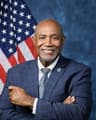 Herbert Conaway
Democrat · New Jersey
 Danny Davis
Democrat · Illinois
 Mark DeSaulnier
Democrat · California
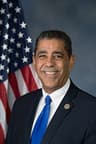 Adriano Espaillat
Democrat · New York
 Maxwell Frost
Democrat · Florida
 Valerie Foushee
Democrat · North Carolina
 Jimmy Gomez
Democrat · California
 Jesús García
Democrat · Illinois
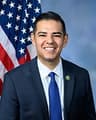 Robert Garcia
Democrat · California
 Daniel Goldman
Democrat · New York
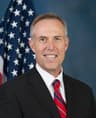 Jared Huffman
Democrat · California
 Jahana Hayes
Democrat · Connecticut
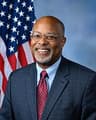 Glenn Ivey
Democrat · Maryland
 Henry Johnson
Democrat · Georgia
 Ro Khanna
Democrat · California
 Raja Krishnamoorthi
Democrat · Illinois
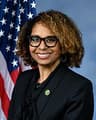 Sydney Kamlager-Dove
Democrat · California
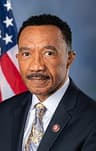 Kweisi Mfume
Democrat · Maryland
 Grace Meng
Democrat · New York
 LaMonica McIver
Democrat · New Jersey
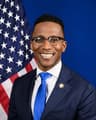 Christian Menefee
Democrat · Texas
 Analilia Mejia
Democrat · New Jersey
 Eleanor Norton
Democrat · District of Columbia
 Ilhan Omar
Democrat · Minnesota
 Nellie Pou
Democrat · New Jersey
 Marilyn Strickland
Democrat · Washington
 Andrea Salinas
Democrat · Oregon
 Lateefah Simon
Democrat · California
 Bennie Thompson
Democrat · Mississippi
 Mark Takano
Democrat · California
 Shri Thanedar
Democrat · Michigan
 Nydia Velázquez
Democrat · New York
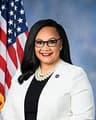 Nikema Williams
Democrat · Georgia
 Frederica Wilson
Democrat · Florida
 Bonnie Watson Coleman
Democrat · New Jersey