
Rosa DeLauro (D-CT)
Calling for a trade policy that supports workers, consumers, independent farmers, small businesses, and the environment.
A Democratic resolution with 54 Democratic cosponsors · See all 54 cosponsors
Last activity — Referred to the House Committee on Ways and Means.
In committee
Introduced and handed to a committee in the chamber it started in.
The committee holds it, and most bills are never heard from again. A hearing or a committee vote would be news; silence is the usual outcome, and it kills the bill without anyone voting against it.
Its path through Congress
- Introduced
- In Committee
A House resolution is the House speaking for itself: stating a position, honouring someone, or setting its own rules. Adopting it is the whole process. Once the House agrees to it, it is officially the House's word; it is not a law, so the Senate and the President have no part in it.
What this bill would do
This resolution calls for a new trade policy that prioritizes workers, consumers, family farmers, small businesses, and the environment over corporate interests. It rejects current and past trade models that have led to factory closures and job losses in the United States. The House of Representatives seeks to implement strong labor and environmental standards in all trade agreements to prevent offshoring. It advocates for strengthening "Buy America" requirements and domestic manufacturing capacity through industrial policies. Additionally, the resolution pushes for protections in sectors like medicine, agriculture, and the digital economy. Ultimately, it aims to create a trade system that rewards responsible production and enhances national security.
Yes· 3 of 34
- Scored +9
Would farmers be better off under this?
Provides specific protections for independent and family farmers, including labeling and subsidies.
- Scored +9
Would union members be better off under this?
Prioritizes union jobs and implements labor standards to prevent offshoring.
- Scored +9
Does this lower the price of prescription medicines?
Prioritizes access to affordable medicine and opposes monopoly protections that raise drug prices.
The opposite
- Scored -7
Would billionaires be better off under this?
Aims to eliminate incentives for offshoring and reduce corporate-privileged trade access.
- Scored -6
Would the very wealthiest people be better off under this?
Directly rejects trade policies that put corporate interests and wealthy individuals first.
- Scored -4
Would people with substantial wealth be better off under this?
Challenges corporate-centered trade models that benefit wealthy individuals.
Who it would affect, and how
Potential Positive Impacts for People
-
Support for Workers: The resolution proposes strong, binding labor standards, fair wage guarantees across various sectors, and a wage floor for companies seeking preferential tariffs to discourage offshoring (Section 3). It also calls for a fully funded Trade Adjustment Assistance Program to help workers get back on their feet (Section 5).
-
Benefits for Family Farmers: It seeks to prioritize independent and family farmers through mandatory country-of-origin labeling, targeted support for small and mid-scale farmers, and antimonopoly disciplines to ensure fair prices (Section 8).
-
Environmental Protection: The resolution calls for trade agreements to include robust environmental standards to limit various types of pollution and emphasizes the importance of promoting a healthy environment (Section 3 and Section 6).
-
Consumer and Health Benefits: It advocates for trade policies that prioritize access to affordable medicine and prevent monopoly protections that allow pharmaceutical firms to raise prices (Section 7).
-
Strengthening Domestic Industry: The resolution suggests that public procurement and infrastructure investment should support United States workers by strengthening "Buy America" requirements and domestic content standards (Section 4).
Potential Negative Impacts for People
- Note: The provided text does not explicitly list specific negative impacts or burdens for individuals or groups; rather, it outlines the grievances and failures of previous trade models that the resolution seeks to remedy.
Groups and Interests Ranking
Every group the model scored this bill for, from -10 to +10. Tap or hover a score for the reason it gave.
- Economy And Finance
- Does this strengthen the rights of workers to organise? — Explicitly supports industrial policies to support union jobs and protects workers' rights. Does this give people more protection from unfair business practices? — Focuses on affordable medicine, data privacy, and mandatory country-of-origin labeling. Is this likely to create jobs? — Aims to rebuild domestic manufacturing capacity and incentivize domestic production over offshoring. Does this make it easier to run a small business? — Prioritizes small businesses over corporate interests and supports small-scale farmers. Does this raise the taxes companies pay? — The bill suggests penalizing companies for offshoring and implementing clawbacks on tax incentives. Does this raise the lowest wage an employer may pay? — Advocates for fair wage guarantees and a wage floor for corporations seeking preferential tariffs. Is this likely to grow the economy? — Seeks to strengthen domestic industry and strategic sectors through tariffs and Buy America requirements. Does this increase support for people who lose their jobs? — Calls for a fully funded Trade Adjustment Assistance Program to help displaced workers.
- Demographic And Interest Groups
- Would farmers be better off under this? — Provides specific protections for independent and family farmers, including labeling and subsidies. Would union members be better off under this? — Prioritizes union jobs and implements labor standards to prevent offshoring. Would people in rural areas be better off under this? — Strong focus on supporting rural communities and family farming. Would households on low incomes be better off under this? — Focuses on fair wage guarantees and reducing the cost of essential medicines. Would middle-income households be better off under this? — Seeks to protect manufacturing jobs and lower drug costs. Would retired people be better off under this? — Reduces the financial burden of prescription drugs. Would people over 65 be better off under this? — Focuses on reducing the costs of prescription drugs. Would business owners be better off under this? — Positive for small and mid-scale business owners; negative for transnational corporations. Would billionaires be better off under this? — Aims to eliminate incentives for offshoring and reduce corporate-privileged trade access. Would the very wealthiest people be better off under this? — Directly rejects trade policies that put corporate interests and wealthy individuals first. Would people with substantial wealth be better off under this? — Challenges corporate-centered trade models that benefit wealthy individuals.
- Environment Energy And Infrastructure
- Does this better protect air, water and wildlife? — Requires robust environmental standards and enforcement mechanisms in all trade agreements. Does this invest in rural communities? — Prioritizes benefits for independent and family farmers and rural communities. Does this cut the pollution that drives climate change? — Advocates for binding environmental standards to limit climate and air pollution. Does this repair or build roads and bridges? — Strengthens Buy America requirements for infrastructure investment. Does this put more money into wind, solar and other renewable power? — Domestic content standards apply to energy spending.
- Governance And Ideology
- Does this make what the government does easier for the public to see? — Calls for transparent negotiations and public-centric priorities in trade policy. Does this protect people from being watched or searched? — Supports the ability of governments to enforce data privacy policies. Does this limit the influence of paid lobbyists? — Opposes privileging corporations through special access to policymakers. Does this give the federal government more power? — Asserts that Congress must vote to approve new or renegotiated trade agreements. Does this leave more decisions to the states? — Protects the ability of state governments to preference domestic products in purchasing.
- Education And Technology
- Does this give people more control over their personal data? — Explicitly protects the ability of countries to set and enforce data privacy and security policies. Does this put more rules on large technology companies? — Protects governments' ability to regulate AI, data privacy, and competition in the digital economy. Does this make patent and copyright rules fairer? — Treats IP theft as trade violations while limiting pharmaceutical monopoly protections.
- Healthcare
- Does this lower the price of prescription medicines? — Prioritizes access to affordable medicine and opposes monopoly protections that raise drug prices. Does this make health care easier to get in general? — Seeks to enable domestic production of medicine to address public health needs.
- National Security And Foreign Policy
- Does this send more money or help to other countries? — Calls for robust development assistance funding to improve global workers' rights. Does this make trade with other countries easier? — Seeks a more 'fair' trade model based on binding standards rather than corporate interests.
- Social Issues And Justice
- Is this likely to lift people out of poverty? — Aims to raise wages for workers and support rural communities.
- 10/19/2026
- 1 Cosponsor added.
- 9/16/2026
- 1 Cosponsor added.
- 9/14/2026
- 1 Cosponsor added.
- 9/1/2026
- 2 Cosponsors added.
- 8/31/2026
- 1 Cosponsor added.
- 8/20/2026
- 4 Cosponsors added.
- 8/3/2026
- 2 Cosponsors added.
- 7/23/2026
- 1 Cosponsor added.
- 7/21/2026
- 1 Cosponsor added.
- 7/13/2026
- 2 Cosponsors added.
- 6/30/2026
- 2 Cosponsors added.
- 6/25/2026
- 3 Cosponsors added.
- 6/23/2026
- 1 Cosponsor added.
- 6/10/2026
- 1 Cosponsor added.
- 5/20/2026
- 3 Cosponsors added.
- 5/14/2026
- Submitted in House
- Referred to the House Committee on Ways and Means.
- 28 Cosponsors added.
 Yassamin Ansari
Democrat · Arizona
 Brendan Boyle
Democrat · Pennsylvania
 Nikki Budzinski
Democrat · Illinois
 Becca Balint
Democrat · Vermont
 Emanuel Cleaver
Democrat · Missouri
 Yvette Clarke
Democrat · New York
 Steve Cohen
Democrat · Tennessee
 André Carson
Democrat · Indiana
 Greg Casar
Democrat · Texas
 Christopher Deluzio
Democrat · Pennsylvania
 Mark DeSaulnier
Democrat · California
 Debbie Dingell
Democrat · Michigan
 Madeleine Dean
Democrat · Pennsylvania
 Al Green
Democrat · Texas
 John Garamendi
Democrat · California
 Jesús García
Democrat · Illinois
 Sylvia Garcia
Democrat · Texas
 Adelita Grijalva
Democrat · Arizona
 Val Hoyle
Democrat · Oregon
 Henry Johnson
Democrat · Georgia
 Pramila Jayapal
Democrat · Washington
 Jonathan Jackson
Democrat · Illinois
 Marcy Kaptur
Democrat · Ohio
 Robin Kelly
Democrat · Illinois
 Ro Khanna
Democrat · California
 Stephen Lynch
Democrat · Massachusetts
 Mike Levin
Democrat · California
 James McGovern
Democrat · Massachusetts
 Betty McCollum
Democrat · Minnesota
 Grace Meng
Democrat · New York
 Joseph Morelle
Democrat · New York
 Frank Mrvan
Democrat · Indiana
 Jerrold Nadler
Democrat · New York
 Eleanor Norton
Democrat · District of Columbia
 Donald Norcross
Democrat · New Jersey
 Alexandria Ocasio-Cortez
Democrat · New York
 Chellie Pingree
Democrat · Maine
 Mark Pocan
Democrat · Wisconsin
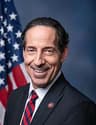 Jamie Raskin
Democrat · Maryland
 Josh Riley
Democrat · New York
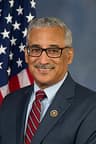 Robert Scott
Democrat · Virginia
 Janice Schakowsky
Democrat · Illinois
 Mary Gay Scanlon
Democrat · Pennsylvania
 Haley Stevens
Democrat · Michigan
 Melanie Stansbury
Democrat · New Mexico
 Lateefah Simon
Democrat · California
 Bennie Thompson
Democrat · Mississippi
 Dina Titus
Democrat · Nevada
 Paul Tonko
Democrat · New York
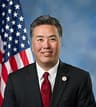 Mark Takano
Democrat · California
 Jill Tokuda
Democrat · Hawaii
 Nydia Velázquez
Democrat · New York
 Maxine Waters
Democrat · California
 Bonnie Watson Coleman
Democrat · New Jersey